


 Shkruar nga Pamfleti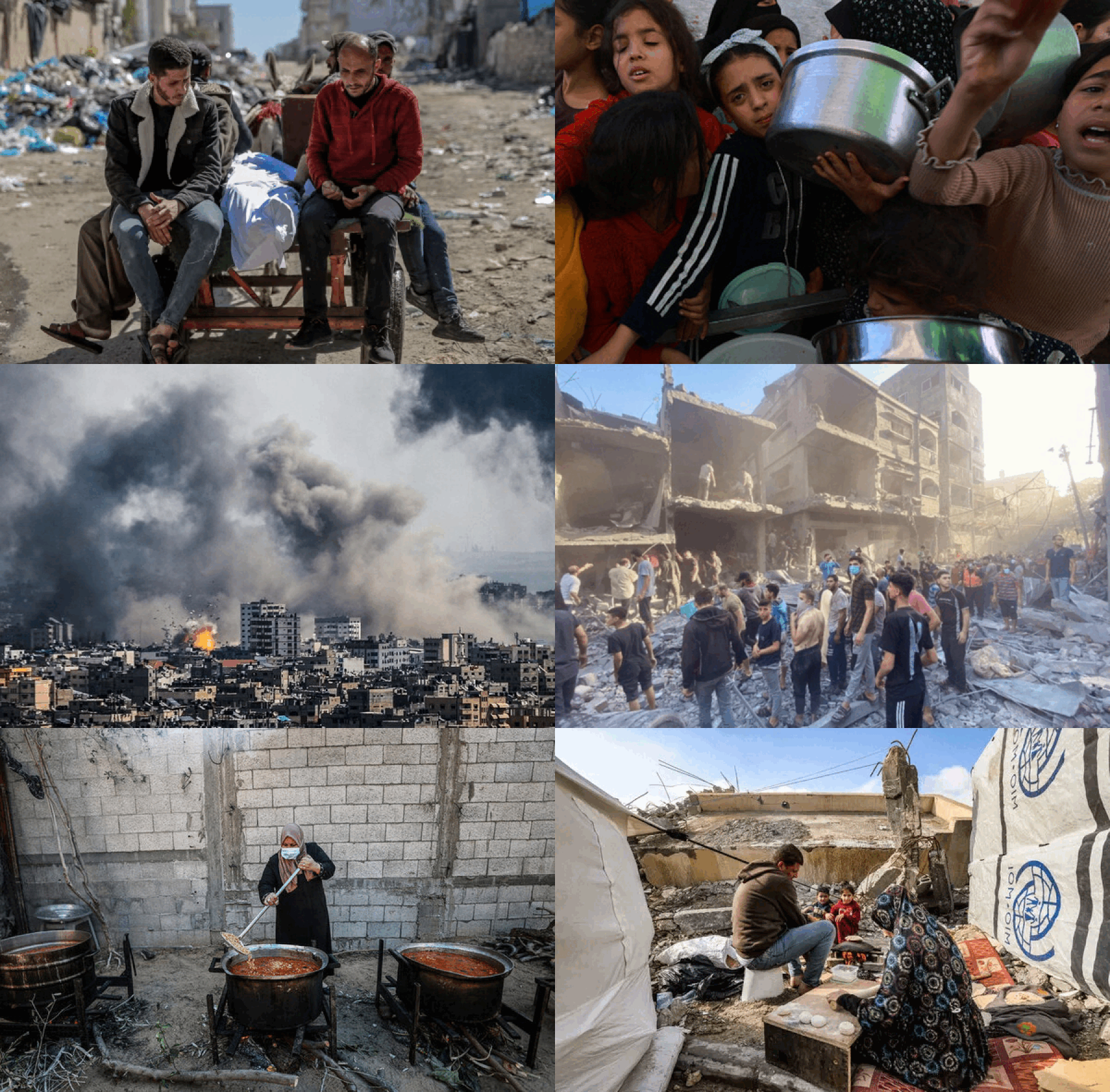
The US risks being seen as an accomplice in the humanitarian disaster in the Gaza Strip!
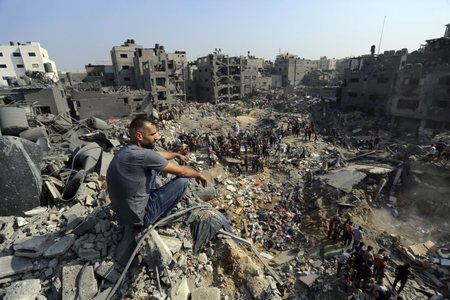
Thousands of Palestinians who rushed to a convoy of aid trucks in the rubble of northern Gaza last week hoped to get their hands on desperately needed food. Instead, dozens joined the list of thousands already killed in the generation. Those responsible blame each other. Palestinian officials say more than 100 were killed by Israeli fire. Israel admits its troops fired warning shots as crowds moved toward them and hit several people, but says dozens were killed in the stampede and crushed under truck tires. Whatever the truth, the tragedy underscored just how dire the disaster has become in Gaza following Israel's five-month siege and offensive against Hamas.
According to Palestinian officials, the death toll from Israel's offensive last week exceeded 30,000. For weeks, UN officials have warned of starvation and disease as minimal aid reaches Gaza. In January, judges hearing South Africa's genocide case against Israel at the International Court of Justice ordered the Jewish state to "take immediate measures" to enable aid to be sent to Gaza. But the UN says shipments almost halved in February compared to January. Civil order has collapsed in the generation.
More than any other issue, the lack of aid illustrates the impotence of the US and its Western allies in pressuring Israel to change the course of the war. As the occupying power, it is Israel's responsibility to provide enough food for the hungry. The Biden administration has been pushing Israel to facilitate more aid to Gaza for weeks, with negligible results.
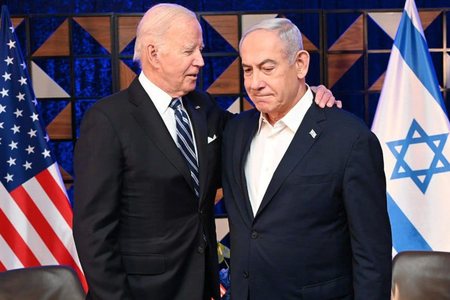
Washington has pressed Prime Minister Benjamin Netanyahu to produce a realistic post-war plan for Gaza and curb extremist settlers in the occupied West Bank. Yet Netanyahu ignores Washington's pleas as he vows to pursue "total victory."
The best hope for halting the conflict, easing the humanitarian catastrophe and reducing regional tensions lies in efforts to broker an agreement between Israel and Hamas to secure the release of the hostages in Gaza. But the mediators – the US, Qatar and Egypt – have struggled to narrow the wide gaps between the protagonists and get an agreement over the line. This deadlock must be broken.
Qatar and Egypt should keep up the pressure on Hamas to agree to a deal and release the Israeli hostages, who are also at risk. But as the only nation with significant influence over Israel, the US must do more to persuade Israel to ease the suffering in Gaza and end its offensive.
The US decision to throw aid in the belt is a sign of the urgency of the situation. But at best it will provide a sticking plaster and things should never have come to this point.
Washington was right to support Israel's right to self-defense after the horrific October 7 Hamas attack that killed 1,200 people. But it is long past the time when this support should be unconditional. It's complex for President Joe Biden, especially in an election year. However, as a friend of Israel, he should go beyond Netanyahu and speak directly to Israelis to warn of the damage the carnage in Gaza is doing to their nation's international standing and its long-term security objectives.
Biden should impose conditions on US arms sales if Netanyahu continues to ignore his advice. He should support full Palestinian membership in the UN to underline Washington's seriousness in working towards a two-state solution. He must reverse a decision to suspend funding to UNRWA, the agency on which millions of Palestinians depend, after Israel accused 12 of its 13,000 staff in Gaza of being involved in the Hamas attack. Above all, Biden must recognize that it is in the interests of Israel and the US to use the leverage he has. If not, the longer the war continues, the more the US will be seen as complicit in the catastrophe in Gaza./ Adapted "Pamphlet" from "Financial Times"



Lini një Përgjigje