


 Shkruar nga Alexander Langlois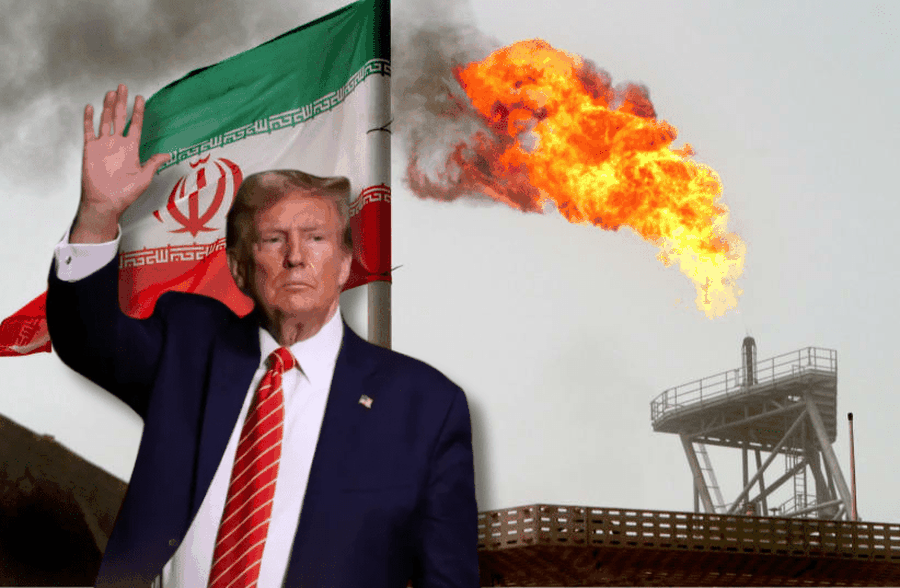
The US-Iran rivalry provides a prime example of the nuances missing from the misguided “peace through strength” approach.
The main foreign policy slogan of the Trump administration's second term, known as "peace through strength," will achieve at best a formal peace in the Middle East. Meanwhile, the so-called "peace" that President Trump emphasized as a central element of his third campaign for the White House is proving to be unattainable, as demonstrated by the violation of the Israel-Hamas ceasefire agreement and the new bombing campaign in Yemen.
These developments reflect an even broader problem: Washington continues to use overly militaristic policies to achieve political results that cannot be achieved through the overt use of hard, military force.
The irony is clear among those who rightly criticize the “isolationist” labels hurled at the new administration. Trump’s second term is turning out to be a mandate for action, but the personnel are highly political. So many of the key national security staff in bodies like the National Security Council are drawn primarily from the neoconservative and interventionist wing of the Republican Party.
Some of these officials are the same individuals who have been pushing for decades of failed policies, such as “maximum pressure” against Iran. The views and goals of such staff did not suddenly change overnight. They simply operate on a new agenda.
In fact, the US-Iran rivalry provides a prime example of the nuances missing from the misguided “peace through strength” approach. Tehran has for decades rejected enemy efforts—including sanctions, assassinations, and international piracy—to change its behavior, developing increasingly complex and dangerous deterrent policies in the Middle East and beyond in response.
In this case, Washington's use of "force" has emboldened Iranian hardliners and vice versa, in a spiral of increasingly violent interactions in third countries. The Islamic Republic is anything but angelic. But the problem remains.
Aggressive behavior to highlight relative strength has had little success in preventing US adversaries from working to achieve their own interests, even if they are diametrically opposed to Washington's.
The Middle East is littered with similar failed examples of this dynamic, from Iraq and Syria to Palestine and Yemen. In each case, the force approach has failed and is failing. The Assad regime in Syria, for example, did not fall because of U.S. sanctions, a military presence, or the covert arming of opposition militias.
On the contrary, Damascus responded to those US actions by engaging in regional destabilizing actions, such as the Captagon drug trade, to exert pressure on the US's regional partners. The Houthi rebels did not cease their malicious actions in Yemen due to the designation as a terrorist organization or the bombs dropped on their military and government positions.
On the contrary, the group has been strengthened time and again. Traditional arguments in the neo-conservative narrative emphasize that interventionist policies do not go far enough, often because of leaders and officials who “lack resolve.”
For them, this failure reflects a willingness to sacrifice a vague so-called “credibility” in the name of isolationist and weak goals. The logic is that Washington must be strong everywhere and at all times. Otherwise, it risks leaving open ground for dangerous actors just a step beyond the US coastline.
While Trump has espoused a relatively different - albeit chaotic - line of reasoning publicly and in some policy decisions, his first and second terms again reflect the traditional neoconservative approach.
His first administration expanded bombing campaigns in the Horn of Africa and anti-ISIS operations across the Middle East (and kept troops there even after ISIS was defeated). And it undertook a brutal campaign of pressure on Iran in the name of force, to achieve total victory over its enemies or to reach increasingly illusory “deals.”
To this day, Trump’s second term reminds us of the same approach in the Middle East. Under his leadership, the US has threatened Jordan and Egypt to accept hundreds of thousands of Palestinians in an apparent attempt to allow Israel to annex the illegally occupied West Bank and Gaza.
If this scenario occurs, it risks a brutal regional conflict and a Third Intifada, which could threaten the governments in Amman and Cairo. The current administration is expanding former President Joe Biden's bombing campaign in Yemen against the Houthi rebels.
He has even gone so far as to state that Iran will be held responsible for any future Houthi attacks. And this is a clear threat for a future attack against the Islamic Republic. With the Houthi rebels likely to cease their attacks soon, one could be justified in wondering how this clash will end.
Ultimately, American officials would be wise to recognize that “strength” comes in many forms. Washington’s secret weapon is not its military per se, but rather the culmination of capabilities, relationships, and a grand strategy that reasonably recognizes the broad range of capabilities of these components to achieve a given foreign policy objective.
This includes soft power, which is worthless if brute force has been used before, regardless of those relationships. Simply put, the Trump administration will fail in the Middle East and more broadly if it acts only through hard power, and especially if that approach ignores how narrow US interests are in the Middle East.
Understanding this dynamic requires acknowledging the limitations of power and the unnecessary risk associated with pursuing shortcuts to a false victory. If the U.S. does so, it could lead to outcomes that are consistent with Trump’s stated desire to go down in history as a peacemaker./ Adapted from “Pamphlet” by “The Hill”



Lini një Përgjigje