


 Shkruar nga Mark Galeotti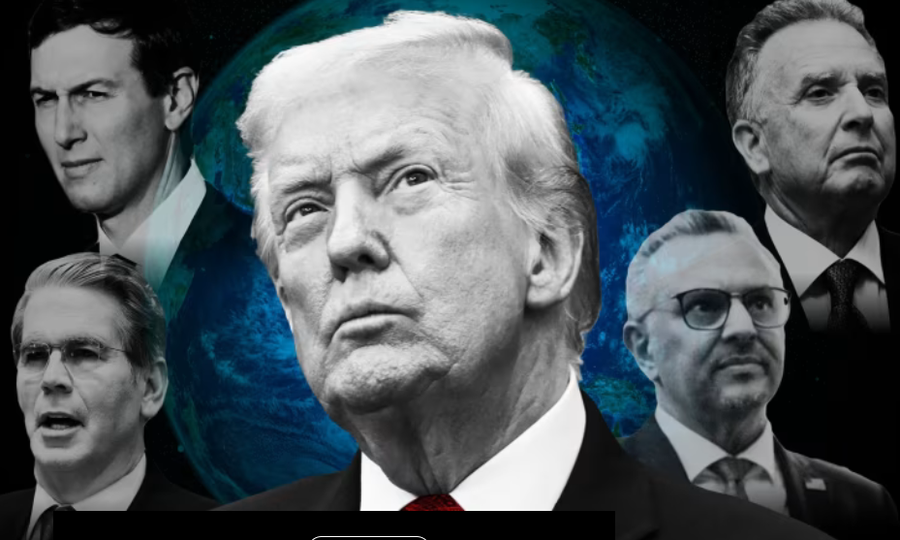
In Washington everyone comes prepared to sell the US what they have to offer...
Brian Mast, the Republican congressman who represents a district that borders Donald Trump's second home in south Florida, has a large wooden conference table in his Washington office. It is always stocked with small bottles of water for visitors.
They come every day from embassies around Washington but also from various capitals around the world. The last day had been filled with visitors from Nigeria, Turkey, Azerbaijan, Taiwan and two other countries whose names he can't remember.
But they all come prepared to sell America what they have to offer, says Mast, who heads the foreign affairs committee in the US Congress.
“ Every one of them comes here saying 'We have the best quality of this mineral' or 'the greatest capacity to refine this mineral, '” he says from his office on Capitol Hill.
He describes this as a new trend, searching for the right metaphor. The “new fashion” of the moment? “Let’s call it the new bag. Everyone brings this bag… ” he replies.
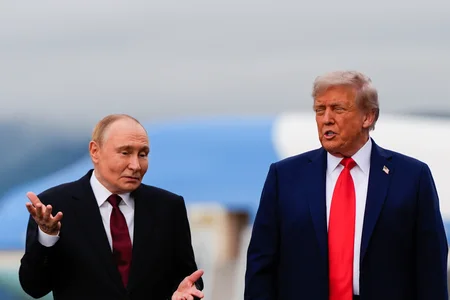
If the transactional aspect is one of the defining themes of Trump's second term foreign policy, asking not what Washington can do for a foreign country, but what foreign countries can do for Washington, the other key feature is the envoy.
Personality-based politics, as one former defense official puts it, has already replaced the processes and institutions that have been in place for decades of American foreign policy.
Instead of the State Department, today it is real estate developer Steve Witkoff, the president's longtime friend and business partner, who has become special envoy for "peace negotiations."
Witkoff travels constantly between Moscow, Riyadh, Jerusalem, etc. to reach agreements. At his side is Jared Kushner, Trump's son-in-law and investor, who does not officially hold any government position, but has "found time", while doing business with the Persian Gulf monarchies, to play a leading role in peace talks in the Middle East and Ukraine, on behalf of the US.
Tom Barrack, Trump’s longtime campaign aide and donor, is now serving as his ambassador to Turkey and as a peace broker in Syria and Lebanon. Masad Boulos, the Lebanese-American son-in-law of Trump’s other daughter, Tiffany, has long run a business empire in West Africa. And it’s no surprise that he also serves as Trump’s envoy to Africa.
They have eliminated the traditional means of advice and oversight and the “hierarchy of political engagements” that once guided this space, says a former U.S. official who served in several U.S. administrations. He also laments the disappearance of experts and with them decades of practical diplomacy.
“Trump’s inner circle is very small ,” the former official said. Muaz Moustafa, executive director of the Syrian Emergency Task Force, has lobbied various US administrations on behalf of Syria and has been a mediator with the new government.
“If you’re a real estate business partner, like Steve Witkoff or Tom Barrack, they’re the main characters. So are Ivanka and Jared ,” he said, referring to Trump’s daughter and son-in-law. “Maybe even Donald Jr. ”
A little lower down the list comes Secretary of State and National Security Advisor Marco Rubio and Vice President JD Vance. These are the people who matter in Trump's second presidency's approach to the world: they are the secret channel of American diplomacy.
The White House itself presents this as a deliberate shift from the traditional "bottom-up" approach to a "top-down process led by the president."
"Many of the processes are run directly by Trump through a few senior officials he trusts ," says Anna Kelly, deputy press secretary at the White House.
Every administration has had envoys, including those who have had great power for their roles or limited attention to structure. But even then, public services functioned.
Now, in an environment where, according to the American Foreign Service Association, "America's diplomatic capacity is being destroyed from within," there is no one to keep them in check.
By reducing the State Department's resources, sidelining a good portion of its top staff, and appointing a small handful of businessmen as advisers to implement the American agenda abroad, Trump has fundamentally changed the way foreign policy is done in Washington, say career foreign policy officials, foreign diplomats and lawmakers.
"The National Security Council doesn't matter anymore. The State Department doesn't matter either. Nothing matters except the main characters," Mustafa says.
For many traditional allies, accustomed to traditional channels of diplomacy, finding a way to access the administration has been a real challenge.
The example of South Korea shows that negotiators have been forced to make grueling 30-hour round trips to Washington, sometimes twice a week, to present their demands directly to Trump.
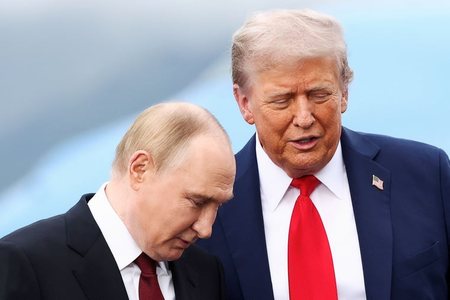
Those who share Trump's appreciation for autocrats and his disdain for procedures have found it easier to operate in Washington.
"The people who adapted the fastest were from the Gulf states. They reflect Trump's approach, with the mix of politics, business and personal relationships," says an American diplomat.
“Everyone has been trying to fit in!” says a Southeast Asian official, accustomed to working with countries where back channels and flattery are necessary to gain access. “Dealing with a country where personal connections matter more than anything else is not unfamiliar to many officials in our region,” he adds.
Trump has denied that his personal interests have mixed with his role as leader of the free world. However, it is often unclear where American interests end and personal ones begin.
“This is the most powerful place in the world!” he recently told the Oval Office, before heading to Saudi Arabia's Crown Prince, Mohammed Bin Salman, to ask for a check for the construction of his new hall.
In Switzerland, reports of directors donating a Rolex watch and a personally engraved gold bar to Trump's presidential library caused concern in the country. But the move appears to have reduced taxes, from 39 percent to 15 percent.
In this new era of American diplomacy, timely offers are essential. When several African presidents had a collective audience with Trump at the White House in July, each tried to convince him of their country’s valuable mineral reserves.
Pakistan has been particularly successful in this game. A group of US and Gulf-based businessmen of Pakistani origin are using their connections to the Trump and Whittaker families to broker deals on critical minerals and cryptocurrencies.
A Dubai-based investor who calls himself Pakistan's "economic ambassador" says he has secret channels into the US president's inner circle. "This is a more natural way for us Pakistanis. Trump and Whittaker understand the value of relationships very well," he says.
When asked what he has learned in the first year of Trump's second term, a European foreign minister said that everything is conditional. "You get nothing if you don't give something! " he emphasized. The administration argues that Trump's transactional nature primarily benefits Americans.
The US needs to reduce its debt and secure access to critical minerals that power its military, infrastructure and data. But critics say he has stripped away too much from the diplomatic process to more easily integrate his business interests with foreign policy./ Përshtati "Pamphlet", taken from the "Financial Times"



Lini një Përgjigje