


 Shkruar nga Pamfleti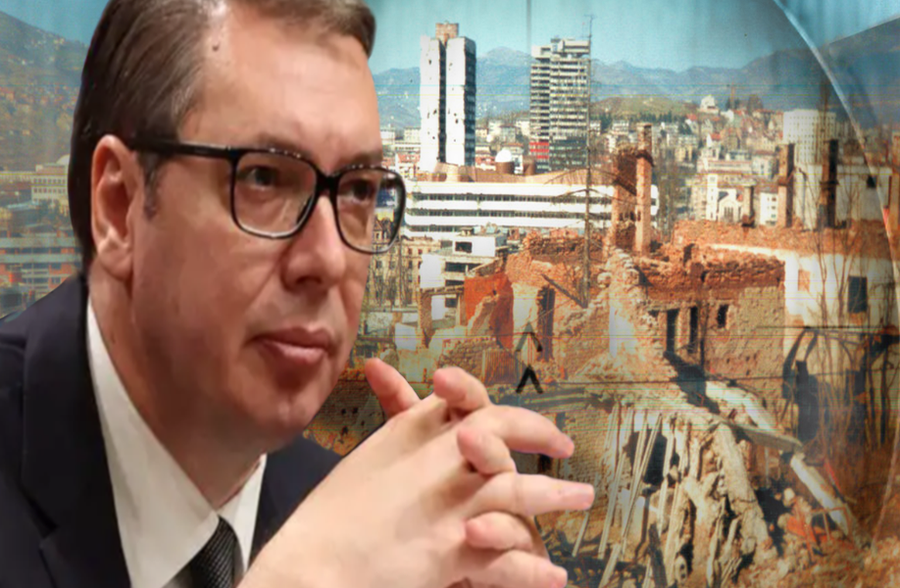
From threats of lawsuits to political panic: What's behind Vučić's nervousness?
Serbian President Aleksandar Vučić has threatened to sue several international media outlets that, according to him, are spreading fake news about his involvement in the scandal called "Sarajevo Safari".
The slang term was revived after reports that prosecutors in Milan have opened an investigation into several Italian citizens who allegedly paid large sums of money to participate as “weekend snipers” during the siege of Sarajevo, shooting at civilians during the Bosnian war. According to the complaint by Italian journalist Ezio Gavaceni, the investigation also includes citizens from the US, Canada and Russia.
Such cases, which have also been documented by international media, include allegations that foreign individuals paid money to shoot at defenseless people from a distance, a story that the British newspaper The Guardian has described as one of the darkest aspects of life under siege. Vučić has been embroiled in controversy after some reports indirectly linked him to this dossier, which he calls a pure lie and a “campaign against Serbia.”
In a lengthy statement, the Serbian president said he would hire "the most expensive lawyers in the world," who he would pay on a "success fee" basis, meaning only if they win their case against media outlets like The Guardian and the Daily Mail. He added that he would not sue media outlets within Serbia, which he accuses of "inventing lies for ten years," but would focus on Western newspapers "that have a lot of money."
Reactions in Serbia have been strong and mostly critical. Professor and politician Biljana Stojković quipped that Vučić does not understand that international media does not function like those in Serbia and that they cannot be intimidated by “howls within the country”. She emphasizes that the investigation into the “sniper safari” must go to the end and that if any involvement of political figures from the 1990s is proven, “the verdict of justice must be inevitable”.
Journalist Nedim Sejdinović says that Vučić will most likely not follow through on the threat of indictment, because the media articles are based on documents and there is no legal basis for the accusation. According to him, the Serbian president is using the threat of indictment for domestic consumption, while if the case is actually opened in international courts, he risks opening old files on the crimes of the Serbian radical right in the 1990s, including the period when Vučić himself was Slobodan Milošević's minister of information.
In the same vein, Bojan Kostreš from the League of Social Democrats of Vojvodina sees Vučić's statement as "political theater for the domestic public," adding that the fact that major international media outlets are reporting on this story means that there are serious indications. According to him, Vučić is trying to control the situation and avoid further loss of public support.
This issue is much deeper than just another controversy between Vučić and the Western media. It touches on the open wounds of the Balkan wars, the issue of complete impunity for past crimes, and the role of today's political elites who inherited positions from the regimes of the 1990s. If the Milan investigation moves forward and if these accusations take judicial form, "Sarajevo Safari" could become one of the most important stories of redimensioning the truth of the wars in Bosnia, and the role that some current political actors played in them. /Adapted from "Pamphlet" by "Danas"



Ne Kosove shkuan edhe ruse e ukrainas. Kam takuar ne London disa prej tyre qe tregonin vete pa e ditur qe jam Shqiptar. Ishin oficere e kishin shkuar se u afrohej para e mire.