


 Shkruar nga Sarah Leah Whitson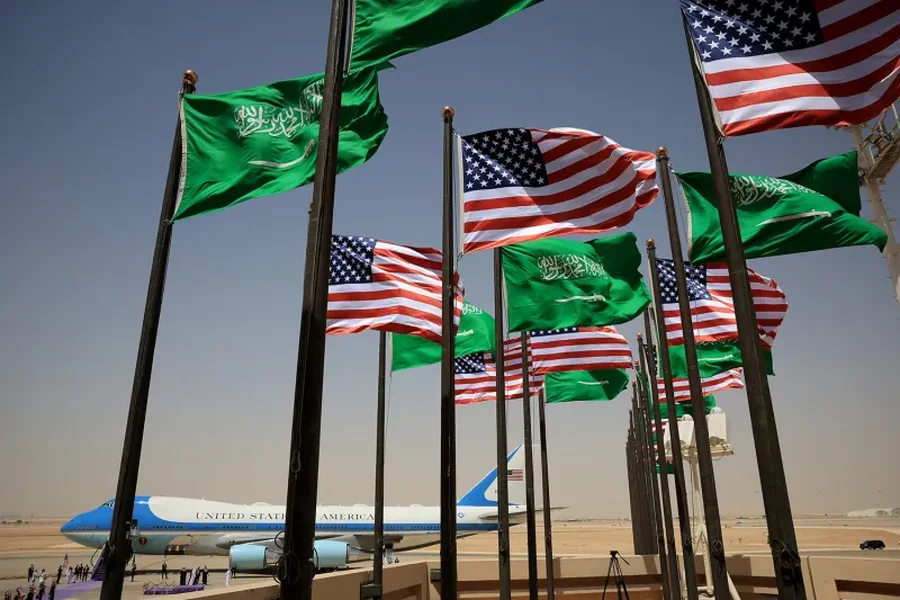
American troops would be forced to defend Riyadh...
The rehabilitation of Saudi Arabia's Mohammed bin Salman from a global outcast to a global patron is one of the most extraordinary political feats of our time.
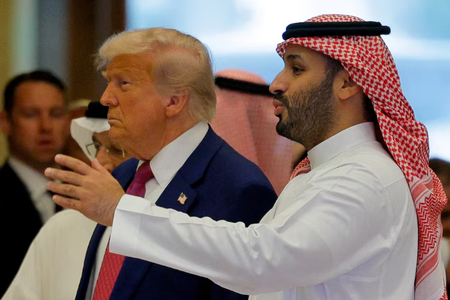
This week, the crown prince will make a triumphant return to Washington after nearly a decade in exile. He is expected to deliver $600 billion in promised investments in American companies and, as part of that exchange, receive a long-desired security guarantee from the United States. This may be a great deal for the corporations that will benefit from the excessive acquisition, but it remains a crude and dangerous deal for the American people, who will have to foot the bill.
After the 2018 killing of DAWN founder Jamal Khashoggi by Saudi agents, Mohammed bin Salman faced sanctions and global isolation. Corporate executives pulled out of investment conferences in Riyadh, official state visits were suspended, and major deals with the Saudi government were canceled. The Trump administration imposed sanctions on 17 individuals involved in the killing in November 2018.
By now, the country's reputation had sunk so much that former US President Joe Biden campaigned on promises to end arms sales to the "noble" kingdom with "very little social redeeming value."
In February 2021, the Biden administration’s Office of the Director of National Intelligence released its investigation, concluding that Mohammed bin Salman had, indeed, ordered Khashoggi’s murder. At the same time, it announced a new sanctions regime to punish acts of extraterritorial repression and designated 76 agents of the crown prince for their role in the murder, barring them from traveling to the United States, though it deliberately avoided sanctioning Mohammed bin Salman himself.
But within two years, Biden’s team was back to business as usual, unwilling to risk losing Saudi Arabia as its most valuable arms customer or US hegemonic influence in the Persian Gulf. He also got a taste of Saudi influence, with deeply unpopular gasoline price hikes ahead of the 2022 US midterm elections.
In July 2022, Biden returned to Saudi Arabia to improve relations with Mohammed bin Salman, imploring him to increase Saudi oil production and promising to relax the US arms ban to include only "assault" weapons.
By the time US President Donald Trump returned to power, the crown prince’s rehabilitation was already complete. Unlike Biden, Trump has been clear and forthright about the transactional nature of the relationship, built on commercial matching: US military protection in exchange for Saudi capital commitments.
Much has changed for the better in Saudi Arabia, but many of the worst aspects of the country remain the same. The government has introduced unprecedented social liberalization and largely ended enforced gender segregation, reviving Mohammed bin Salman’s title as “the reformer.” The government has abolished most aspects of the “guardianship” system that reduced women to perpetual minors, requiring them to seek permission from a male guardian for the most basic life decisions, such as finding a job, opening a bank account, or renting an apartment. Young Saudis can now go to concerts, restaurants, and shopping malls without hindrance from religious police. It has also introduced long-overdue reforms for the country’s migrant workers, allowing them to change jobs after their contracts end and to leave the country without their employer’s permission.
What hasn’t changed is the country’s government: an absolute dictatorship under a single, completely unaccountable leader. Saudis cannot participate in any kind of democratic process to elect or change their representatives. They cannot protest or criticize Mohammed bin Salman or the government for policy failures unless they want to be charged with terrorism and face decades in prison. There is no codified criminal law in the country, so appearing before a judge is like rolling dice: The law is whatever the judge says, and so is the sentence, as 322 executions in 2025 to date, most of them foreign nationals, attest. There is certainly no accountability, not for Khashoggi’s murder, not for the ongoing detentions of activists, not for the destruction of Yemen.
Critical to Saudi Arabia’s global rehabilitation, however, is not the enthusiastic concerts and art galleries that Saudis can now enjoy, but the strategic deployment of Saudi capital. The country’s Public Investment Fund, with more than a trillion dollars in assets, has poured hundreds of billions of dollars into an extraordinarily diverse set of U.S. financial, entertainment, sports, gaming, agriculture, oil, gas, water, and technology sectors, from acquisitions of LIV Golf and artificial intelligence startups in defense to lucrative deals with the Metropolitan Opera, women’s tennis, and even America’s most shameless and dishonest comedians.
Ndërsa shumë i kanë përshkruar këto blerje ekstravagante si ushtrime për larjen e reputacionit, ato shihen më saktë si leva ndikimi dhe kontrolli në ekonominë amerikane që do ta bëjnë jashtëzakonisht të vështirë të shohësh bizneset amerikane të largohen përsëri nga Arabia Saudite. Ajo që filloi si marrëveshje punësimi dhe biznesi me zyrtarë qeveritarë të dorëhequr së fundmi, tani duke përfshirë marrëveshje me anëtarë të familjes së vetë Trump, e kanë bërë shumë më të vështirë për qeverinë amerikane të distancohet edhe nga mbretëria.
Ajo që ka sjellë gjithashtu në dispozicion vendosja e kapitalit nga Arabia Saudite është çmimi i artë i kërkuar prej kohësh i një garancie sigurie nga SHBA-ja dhe një bonus prej avionësh luftarakë F-35, deri më sot të rezervuar vetëm për Izraelin në Lindjen e Mesme. Riadi nuk do të marrë një garanci të mbështetur nga traktati, falë qeverisë izraelite që ka hedhur në erë çdo mundësi për një Marrëveshje Abrahami me mbretërinë, çmimi i mëparshëm për një angazhim kaq të fortë.
Por pritet gjerësisht që ajo të marrë një angazhim sigurie të paktën të barabartë me atë të Katarit, me një premtim nga Trump për të angazhuar trupa amerikane për të mbrojtur vendin nëse ai sulmohet.
Bombardimi i Katarit nga Izraeli do të thotë se Arabia Saudite tani ka më shumë interes në pengimin e një sulmi izraelit sesa një iranian, duke rritur barrën e kostos për Shtetet e Bashkuara të çdo armiqësie izraelite. Tregtia do të përfshijë gjithashtu premtimet saudite për të përjashtuar Kinën nga projektet e mëdha të armëve në vend dhe për të blerë armë amerikane për të ardhmen e parashikueshme.
Përfituesit amerikanë nga një marrëveshje e tillë padyshim do të përfshinin bizneset që përfitojnë nga fitimet saudite, por kostot ushtarake, diplomatike dhe morale, do të përballoheshin nga publiku amerikan, përfshirë ushtarët amerikanë që pritet të rrezikojnë jetën e tyre për të shpëtuar familjen mbretërore saudite. Kjo nuk është strategji, dhe as administrata Trump nuk ka ofruar ndonjë justifikim sigurie për zgjerimin, jo zvogëlimin, e angazhimeve ushtarake amerikane në Lindjen e Mesme, pavarësisht premtimeve të tij për një politikë të jashtme “Amerika e Para”.
Mbështetësit e një pakti sigurie argumentojnë se Mohammed bin Salman është pjekur, se epoka e luftës së pamatur në Jemen , bllokadës së Katarit dhe ndalimeve në Ritz-Carlton është lënë pas. Por një sistem pa llogaridhënie nuk evoluon thjesht sepse sundimtari i tij plaket.
Një angazhim formal mbrojtës do t'i lidhë vendimet strategjike të SHBA-së me gjykimin e një udhëheqësi të vetëm i cili nuk është i lidhur nga kufizimet ligjore, zgjedhore ose institucionale dhe e ka treguar veten të jetë impulsiv, i pamatur dhe brutal.
This is not a stabilization agreement. It is an invitation to engage in future conflicts that Washington neither chooses nor controls, even encouraging a sense of Saudi impunity. The main risk is structural: Saudi Arabia would gain protection and the United States would gain liabilities.
The American people deserve a critical examination of the nature of this proposed pact. It does not advance U.S. security interests. It does not promote regional de-escalation. And it does not encourage reform within the realm. What it does do is further normalize an American political economy in which state power protects capital rather than citizens and foreign policy becomes a tool for private advantage, subsidized by the American public. /Adapted from Foreign Policy/



Lini një Përgjigje