


 Shkruar nga Pamfleti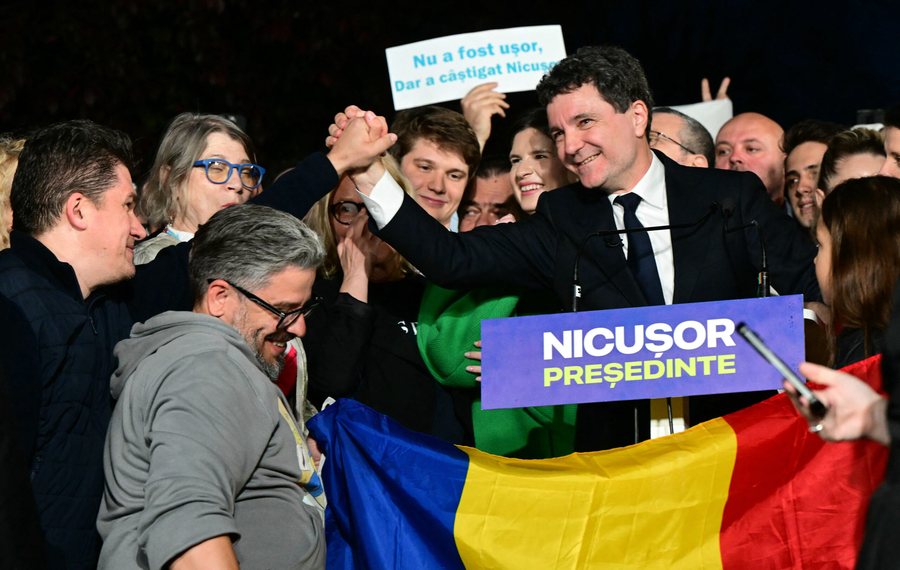
How did the Russian strategy fail?
Sunday's Romanian presidential election marks a historic victory not only for democratic governance but also for the broader Western alliance in its ongoing fight against Russian influence.
As the Kremlin recalibrates its tactics, Romania has been confirmed as a stable stronghold on NATO's eastern flank, and as a model for other countries facing similar threats to their sovereignty and democracy.
Despite Russia’s continued efforts to influence the election outcome through disinformation, support for fringe candidates, and cyber operations, the election resulted in a decisive victory for a pro-European, pro-Atlantic candidate. This result represents a strategic setback for the Kremlin and will have significant positive consequences for NATO, the EU, and the Black Sea region.
Romania's strategic importance
Romania occupies an important geopolitical position as a member of NATO and the European Union. It borders Ukraine and the Black Sea, and has significant US and NATO military infrastructure (notably the Aegis Ashore missile defense system at Deveselu), and serves as a key node in transatlantic energy and intelligence networks. Its political orientation therefore has important consequences for the regional balance of power, making it a persistent target for Russian influence operations since at least 2014.
The Russian Influence Campaign: Goals and Tactics
Moscow's main objectives have been threefold. First, to undermine public trust in democratic institutions. Second, to promote candidates who are sympathetic to "strategic autonomy" or who are openly critical of Western alliances. And third, to foster internal polarization and erode support for NATO and EU policies.
Tools and methods
Disinformation: Reinforcement of anti-EU and anti-American narratives through social media, pro-Kremlin platforms in Romanian, and coordinated online campaigns. Cyber-interference: Attempts to interfere with electoral systems and target campaign infrastructure.
Support for peripheral actors: Financial, media and logistical support of nationalist-populist figures and parties with pro-Russian leanings.
Narrative framing: Using media outlets such as Russia Today, Sputnik, and their associated networks to portray the West as exploitative and Romania as a subservient state.
How did the Russian strategy fail?
Election results. The winning candidate, with a clear and firmly pro-Western platform, secured broad support among urban and diaspora populations. The defeat of Kremlin-linked candidates was comprehensive, reflecting a rejection of Russian influence in the majority of society.
Institutional Preparation. Romanian intelligence and cybersecurity services, in cooperation with NATO and EU partners, played a crucial role in combating disinformation and neutralizing cyber intrusions. On the other hand, civil society organizations and independent media played an important role in identifying and exposing manipulation attempts.
Public awareness and media literacy. High-profile media campaigns and educational efforts raised public awareness of foreign interference tactics, encouraging the electorate to be more savvy, minimizing the impact of online manipulation.
The wider strategic consequences
For the Kremlin, the Romanian election result reflects the diminishing results of Russia’s hybrid warfare in deep democracies. Sunday’s failure could prompt the Kremlin to shift its strategy from overt manipulation to more subtle building of economic and cultural influence.
For NATO and the EU, the successful protection of democratic processes proves the importance of multilateral cooperation in cybersecurity, the fight against disinformation, and the democratic sustainability of an allied country.
After these elections, Romania emerges as a state on the front lines in the ideological race between authoritarianism and liberal democracy. The Romanian example sends a strong signal to neighboring countries such as Moldova, Bulgaria, and Serbia, reinforcing the sustainability of a Euro-Atlantic future.
It also encourages pro-democracy actors and civil society throughout Eastern Europe. For the United States, the election result in Romania represents a strategic affirmation of its foreign policy goals in Eastern Europe.
Washington can now deepen defense cooperation, intelligence sharing and energy infrastructure projects without fear of political upheaval. But the outcome of Sunday's election is not just a rejection of foreign interference, but also a reconfiguration of Romania's domestic political dynamics.
The defeat of nationalist-populist candidates who flirted with pro-Russian rhetoric is likely to weaken their influence. The victory of a pro-Westerner reinforces a broad national consensus around Euro-Atlantic integration.
Meanwhile, the prominent role played by civic groups and independent media in the fight against misinformation has increased their credibility. It is expected that institutional support and influence will increase in policy areas such as media regulation, transparency, and education. / Adapted from “Pamphlet” by “Robert Lansing Institute”







Lini një Përgjigje