


 Shkruar nga Jason Hickel, Dylan Sullivan dhe Omer Tayyab
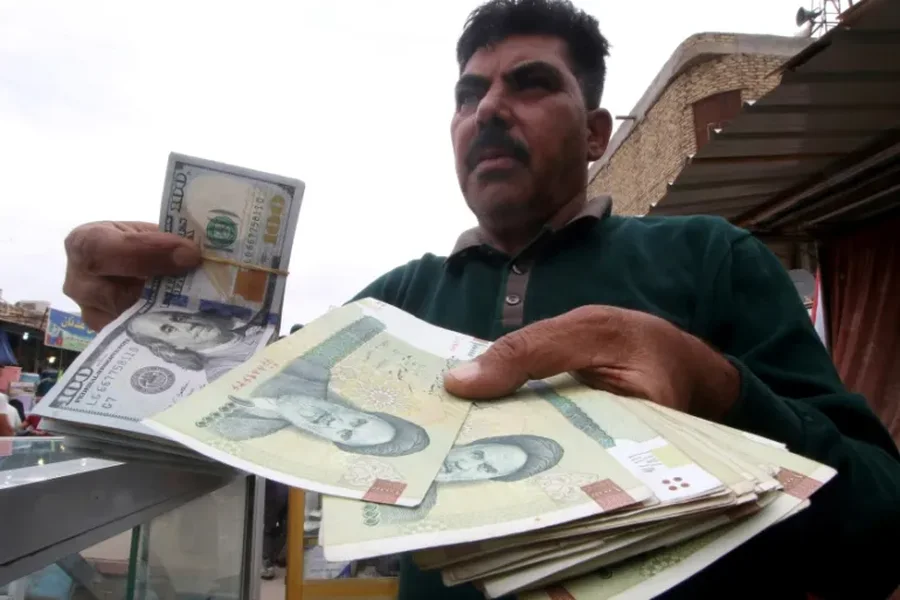
More than half of the victims are children and the elderly, people who are most vulnerable to malnutrition.
The United States and Europe have long used unilateral sanctions as a tool of imperial power, to discipline and even destroy governments of the Global South that seek to shake off Western dominance, chart an independent path, and establish any kind of meaningful sovereignty.
During the 1970s, on average, about 15 countries were under unilateral Western sanctions in any given year. In many cases, these sanctions were intended to hinder access to finance and international trade, destabilize industries, and foment crises to provoke the collapse of states.
For example, when the popular socialist Salvador Allende was elected to power in Chile in 1970, the US government imposed brutal sanctions on the country. In a September 1970 White House meeting, US President Richard Nixon explained that the objective was to “make Chile’s economy scream.” Historian Peter Kornbluh describes the sanctions as an “invisible blockade” that cut Chile off from international finance, created social unrest, and paved the way for the US-backed coup that installed the brutal right-wing dictatorship of Augusto Pinochet.
Since then, the US and Europe have significantly increased their use of sanctions. During the 1990s and 2000s, an average of 30 countries were under unilateral Western sanctions in any given year. And now, as of the 2020s, it is more than 60, an unusually high percentage of countries in the Global South.
Sanctions often come at a high human cost. Researchers have demonstrated this in several high-profile cases, such as the US sanctions against Iraq in the 1990s that led to widespread malnutrition, a lack of clean water, and shortages of medicine and electricity. More recently, the US economic war against Venezuela has resulted in a severe economic crisis, with one study estimating that the sanctions caused 40,000 deaths in just one year, from 2017 to 2018.
Until now, researchers have tried to understand the human toll of sanctions on a case-by-case basis. This is a difficult task and can only give us a partial picture. But that has changed with new research published this year in The Lancet Global Health, which gives us a global picture for the first time. Led by economist Francisco Rodriguez at the University of Denver, the study calculates the total number of excess deaths linked to international sanctions from 1970 to 2021.
The results are shocking. In their central assessment, the authors find that unilateral sanctions imposed by the US and EU since 1970 have led to 38 million deaths. In some years during the 1990s, more than a million people were killed. In 2021, the most recent year of data, sanctions caused more than 800,000 deaths.
According to these results, several times more people are killed by sanctions each year than are killed as direct victims of war (on average, about 100,000 people per year). More than half of the victims are children and the elderly, people who are most vulnerable to malnutrition. The study finds that, since 2012, sanctions have killed more than a million children.
Hunger and deprivation are not an accidental by-product of Western sanctions; they are a key objective. This is clear from a State Department memo written in April 1960, which explains the purpose of American sanctions against Cuba. The memo noted that Fidel Castro, and the revolution in general, enjoyed widespread popularity in Cuba. It argued that “every possible means should be taken immediately to weaken the economic life of Cuba,” by “denying money and supplies to Cuba, to reduce money and real wages, to cause hunger, desperation, and the overthrow of the government.”
The power of Western sanctions depends on their control over the world’s reserve currencies (the US dollar and the euro), their control over international payment systems (SWIFT), and their monopoly over essential technologies (e.g. satellites, cloud computing, software). If countries in the Global South want to chart a more independent path towards a multipolar world, they will need to take steps to limit their dependence on these aspects and thus insulate themselves from negative feedback. Russia’s recent experience shows that such an approach can succeed.
Governments can achieve greater independence by building South-South trade and exchange lines outside of major currencies, using regional planning to develop the necessary technologies, and creating new payment systems outside of Western control. Indeed, some countries are already taking steps in this direction. It is important to note that the new systems that have been developed in China (e.g. CIPS for international payments, BeiDou for satellites, Huawei for telecommunications) now offer other countries of the Global South alternative options that could become a path to liberation from Western dependence and the sanctions network.
These steps are necessary for countries that wish to achieve sovereign development, but they are also a moral imperative. We cannot accept a world where half a million people are killed every year to support Western hegemony. An international order that relies on this kind of violence must be dismantled and replaced./ Adapted from “Pamphlet” by “Aljazeera”





Lini një Përgjigje