


 Shkruar nga Pamfleti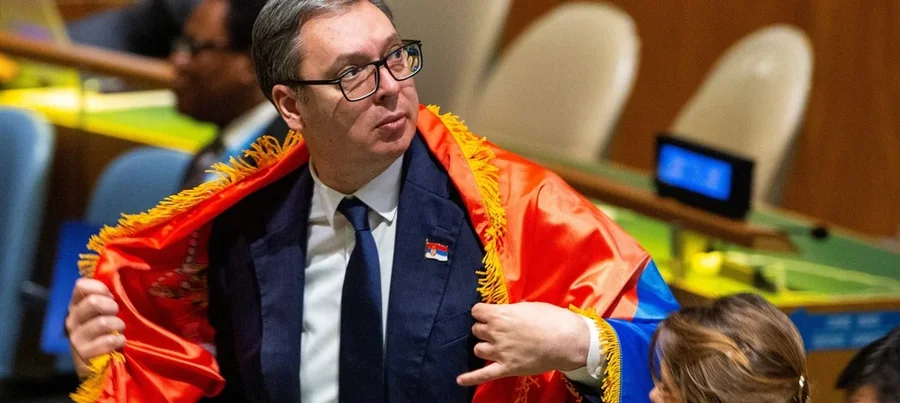
For Vučić, it is much better if the country discusses an alleged anti-Serb Srebrenica than poor public transport, dilapidated hospitals or corruption. Therefore, it is expected that the anger in Serbia will last at least until the elections.
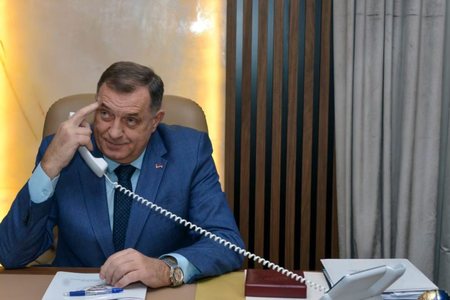
After losing a vote in the United Nations General Assembly to establish a day of remembrance for the Srebrenica genocide, Milorad Dodik practiced his math skills. The nationalist president of the Bosnian Serb Republic, which is part of Bosnia-Herzegovina, concluded that his Serbs had essentially won the vote - if only one counted correctly.
Dodik could not deny that 84 UN members had voted in favor and only 19 against the Resolution introduced by Germany and Rwanda, meaning that it was accepted.
But Dodik counted things differently. He quickly added the 68 abstentions and those members who did not vote for the no vote. So he came to "almost 110 states" that were against the resolution.
"This means the resolution has failed," said the man who has been Bosnia's most powerful Serbian political leader for more than two decades.
But regardless of how Dodik turns the numbers, after Thursday's vote, every July 11 will henceforth be an "International Day of Remembrance of the Srebrenica Genocide."
On that summer day in 1995, a days-long mass killing took place in the eastern Bosnian town of Srebrenica, resulting in the execution of more than 7,000 captured men and male minors, as well as some Bosnian Serb convicts. like General Ratko Mladic.
Vucic debates the holocaust
Mladic's troops had previously occupied the "UN protection zone", in which tens of thousands of people had sought refuge for years and at least found it in precarious conditions, without any great difficulty.
A Dutch contingent of blue helmets stationed in the area was clearly militarily inferior to the Serbs and offered no resistance. The victims of the mass killing organized after the invasion, although not with direct participation, but under the eyes of the Dutch, were Bosnian Muslims - or Bosniaks, as they were since the outbreak of the war in Bosnia-Herzegovina Bosnian Serbs, whose army was logistical during the war and other support received from Serbia.
The German ambassador to the UN, Antje Leendertse told New York that the resolution was not aimed at a people or a country: "This resolution is not directed against anyone - not even against Serbia, a precious member of this organization. If anything, it is directed against the perpetrators of genocide.”
Vucic, his party and his media have been preaching it for weeks, and Serbia's Orthodoxy joined the chorus Thursday across the country in protest. Patriarch Porfirije complained about an "injustice towards the Serbian people".
Vucic threatened that the resolution would cause political chaos in the Balkans. Immediately before the vote, he had said in response to the previous German speaker: "It is difficult to talk to Germany, which represents the most powerful country in Europe and without a doubt has the right to give this opinion. "Why?" asked the president rhetorically, referring to the Holocaust, "didn't these people start talking about genocide?"
Repeat elections in early June
This has been the leitmotif of the Serbian debate for weeks - at least that part of the debate that is defined by the government in Belgrade and its media: Germans, of all people!
Hitler's grandchildren, of all people, wanted to teach the world lessons about Serbian crimes, when they themselves had committed the greatest crimes of all times and peoples.
"We are not a nation of genocidal people", is Vucic's counter-slogan.
He shared a photo of himself in New York, wrapped in the Serbian flag.
Caption: "I'm proud of my Serbia" He was supported by the usual suspects: Russia, the Chinese and the Hungarians, as expected they voted against the resolution.
In terms of domestic politics, Vučić deserves the lost vote and the anger he sparked against Germany. Next Sunday, they will be chosen in Serbian. Also or especially since this is only a local election, a national hot topic is the best thing that could happen to the president right now. The election is a repeat of the vote from December last year. A string of irregularities and allegations of fraud, particularly in the capital Belgrade, led to protests and heightened international pressure to repeat the vote.
This will now take place on June 2nd. For Vučić, it is much better if the country discusses an alleged anti-Serb Srebrenica than poor public transport, dilapidated hospitals or corruption. Therefore, it is expected that the anger in Serbia will last at least until the elections./ Taken from FAZ



Lini një Përgjigje