


 Shkruar nga Pamfleti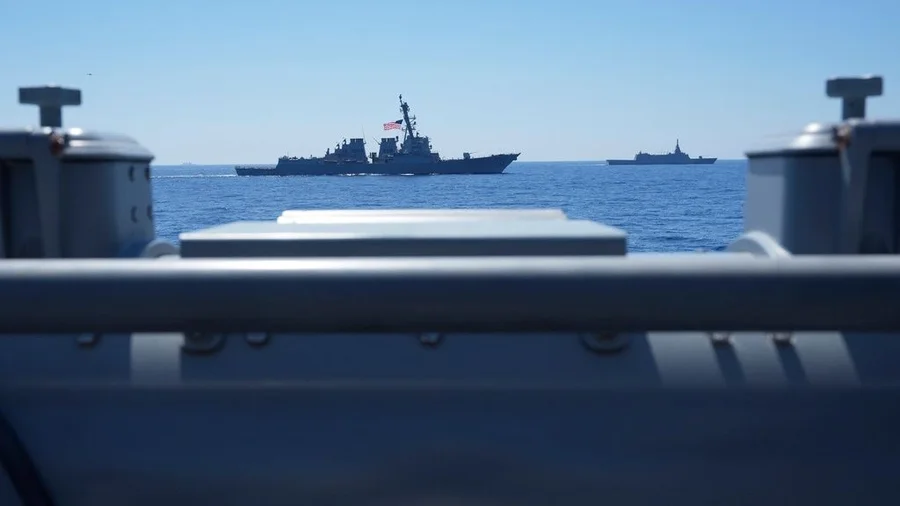
The US and its allies are expanding the range of their military assets to better respond in the event of a conflict with China. At the same time, the US is pressuring its Asian partners to strengthen their defenses. That's why it has deployed so-called killer missiles in the Philippines...
The thermometer of tension in the Pacific is rising with China's decision to send ships and aircraft to areas previously considered inaccessible, while many analysts wonder whether this will be the next front that will open and lead Beijing into confrontation with the US and its allies in the region.
This military expansion is not just a show of force, but a clear message that China is ready to defend its "region" but also to challenge traditional power relations in the Asia-Pacific region, as reported by the Wall Street Journal.
Beijing has long been unhappy with what it sees as interference by the United States and its allies in its traditional sphere of influence in the Asia-Pacific region. Now, it is asserting itself more aggressively in its own backyard, while moving far beyond the geographic limits of its military.
Thus, with numerous exercises, naval patrols and operations near Taiwan, in the South China Sea archipelago and in the Indian Ocean, it confirms that it is preparing for any eventuality, even a military conflict.
In response, the US and its allies are expanding the range of their military assets to better respond in the event of a conflict with China. At the same time, the US is pressuring its Asian partners to strengthen their defenses. That is why it has deployed so-called killer missiles in the Philippines.
“The problem is not that they have increasing capabilities in blue waters and are expanding further from their shores, that’s to be expected,” said Jennifer Parker, an assistant professor in marine studies at the University of New South Wales in Canberra. The problem, she said, is the nature of how they’re doing it, which is challenging.
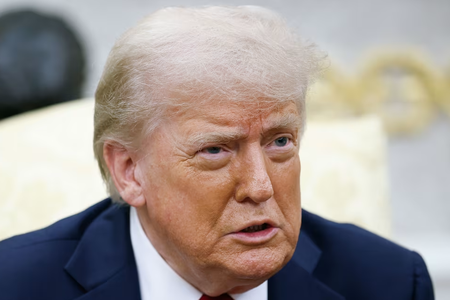
For the United States, the biggest threat from China's military exercises concerns Taiwan, the self-ruled island that Beijing claims as its own and has threatened to invade by force. Donald Trump has pursued a policy that does not clarify whether American forces would come to Taiwan's aid in the event of a Chinese invasion.
An American intervention is considered necessary to prevent an invasion by China. At present, the US sells arms to Taiwan, including missile defense systems, trains some of the island's soldiers and helps its defense industry.
Meanwhile, the US is pressuring Asian allies to spend 5% of their gross domestic product on defence. That effort is running into obstacles. Japan is seeking to increase its spending to just about 2%, while South Korea said in June that its military spending was already "too high".
Meanwhile, the US military presence in Asia includes tens of thousands of troops on the Japanese island of Okinawa. About 55,000 US troops are stationed in Japan and more than 28,000 in South Korea.
The US military has strengthened its presence on the US territory of Guam, which already houses several nuclear submarines and long-range bombers, by adding a new base expected to house 5,000 Marines.
Although the US has no permanent troops in the Philippines, Manila has given American forces access to more bases in recent years. /Adapted from Pamphlet/



Lini një Përgjigje