


 Shkruar nga Pamfleti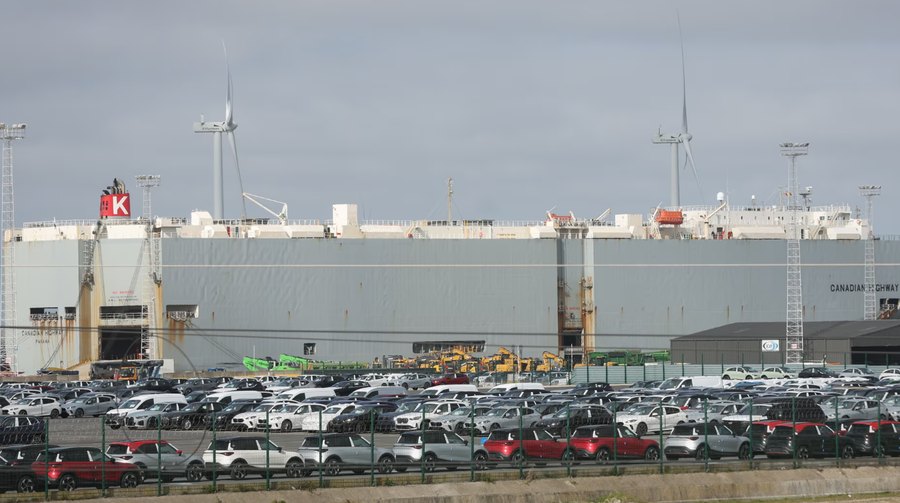
The port of Antwerp-Bruges has become a giant parking lot with thousands of cars, vans, trucks and tractors destined for the US sitting idle as manufacturers try to avoid the worst of Donald Trump's tariffs.
Figures released by the port show a 15.9% drop in new passenger car and van shipments to the US in the first 6 months of 2025 compared to the same period last year, with a significant drop appearing in May, a month after the US president announced his "liberation day" tariffs.
Exports of trucks and what they call "high and heavy equipment" have fallen by almost a third, to 31.5%.
This category includes tractors and construction vehicles, with the decline in transatlantic movements perhaps reflecting the impact a 25% tariff would have on vehicles that can cost more than $100,000.
The port is one of the largest car shipping hubs in the world, transporting more than 3 million vehicles worldwide in 2024.
"The outlook for the second half of the year remains uncertain. Much will depend on whether a trade agreement between the EU and the US can be reached by August 1," the port said in a statement.
European carmakers, from Volkswagen to Volvo, had hoped a deal would be signed last week, as Trump's initial deadline for a tariff deal with the EU was set to expire.
Before Trump arrived in the White House, they paid a 2.5% tariff on exports, but since April they have been charged an additional 25% tariff, adding tens of thousands of dollars to the price of a family car in the US.
Ports across Europe have been tested by Brexit, the coronavirus pandemic, port congestion caused by a container shortage in 2024, said Justin Atkin, the UK and Ireland port representative of the Port of Antwerp-Bruges.
Compared to Brexit, the impact of tariffs has been "more of an immediate shock," he said.
"With the pandemic, we had lockdown, then we came out of lockdown, then we went back into lockdown and people learned to manage it because they were unprepared. While people here have talked about tariffs, I don't think anyone expected the level and severity of immediate action," he said.
The port could not give an exact figure for the number of cars waiting to be transported, but said it was in the thousands.
Atkin said there was also evidence of Chinese cars piling up at the port, which could reflect a diversion of trade away from the US, with Beijing facing tariff barriers.
The tariff crisis combined with the conflict in the Red Sea and the increase in the size of ships in global fleets, extending the time of anchorage in port to 8 days instead of the usual 5 days, has put parking space for cars and containers under pressure.
The US is the Port of Antwerp-Bruges' second largest trading partner after the UK, and there is evidence that US exporters are also loading cargoes in advance in an attempt to avoid any retaliatory tariffs the EU might impose in the event of a trade war.
In the first half of the year, incoming cargoes from the US rose by 17% with higher volumes of liquefied natural gas. / Adapted from The Guardian Pamphlet /






Lini një Përgjigje