


 Shkruar nga Pamfleti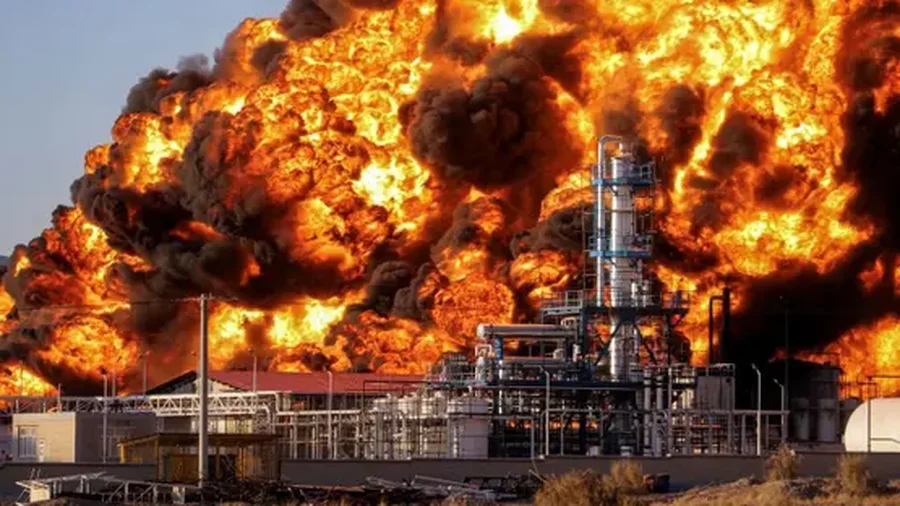
At 02:00 Albanian time, the ultimatum expires, the three scenarios expected for Iran
Donald Trump is keeping the world on edge again: at 2:00 a.m. (Albania time) on Wednesday, the deadline set by the US president for war with Iran expires. If there is no progress in negotiations by then, the Persian Gulf country is threatened with "total destruction." At least that's what Trump said today.
The US president has warned that the US could destroy all of Iran's bridges and power plants if Tehran does not accept his ultimatum to open the Strait of Hormuz. He said the US could cause "total destruction" within four hours.
But what are the scenarios of what could happen tomorrow?
Scenario A: The US intensifies attacks on Iran
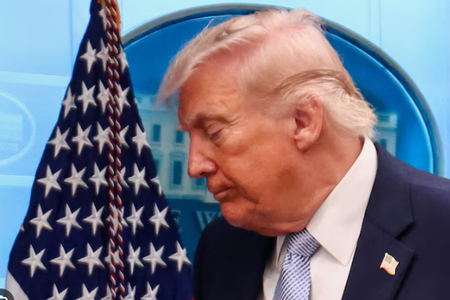
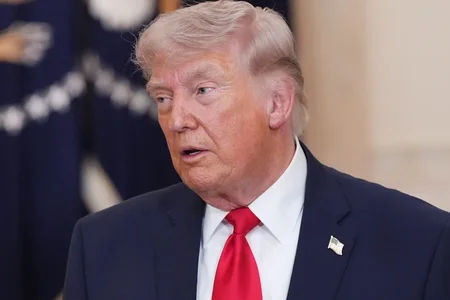
At a press conference on Big Monday in Washington, Trump appeared particularly aggressive.
“Iran could be destroyed overnight, and that night could be tomorrow,” the US president said, even threatening to hit civilian infrastructure. Every bridge and every power plant would be destroyed if the regime in Tehran did not make significant concessions. He said he was ready to bomb the country “returning it to the Stone Age.”
According to a report by the American media outlet Axios, the president himself is the one pushing the most for the escalation of attacks. "He is thirsty for blood," an anonymous White House source is reported to have said. Militarily, everything is already ready in the Persian Gulf for a major wave of attacks.
Geopolitical analyst Klemens H. Fischer of the University of Cologne considers this scenario the most likely. According to him, Trump and Defense Secretary Pete Hegseth "have cut all bridges to a peaceful solution." Hegseth even compared the American intervention in Iran to a holy war.
Scenario B: Progress in negotiations
According to many analysts, Trump may have underestimated Iran. Although the Islamic Republic lags behind militarily, it has managed to effectively block the Strait of Hormuz through threats and attacks on ships.
This passage is a vital artery for the global oil and gas trade. For the Tehran regime, this situation is a strategic success.
Shortages are already leading to price increases internationally, even at gas stations in the US.
Resuming negotiations would require a significantly improved proposal from Iran. Parts of a 10-point Iranian plan were made public on Monday, which includes reopening the Strait of Hormuz in exchange for a $2 million fee per ship.
Scenario C: The ultimatum expires without consequences
In the past, Trump has repeatedly made dramatic threats and ultimatums, without ultimately taking action. Political analyst Christian Lammert of the Free University of Berlin believes that Trump's ultimatums often function as negotiating pressure and a political show of resolve within the US.
In the United States, there is even a phrase for this: “Trump always gets angry” - that is, “Trump always gets angry.” However, Fischer considers this version quite unlikely this time.
"With yesterday's press conference, Trump essentially ruled out this possibility. A delay of more than four or five hours in the American response would lead to an almost irreversible loss of credibility."
According to the Axios report, many White House observers believe that this time Trump is serious.
How is the infrastructure in Iran?
Despite harsh international sanctions, Iran has a relatively developed and modern infrastructure. Much of it is organized at the state level and has been further developed in recent decades, in part with Chinese support.
The country, with around 90 million inhabitants and an area about four times the size of Germany, connects large metropolitan areas such as Tehran, Isfahan and Mashhad with vast and often inaccessible areas.
In large cities, the transport network consists of highways, ring roads and metros. In rural areas, infrastructure is sparser. The railway network connects the main cities and has been expanded in recent years, among other things to strengthen international trade routes.
Air transport is being hit by sanctions: many aircraft are old and spare parts are scarce.
Iran is also one of the world's largest oil and gas producers. It has a dense electricity generation network, including large natural gas-fired power plants, such as the one at Damavand near Tehran, and numerous dams. These facilities ensure energy sufficiency, but they are also vulnerable targets.
What targets could Iran hit?
In the Gulf countries, a potential target could be seawater desalination plants. Millions of people depend on them for their water supply.
In countries like Qatar and Bahrain, over 90% of their drinking water comes from such plants. Many of them are located on the Persian Gulf coast, several hundred kilometers from Iran.
Attacks have already occurred on oil and gas plants, while technology and data centers could also be targeted if the crisis escalates further. /Pamphlet




Lini një Përgjigje