


 Shkruar nga Pamfleti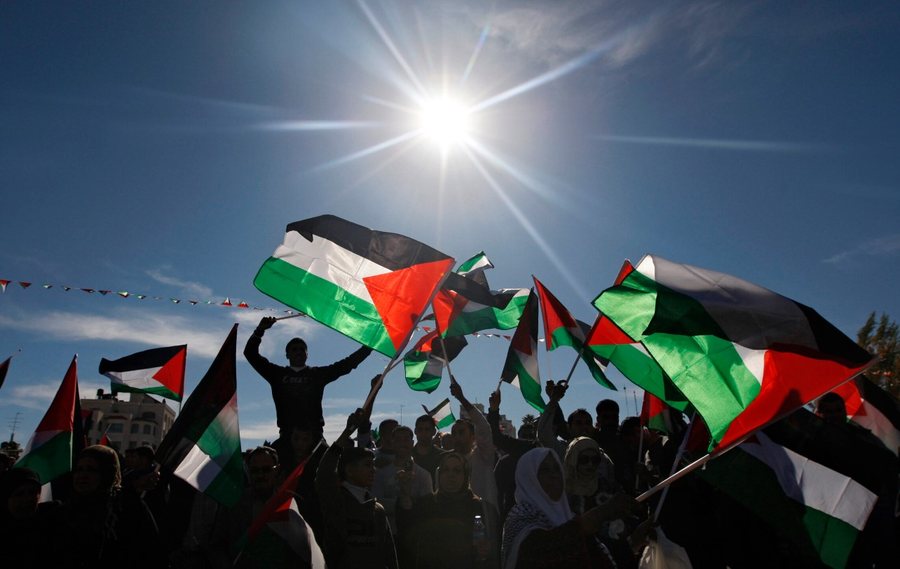
For the Palestinians, May 2024 will go down in history, at least at the diplomatic level. A few days ago, the General Assembly of the International Organization, with its resolution, improved the observer status of the Palestinian delegation with additional rights (but not with the right to vote). The Palestinians were admitted to the General Assembly with observer status in 2012.
Now everything shows that a new improvement at the diplomatic level is inevitable. Several European countries are said to be determined to formally recognize Palestine as an independent state. On the one hand because of solidarity with the civilian population in Gaza, on the other hand as a clear position in favor of a "two-state solution" in the Middle East, which is currently rejected by the right-wing government of Israel.
After the terrorist attack by Hamas on October 7, 2023, Israeli Prime Minister Benjamin Netanyahu has made the elimination of the Islamic organization a clear objective, while at the same time trying to control the Palestinian territories. Both the steadfast attitude of the Israelis, which according to Palestinian sources has already resulted in the death of more than 35 thousand civilians, as well as the desperate situation that prevails today in the Gaza Strip, strengthen international criticism of Israel.
Is Sanchez's Spain an "honest mediator"?
Spain and Ireland in particular now want to increase the pressure by recognizing an independent Palestinian state. Spanish Prime Minister Pedro Sanchez has already made contact with other leaders, promoting a concerted initiative at the European level. But with several countries - including Germany - rejecting the plan, Sanchez now wants to create an "alliance of the willing". According to the High Representative of the EU, for Foreign Policy, Josep Borrell, relevant announcements are expected from Spain, Ireland and Slovenia on Tuesday, May 21.
Spain maintains good relations with Arab countries - especially in the Maghreb region - but also with Turkey. The fact that it was not completely isolated from East and West during the Franco dictatorship (1939-1975) is precisely because of this good neighborliness. After the restoration of the Republic, it cultivated trade relations with Israel, while the establishment of diplomatic relations followed in 1986. Since then, Madrid has assumed the role of honest mediator between the Jewish state and the Arab world. The Middle East Conference held in Madrid in 1991 is considered the starting point of the diplomatic ferment that later led to the historic Oslo Accords between Israel and the Palestinians.
Ireland also expresses strong support for the Palestinians. The first guest of the new Irish Prime Minister Simon Harris, in mid-April, was his Spanish counterpart Pedro Sanchez. The two leaders apparently wanted to coordinate their actions on the Palestinian issue. Dublin is proud of the fact that as early as 1980 it had advocated a "two-state solution", which would include the creation of an independent Palestinian state.
For the Irish, identification with the Palestinian cause is explained historically. It dates back to the time of Arthur Balfour, who at the end of the 19th century was an observer of Great Britain in Ireland and opposed its independence, but in 1917, as Foreign Secretary of the United Kingdom, he drafted the "Balfour Declaration ". expressing London's support for the creation of a Jewish state in the Palestinian territories, which at the time were under Ottoman occupation. After they became a British protectorate, the maintenance of order was taken over by the gendarmes, who had previously operated in Ireland as paramilitaries, putting down Irish rebellions in blood. Slovenia seems to be joining Spain and Ireland. He had originally announced the recognition of a Palestinian state by the end of June, but, according to Josep Borrell, he will coordinate with other "prothymos" to meet a common date of May 21. A similar move by Malta is considered possible, while Norway - which does not belong to the EU but maintains close relations with it - has spoken of recognizing Palestine "in the spring".
Different opinions within the EU
Central and Eastern European countries had already moved years ago to recognize a Palestinian state, which can be explained by their socialist past and ideological alignment with Yasser Arafat's PLO. However, some of these countries are now considered supporters of Israel.
Sweden is a unique case of a country that recognized the Palestinian state after joining the EU. namely in 2014. Belgium is also considering the recognition scenario. Other countries, such as Germany, believe they should not recognize an independent Palestinian state before Israel itself recognizes it. Something that is considered impossible, as long as Hamas remains the protagonist of political developments in the Palestinian territories./ Kathimerini




Lini një Përgjigje