


 Shkruar nga Pamfleti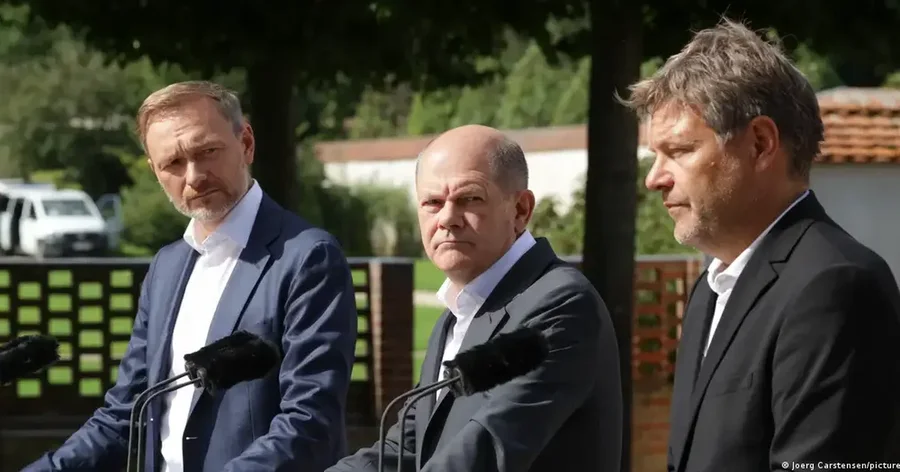
A study published this week showed that only 27 percent of citizens surveyed believe that the state is able to do its job.
Missing classes due to a lack of teachers in schools, municipalities running out of places to house refugees, eternal waits for extensions or issuance of documents and finally a catastrophic balance of railway delays: the list of problems of the German state is tall. This affects the mood of the citizens. A study published this week showed that only 27 percent of citizens surveyed believe that the state is able to do its job. While 69 percent believe that state institutions are overburdened and that the performance of tasks for which citizens pay taxes is beyond their means.
"The numbers are scary," says Ulrich Silberbach, president of the German Association of Civil Servants (dbb), which commissioned the study. He says that "the fish stinks from the head" and criticizes the bad style of government of the current coalition. "In the chancellor's office, we have a person who says that the citizens will have leadership if they want to have one. But it seems that the citizens perceive this differently", criticizes the head of the city employees' union and adds: "Dissatisfaction towards the structures in power and civil servants feel in the first place".
They in turn expect support from the government in carrying out their daily work. This mainly includes more employees, better salaries and investments in the digitization of public administration, which has lagged behind other developed countries. "The government's decision to reduce funding for digitization from 377 to 3.3 million euros is a completely wrong signal," concludes Silberbach.
The biggest problem - refugees
A more detailed look at the survey shows that citizens are particularly dissatisfied with the way the refugee problem is being handled. 26 percent of respondents think that this is the biggest problem of the state, which is being exploited by the political radical right wing, mainly by the Alternative for Germany (AfD) party. This party is benefiting politically from the issue of refugees, which has become a big problem not only in the east but also in the western part of Germany. Citizens perceive the preservation of social justice in society as the most important duty of the state. The fight against climate change, which the current government ranks as the most important task, is no longer so important to citizens.
The division into East and West
But Manfred Güllner, director of the Forsa Institute, which conducted the public opinion survey, believes the survey also showed big differences in the priorities of state tasks when it comes to the western and eastern parts of the country. Investing in the fight against climate change is much more important to citizens in the West than in the East of the country where social issues are a priority. "These kinds of differences cause fear," says Güllner.
The AfD party, as the biggest critic of Olaf Scholz's government, is experiencing a recent surge in popularity in the east of the country. For AfD voters, the fight against climate change plays no role. While for the voters of the ecological party, who mainly live in the West of the country and in urban centers, investing in environmental standards is the most important task of the state./DW






Lini një Përgjigje