


 Shkruar nga Pamfleti
The Russian leader claimed that this weapon was entering mass production and that they had the capacity to turn targets "to dust."
Gleaming in the autumn sun on a parade ground in Beijing, People's Liberation Army rockets moved slowly past the crowd in a fleet of giant camouflaged trucks.
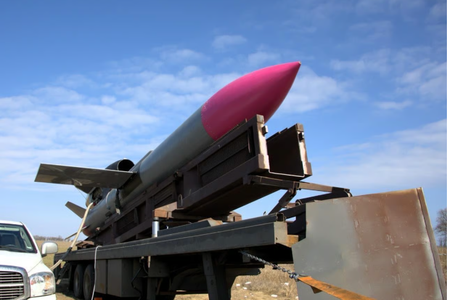
With a needle-sharp profile, 11 meters long and weighing 15 tons, each one bore the letters and numbers: "DF-17".
China had just revealed to the world its arsenal of Dongfeng hypersonic missiles.
This happened on October 1, 2019, at a National Day parade. The US was already aware that these weapons were under development, but China has since rushed ahead with their improvement.
Thanks to their speed and maneuverability, traveling at more than five times the speed of sound, they are some fearsome weapons, so much so that they could change the way wars are fought.
That's why the global race to develop them is heating up.
“This is just one component of the broader picture of the evolving geopolitical competition we are seeing among state actors,” says William Freer, a national security fellow at the Geostrategy Council think tank.
Russia, China, the US: a global competition
The Beijing ceremony raised speculation about a potential growing threat posed by China's advances in hypersonic technology. It now leads the field of hypersonic missiles, followed by Russia.
Meanwhile, the US is struggling to catch up, while the UK has none.
Mr Freer of the Geostrategy Council think tank, which received some funding from defence industry companies, the Ministry of Defence and others, argues that the reason China and Russia are ahead is relatively simple.
"They decided to invest a lot of money in these programs a few years ago," he said.
Meanwhile, for much of the first two decades of this century, many Western countries focused on combating jihadist-inspired terrorism at home, as well as counterinsurgency wars abroad.
"The bottom line is that we failed to spot China's massive rise as a military power," admitted Sir Alex Younger, shortly after retiring as head of Britain's Secret Intelligence Service in 2020.
Other nations are also moving forward rapidly: Israel has a hypersonic missile, the Arrow 3, designed to be an interceptor.
Iran has claimed to have hypersonic weapons and said it launched a hypersonic missile toward Israel during their brief but violent 12-day war in June.
Ndërkohë, Koreja e Veriut ka punuar në versionet e veta që nga viti 2021 dhe pretendon se ka një armë të zbatueshme dhe funksionale.
SHBA-ja dhe Mbretëria e Bashkuar po investojnë tani në teknologjinë e raketave hipersonike, ashtu si edhe vende të tjera, përfshirë Francën dhe Japoninë.
SHBA-të duket se po e forcojnë mbrojtjen e tyre dhe kanë debutuar armën e tyre hipersonike "Dark Eagle".
Sipas Departamentit të Mbrojtjes të SHBA-së, Shqiponja e Errët "sjell në mendje fuqinë dhe vendosmërinë e vendit tonë dhe të Ushtrisë së tij, pasi përfaqëson shpirtin dhe vdekshmërinë e përpjekjeve të Ushtrisë dhe Marinës për armë hipersonike".
Por Kina dhe Rusia aktualisht janë shumë përpara dhe sipas disa ekspertëve, ky është një shqetësim i mundshëm.
Hiper i shpejtë dhe hiper i çrregullt
Hipersonik do të thotë diçka që udhëton me shpejtësi Mach 5 ose më të shpejtë. (Kjo është pesë herë shpejtësia e zërit ose 3,858 mph.) Dhe shpejtësia e tyre është pjesërisht arsyeja pse raketat hipersonike konsiderohen një kërcënim i tillë.
Më i shpejti deri më sot është rus Avangard që pretendohet se është në gjendje të arrijë shpejtësi prej Mach 27 (afërsisht 20,700 mph) megjithëse shifra prej rreth Mach 12 (9,200 mph) përmendet më shpesh, që barazohet me dy milje në sekondë.
Megjithatë, për sa i përket fuqisë thjesht shkatërruese, raketat hipersonike nuk janë shumë të ndryshme nga raketat supersonike ose subsonike të lundrimit, sipas z. Freer.
Në thelb, ekzistojnë dy lloje raketash hipersonike: raketat me rrëshqitje të shpejtë mbështeten në një raketë (si ato DF-17 në Kinë) për t'i shtyrë ato drejt dhe nganjëherë pak mbi atmosferën e Tokës, nga ku më pas vijnë poshtë me shpejtësi të pabesueshme.
Këto janë "armë me përdorim të dyfishtë", që do të thotë se kokat e tyre luftarake mund të jenë ose bërthamore ose me eksploziv të lartë konvencional. Por këto armë nuk janë vetëm shpejtësia.
Që një raketë të klasifikohet si vërtet "hipersonike" në terma ushtarakë, ajo duhet të jetë e manovrueshme në fluturim. Me fjalë të tjera, ushtria që e qëlloi atë duhet që ajo të jetë në gjendje të ndryshojë kursin në mënyra të papritura dhe të paparashikueshme, edhe kur ajo po shkon me shpejtësi ekstreme drejt objektivit të saj.
Kjo mund ta bëjë jashtëzakonisht të vështirë për t’u kapur. Shumica e radarëve tokësorë nuk mund të mbështeten në zbulimin e raketave hipersonike deri në fund të fluturimit të armës.
Në një skenar lufte në kohë reale, kombi që po shënjestrohet përballet edhe me një pyetje të tmerrshme: a është ky një sulm bërthamor apo një sulm konvencional?
Një raport i publikuar në shkurt të këtij viti nga Shërbimi Kërkimor i Kongresit Amerikan paralajmëron: "Zyrtarët e mbrojtjes amerikane kanë deklaruar se arkitekturat e sensorëve si tokësorë ashtu edhe ato aktuale në hapësirë janë të pamjaftueshme për të zbuluar dhe ndjekur armët hipersonike."
Kujdes rreth kërcënimit rus
The fact remains that Russia and China have gained a huge advantage when it comes to developing these weapons. "I think the Chinese hypersonic programs... are impressive and worrying," says Mr. Freer.
"When it comes to the Russians, we probably need to be a lot more careful about what they claim ," he adds.
In November 2024, Russia launched an experimental medium-range ballistic missile at an industrial site on the Dnieper River in Ukraine, using it as a live test site.
The missile, which Ukraine said traveled at a hypersonic speed of Mach 11 (or 8,439 mph), was given the name 'Oreshnik,' which means hazelnut tree in Russian. President Vladimir Putin said the weapon traveled at a speed of Mach 10.
For Europe, the threat to NATO countries comes primarily from Russia's missiles, some of which are stationed on the Baltic coast in the Russian enclave of Kaliningrad. What if Putin ordered an attack on Kiev with an Oreshnik missile, this time armed with a full charge of high explosives?
The Russian leader claimed that this weapon was entering mass production and that they had the capacity, he said, to turn targets "into dust."
Russia also has other missiles that travel at hypersonic speeds.
Putin produced most of his air force's Kinzhal (Dagger) missiles, claiming they traveled so fast they were impossible to intercept. Since then, he has fired many of them toward Ukraine, but it turns out that the Kinzhal may not actually be hypersonic, and many of them have been intercepted.
China has the world's most powerful arsenal of hypersonic vehicles. In late 2024, China unveiled its latest hypersonic glide vehicle, the GDF-600. With a payload of 1,200 kg, it can carry small munitions and reach speeds of Mach 7 (5,370 mph).
'Historic moment' in UK's rush to catch up
The UK is lagging behind in this race, especially as it is one of the five permanent members of the UN Security Council armed with nuclear weapons. But belatedly, it is making efforts to catch up, or at least join the race./ Adapted from "Pamphlet", from "BBC"







Lini një Përgjigje