


 Shkruar nga Pamfleti
Berezovsky was found dead in a locked bathroom at his home in Britain with a noose around his neck in what was initially treated as a suicide.
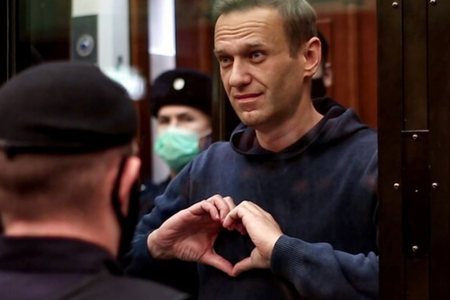
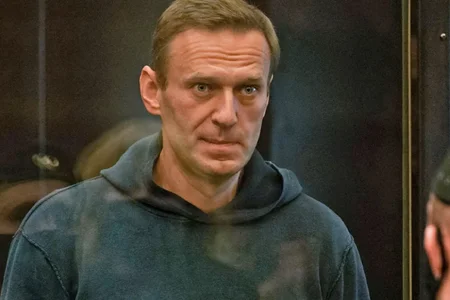
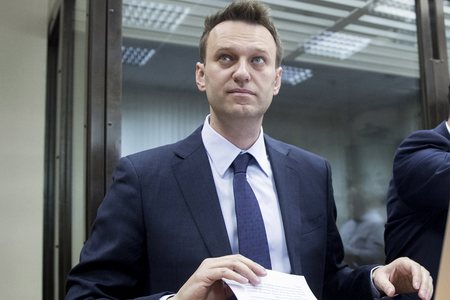
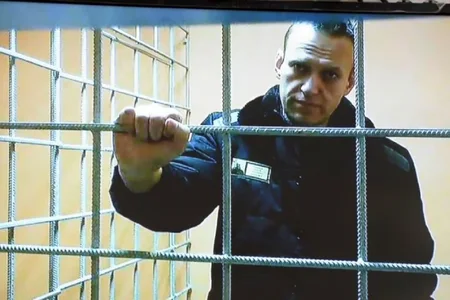
The Federal Prison Service for the Yamal-Nanets Autonomous Region announced today that one of the most prominent critics of Vladimir Putin's regime, Alexei Navalny, has died in Penal Colony No. 3, where he was serving a 19-year prison sentence.
His death has raised many suspicions, as it is not the first time that political opponents of Putin have died under mysterious circumstances. In many cases, their cases are even closed without being solved or classified as 'suicides'!
But who are Putin's critics who died under mysterious circumstances?
Boris Nemtsov, 2015
During the nineties, Nemtsov was the political star of the "young reformers" of post-Soviet Russia. He became deputy prime minister and was considered a possible presidential candidate for a time, but it was Putin who succeeded former president Boris Yeltsin in 2000.
Nemtsov publicly supported the election, but became increasingly critical as Putin curtailed civil liberties and was eventually pushed to the margins of Russian political life. Nemtsov led mass street rallies to protest the results of the 2011 parliamentary elections and wrote reports on corrupt officials. He was also arrested several times as the Kremlin cracked down on opposition rallies.
In February 2015, just hours after calling on the public to join a march against Russia's military involvement in Ukraine, Nemtsov was shot four times in the back by an unknown assailant just meters from the Kremlin, just a few days before he held the anti-war protests. Putin took "personal control" over the investigation into Nemtsov's murder, but the killer is still at large.
Seven years after Nemtsov's murder, Bellingkett, Insider and the BBC found evidence that Nemtsov was followed on 13 trips before he was killed. It was established that Nemtsov was being followed throughout Russia by a government agent - Valery Sukharev - connected to a secret squad responsible for political assassinations. All evidence shows that at the time he was working for the FSV, Russia's main intelligence service. Their investigations produced evidence of the existence of a secret assassination squad within the FSB, which targeted opponents of the Kremlin. The Russian government has always denied these allegations.
Boris Berezovsky, 2013
Exiled Russian oligarch Boris Berezovsky, a former Kremlin instructor who became one of President Vladimir Putin's fiercest critics, was found dead on March 23, 2013 at the age of 67.
He was one of the main political figures in Russia during the nineties and a person very close to President Boris Yeltsin. Berezovsky was also an important "engineer" of Putin's rise to power.
However, he soon fell out of favor with the new leader, so he went into exile in Great Britain in late 2000. His quarrel with Putin led to self-exile in Britain, where he announced that he would overthrow the president . He also accused the Kremlin of orchestrating the assassination of Alexander Litvinenko, a former intelligence officer and whistleblower who died of poisoning in 2009.
Berezovsky was found dead in a locked bathroom at his home in Britain with a noose around his neck in what was initially treated as a suicide. For a long time, the police considered the death of the Russian billionaire "unsolved". A year later, the Guardian wrote that in the investigation carried out by British investigators and forensic experts, no evidence was found that Russian oligarch Boris Berezovsky had been murdered.
Stanislav Markelov and Anastasia Baburova, 2009
Markelov was a human rights lawyer known for representing Chechen civilians in cases against the Russian military. He has also represented journalists who have found themselves in legal trouble after writing articles critical of Putin, including Novaya Gazeta reporter Anna Politkovska, who was murdered in 2006.
Markelov was shot by a masked assailant near the Kremlin. Baburova, journalist of Nova Gazeta, was shot dead while trying to help him. Russian authorities announced that a neo-Nazi group was behind the killings and that two members were sentenced to death.
Sergei Magnitsky, 2009
Lawyer Sergei Magnitsky died in police custody in November 2009 after being brutally beaten and then denied medical care. He worked for British-American businessman William Browder in the investigation of a major tax fraud case.
Magnitsky was reportedly arrested after uncovering evidence suggesting police officials were behind the fraud. In 2012, Magnitsky was posthumously convicted of tax evasion, and Browder lobbied the US government to impose sanctions on those connected to his death. The Sanctions Bill bears his name and has since been applied to offenders in other cases.
Natalia Estemirova, 2009
Natalia Estemirova was a journalist investigating the kidnappings and murders that had become common in Chechnya. There, the Washington Post reported, pro-Russian security forces have carried out a brutal crackdown on Islamic militants responsible for some of the country's worst terror attacks.
Like her fellow journalist Anna Politkovskaya, Estemirova reported on civilians who were often caught between these two violent forces. Estemirova was kidnapped in front of her home, shot several times, including a bullet to the head, and thrown into a nearby forest. No one was convicted of her murder.
Anna Politkovskaya, 2006
Anna Politkovskaya was a journalist for Nova Gazeta. In her book "Putin's Russia" she accused the Kremlin leader of turning the country into a police state. She has written extensively about abuses in Chechnya. She was shot at close range in the elevator of her building.
Five men were convicted of her murder, but a judge ruled it was a contract killing, with a $150,000 reward paid by a person whose identity has never been revealed. Putin denied any Kremlin involvement in Politkovskaya's murder, saying "her death in itself is more damaging to the current authorities in Russia and the Chechen Republic... than her activities."
Alexander Litvinenko, 2006
Litvinenko was a former KGB agent who died three weeks after drinking a cup of tea in a London hotel that turned out to be laced with the deadly polonium-210.
A British investigation found that Litvinenko was poisoned by Russian agents Andrei Lugovoi and Dmitry Kovtun, who were acting on orders "probably approved" by Putin.
Russia refused to extradite them, and in 2015 the Russian president awarded Lugovoi a medal for "merit to the fatherland". After leaving Russia's Federal Security Service, Litvinenko became a vocal critic of the Putin-led agency, later blaming the security service for orchestrating a series of apartment bombings in Russia in 1999 that left hundreds dead. Litvinenko also accused Putin of ordering Politkovska's murder.
Sergey Yushenkov, 2003
The former army colonel was a favorite of Russian parliamentary reporters in the early 1990s, Washington Post Moscow correspondent David Filipov wrote. Sergei Yushenkov had just registered his Liberal Russia movement as a political party when he was shot dead outside his home in Moscow.
Yushenkov was gathering evidence he believed proved Putin's government was behind one of the 1999 apartment bombings.
Yuri Shchekochihin, 2003.
Shchekochihin was a journalist and writer who wrote about crime and corruption in the former Soviet Union. For Nova Gazeta, he investigated the 1999 apartment bombings (the collective name for four bombings in residential buildings in the Russian cities of Buynaksk, Moscow, and Volgodonsk between September 4 and 16, 1999, which killed about 300 and injured 651 people .) In July 2003 he fell ill with a mysterious illness. He died a few days before leaving for the United States./ Pamphlet


Lini një Përgjigje