


 Shkruar nga Federico Fubini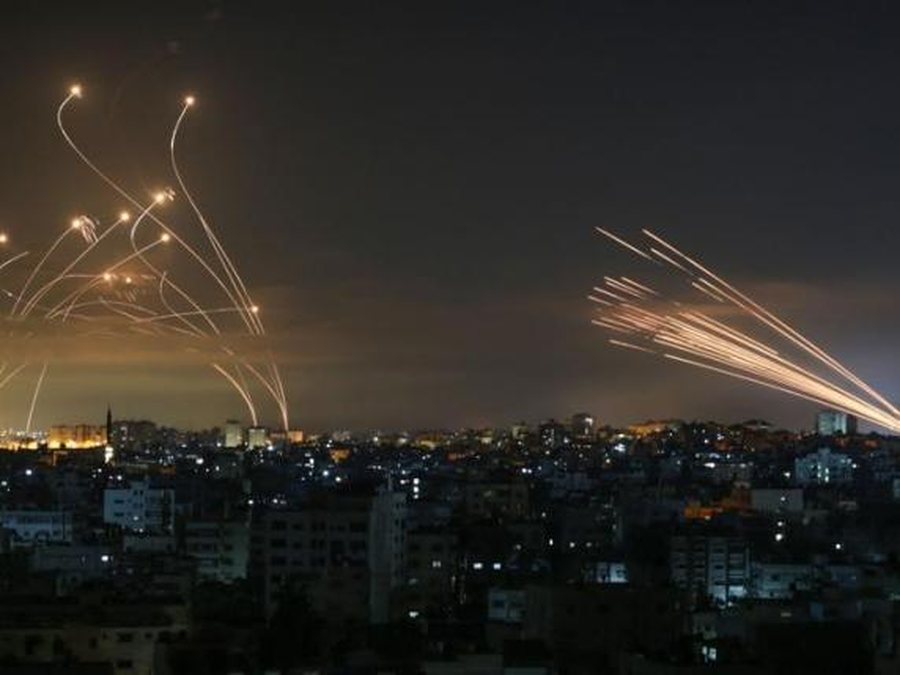
The lesson of modern warfare is that destruction is relatively cheap, while investment in missile defense capabilities is expensive but vital...
I have just returned from the G7 Finance Conference, where the governments of the major democracies are working to make frozen Russian reserves profitable for Ukraine as soon as possible. As this implies an advance in the form of debt from the G7 countries themselves, a somewhat hidden aspect of the discussion concerns contracts for the national defense industry of those countries that will be engaged in the operation. Essentially, the G7 governments will take on new debt to help Ukraine, but they expect this effort to come back to them (partially) in the form of orders for companies in their countries to produce defense equipment that will be shipped to Kiev. I'll say it right away, it doesn't shock me. In the wars of this century, the financial calculation has become – unfortunately – asymmetric. The cost of defense to the attacker is often exponentially higher than the cost of attack to the attacker. Trying to destroy burns much less money than trying not to destroy, so it is necessary to seek all resources in favor of those who are threatened.
The costs of war
The photo you see above is of a well-known event: Iron Dome, Israel's anti-missile system, intercepts rockets fired from Gaza into Tel Aviv. Less well known is the financial reckoning behind such a shootout. According to Air Space & Forces Magazine, the Russian Katyusha rockets routinely fired by Hezbollah, and until recently by Hamas, over Israel cost about $300 each. The Tamir missiles launched by Israel to intercept the Katyushas cost from twenty thousand to a hundred thousand dollars each. And to hit any rocket coming from southern Lebanon in flight, Israel must launch several Tamirs, not just one. In the smallest case, the financial imbalance is 66 times in favor of the attack.
Iran's attack cost at most one hundred million dollars
This algebra of contemporary warfare can naturally be extended. The attack directed by Iran against Israel on the night between April 13 and 14 caused the Tehran regime to launch about 170 drones, costing between twenty thousand and fifty thousand dollars each, as well as just over a hundred ballistic missiles costing approximately one hundred thousand dollars each and cruise missiles estimated to cost between fifty and one hundred thousand dollars each. Total number: In its first direct attack on Israel, Iran is estimated to have burned at most $100 million in assets, but some insiders tell me it was no more than $75 million.
Israel has spent at least a billion dollars to defend itself
Now let's turn the perspective, from a defensive point of view. To intercept Iranian ballistic missiles in flight, Israel launched Arrow missiles, which have a range of over two thousand kilometers and reach a hundred kilometers of altitude in the atmosphere (Arrow 3 are the most modern and efficient interceptors in the world). To stop cruise missiles it launched missiles called "David Slingshot" and to stop drones, other missiles called "Spyder". Total cost: a minimum of a billion dollars spent in one night – but according to some, $1.3 billion – to defend against an attack costing 75 million. Here the financial imbalance between attack and defense is (at least) seventeen times in favor of attack. It is no coincidence that it is estimated that Iran has over three thousand ballistic missiles, capable of rising very high in the atmosphere and then falling at a very high speed; the cost of containing them would put Israel under financial strain.
The cost of Houthi attacks in the Red Sea
If you look elsewhere, you always notice a picture in which modern offense remains much cheaper than defense. The Houthis launch armed drones against merchant ships in the Red Sea estuary, albeit only at a cost of two thousand dollars each or at most Iranian drones, such as those launched into Israel by Iran (which is actually the supplier of their main). But the bullets used by the Americans and Europeans to stop the attacks, equipped with electronic systems to track the target, cost just under two million each. Here the cost of aggression is forty times higher than the cost of defense, in the best case scenario.
The financial asymmetry of the war in Ukraine
If we go to Ukraine and there too the picture of the financial asymmetry of the war presents similar characteristics. It is true that a few hundred dollar Ukrainian drone, if loaded with explosives, can destroy a two million dollar Russian tank (just as a small Iranian-made Russian drone can destroy a $30 million Leopard tank in Kiev). But even here the economics of conflict, in general, tilt in favor of those who attack.
Since 2021, Russia has progressively increased its public spending, in particular military spending, by 90 billion euros per year, and the economy is growing precisely because it is fueled by war production. On the other hand, aid from democratic countries to Ukraine has reached the value of 240 billion euros, while the economy of the attacked country has collapsed by a third.
Imbalance between Russia and Ukraine
I admit, these are not really comparable data, and Russia is also creating internal economic problems, which sooner or later it will pay dearly. But the case of missile defense shows once again the problem of asymmetry. Precisely because these defense systems cost exorbitant amounts and are scarce goods, the West has stopped supplying Kiev with sufficient quantities of them. The result: Andrea Margelletti, president of the Center for International Studies in Rome, estimates that from December to April Ukraine's ability to cover territory from airstrikes dropped from 75% to just over 40%. One consequence is that Russia has managed to damage and paralyze 80% of Ukraine's electricity generation capacity – as the head of the country's energy company explained to me – so the economy is even more paralyzed.
Protection costs more than destruction
The lesson of modern warfare is that destruction is relatively cheap, while investment in missile defense capabilities is expensive but vital. Do Europe and Italy understand this? The short answer is that Europe is worryingly divided at this point and Italy risks being left behind and isolated. Only we Italians, along with the French and Spanish, have so far stayed out of the German-led project called the European Sky Shield Initiative (Esso). This is an initiative launched by Chancellor Olaf Scholz in the summer of 2022, after seeing the damage of the Russian occupation of Ukraine. The German-led project plans to build an air defense and ballistic missile defense system for Europe, which buys the most advanced systems on the market so far; namely the American Patriot missiles and the Israeli Arrow 3 missiles, which are used against Iran's ballistic attacks. Germany is responsible for a significant part of the funding - because it can afford it - and 21 countries have already joined or are about to join the initiative, including Switzerland, Poland and the UK. / Adapted "Pamphlet" from "Corriere Della Sera"






Lini një Përgjigje