


 Shkruar nga Pamfleti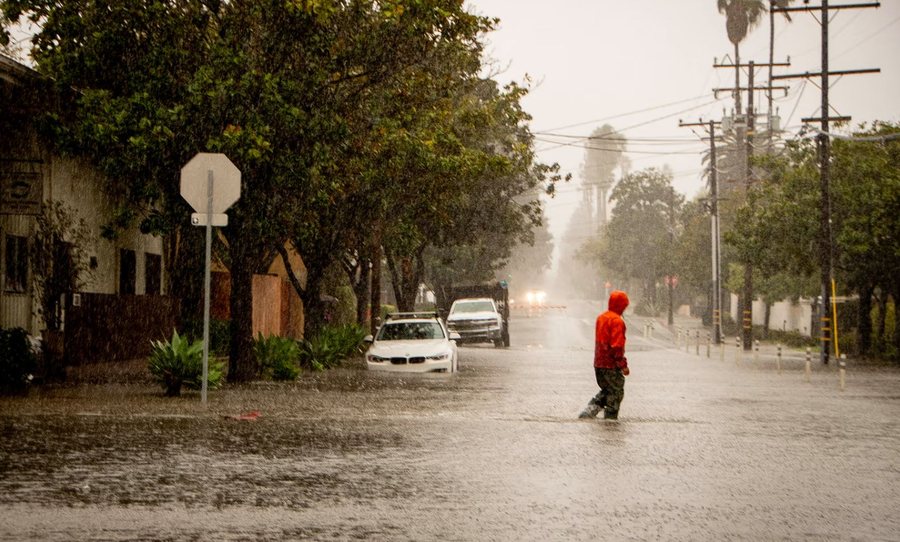
Scientists are shocked by the prolonged and stronger heat on the surface of the oceans.
From the deadly floods in California, to the devastating fires in Chile. Scientists say the world is unprepared for the climate disasters that are striking more often as human-driven global warming continues to break records.
Last year was the hottest on record, but this January is also the hottest ever. Many regions in the Northern Hemisphere are affected by heat waves that will be even more normal in June. Scientists are shocked by the prolonged and stronger heat on the surface of the oceans.
They say the extreme heat is mostly the result of human activity such as burning fossil fuels, coal and deforestation. Added to this, natural factors, in particular El Nino, a phenomenon related to warming in the Pacific Ocean that started last year and is expected to continue at least until Spring.
According to the US National Oceanic and Atmospheric Administration, this year has a one in three chance of being even hotter than last year. The higher the global temperature, the higher the risk of fires and floods. This month alone, we've had two disasters related to climate disasters.
Chile's president, Gabriel Boric, declared two days of national mourning after the country faced its deadliest wildfires that killed 120 people in the Valparaiso region. This follows a decade-long drought in the area and a shift in forest diversity that makes it more vulnerable to fires.
In the US, California Governor Gavin Newsom declared a state of emergency after a river overflowed its banks from the Pacific Ocean, killing at least three people.
Studies are needed to clearly determine the impact if these disasters were caused as a result of human influence on the climate. However, they appear to be in line with a wider trend towards an increase in these severe impacts.
"Driven by extreme weather and climate, the frequency of climate-related disasters has increased significantly in recent years," said Raul Cordero, a climate professor at the University of Groningen and the University of Santiago.
"In some regions of the world, we are facing climate-induced disasters for which we have not prepared and we will hardly be able to fully adapt to them ," he said.
Richard Betts, UK climate change centre, said many extremes, including longer heatwaves, torrential rains, severe droughts and wildfires, are becoming more severe due to human-caused climate change. .
"We can still limit the rate at which extremes get worse if we urgently reduce greenhouse gas emissions to zero, but with global emissions still rising it is still hard not to worry more and more about how we will cope with what is coming." . "From now on we have to adapt to the changes we have caused, and adaptation will become increasingly difficult the longer we leave it to reducing emissions," he said.
Of primary concern is what is happening to the oceans, which cover 71% of the planet and absorb most of the excess heat from global warming. In a newspaper article last month, a group of scientists warned that sea surface temperatures last year were "off the charts", with dire implications for the regulation of the atmosphere and the intensity of storms.
"Warmer oceans increase atmospheric circulation and are associated with extreme events. Record temperatures observed in 2023 have not passed. The planet has not cooled," said Francisco Eliseu Aquino, director of the Center for Climate in Brazil.
While the scientist who monitors the Copernicus satellite in the EU, Francesca Guglielmo, said that 2024 has started as 2023 ended - rain with extraordinary temperatures and extreme events. According to her, there is a good chance that 2024 will set another record in terms of global temperatures, exceeding 1.5 degrees above post-industrial levels for the first time.
Guglielmo said scientists are now examining risks that were previously unthinkable.
"2023 has broken so many records that a number of new hypotheses have been raised, including the start of a new phase in the rate of global warming. These hypotheses were not so widespread a year ago," she said./The Guardian







Lini një Përgjigje