


 Shkruar nga Muiris O’Cearbhaill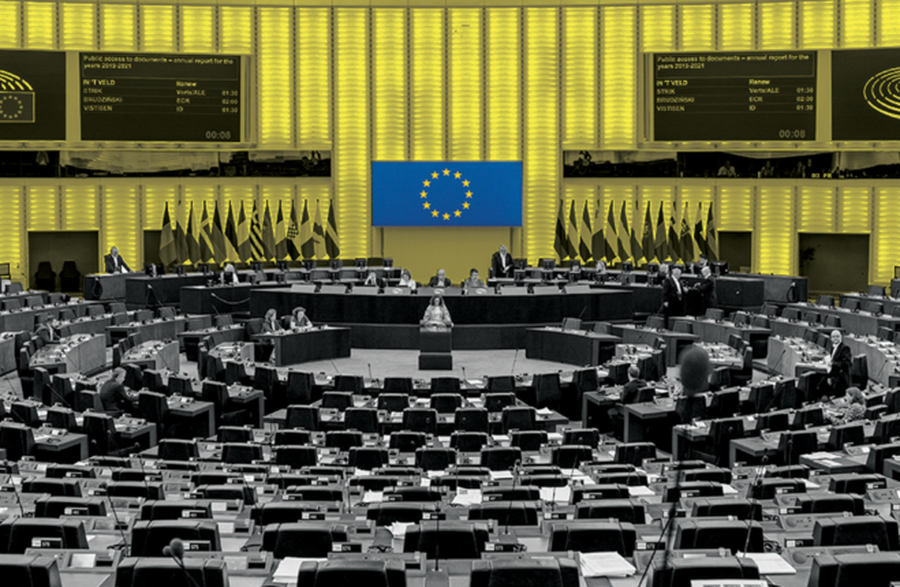
In a cross-border analysis carried out by the Dutch investigative platform Follow the Money, in collaboration with journalists from The Journal, Noteworthy and over 20 other European media outlets (representing a total of 22 member states), it was dug to extract as much as possible “ skeletons in the closet", to determine the level of integrity of the outgoing European Parliament...
Hundreds of legislators of the European Parliament have been involved in public controversies or violated the law during their lifetime. Data collected by The Journal, Noteworthy and other media partners reveals that 25 percent of sitting MEPs have been involved in some form of misconduct at national or international level.
From the analysis, it also results that 23 of them, or 3 percent, were convicted by a court with results ranging from sentences and fines to prison. In December 2022, the EU was exposed to the most serious corruption scandal it had ever faced, when the vice-president of the European Parliament, the Greek MEP, Eva Kaili and 4 other people were arrested on suspicion of taking bribes from Qatar and Morocco.
The scandal that became known as "Catargate", shocked Europe due to the level of corruption. After dozens of searches, the police found 900,000 euros in cash. Around €720,000 was found in a suitcase stuffed with €50 notes, along with a pacifier and nappies for Kaili's 21-month-old daughter.
The investigation into the case is still ongoing today after more than a year. Although all the defendants and the foreign countries allegedly involved in the affair deny all charges, this scandal has all the hallmarks of open corruption: handing over cash to politicians to buy their influence.
This case raised some troubling questions. How could such corruption happen in the heart of the EU? Was this just an isolated incident, albeit a very serious one, or just the tip of the iceberg? In a cross-border analysis carried out by the Dutch investigative platform Follow the Money, in collaboration with journalists from The Journal, Noteworthy and over 20 other European media outlets (representing a total of 22 member states), it was dug to extract as much as possible “ skeletons in the closet", to determine the level of integrity of the outgoing European Parliament.
A total of 253 scandals were discovered from this analysis. We looked at the previous scandals and misconduct of 704 MEPs, from before they first entered politics, to the end of this month. Of course, cases differ in their weight.
Take, for example, the relatively minor scandal of Estonian MEP Jaak Madison, who was fined 100 euros for selling a phone found while working on a ferry almost a decade ago, instead of handing it over to the company.
In Ireland, independent MPs Mick Wallace and Clare Daly were criticized by parliament after they refused to show proof that they had been vaccinated against Covid-19 when they entered the parliament building in Brussels in 2021. However there are some politicians with serious criminal records such as Lara Comi, MEP of Forza Italia who was sentenced in October last year to 4 years and 2 months in prison for extorting 500,000 euros of state funds.
She appealed the decision and is still in office as an MP. Meanwhile, there are several MEPs belonging to the far-right Greek party Golden Dawn, still under investigation since it was labeled a criminal organization by an Athens court in 2020. One of the party's leaders, MEP Ioannis Lagos, was convicted of running a criminal organization in 2021 and was sentenced to 14 years in prison.
Lagos is still an active EU lawmaker from his prison cell in Greece, participating in the parliament's work via online phone connections. But apart from corruption, sexual harassment is a notorious problem in Brussels. We uncovered 46 cases involving 37 lawmakers who made headlines for alleged misconduct.
Of the 45 corruption cases collected from this extensive investigation, two types stand out: favoritism (such as nepotism, cronyism and patronage) with 29 cases, and outright bribery with 16 cases. "Katargate" is the most sensational, but not the only scandal where EU legislators embezzled large sums of money.
Hungarian MEP Tamás Deutsch has been accused of favoritism since he was appointed head of the European parliamentary delegation of Hungarian Prime Minister Viktor Órban's Fidesz party.
Nearly 10 years ago, he and his brother took over the management of the MTK football club, which suddenly started receiving millions of euros in state funding.
Meanwhile, Bulgarian MEP Sergei Stanishev was accused of corruption after his wife's PR company won a €60,000 contract from the European Parliament for a project to promote European elections. Both denied the accusations, but Sanishev's wife withdrew from the project and returned the amount that had been paid in advance of almost 30,000 euros.
The issue of corruption and subjection to foreign influence is gaining ground in a multipolar Europe and a world full of conflicts and on the verge of geopolitical reconfiguration. This problem is so widespread that the European Parliament has taken measures to draw up a "black list" of several MEPs, so that they do not participate in election observation missions.
Considering MEPs' high salaries and allowances - the group earns around €8,000 a month, after tax, and can claim almost €5,000 in overheads - any money issue will shake people's faith in their representatives. The team detected a total of 44 incidents of fraud and theft.
Nick Aiossa, director of Transparency International EU, said the MEPs' overhead allowance scheme - amounting to more than €40 million in total per month for more than 700 MEPs - could easily be abused.
He added that there is no supervision or management for this funding.
In a highly significant example, the far-right French party Rassemblement National allegedly submitted false employment data on non-existent parliamentary assistants, misusing €6.8 million in public funds. This case is expected to be tried in the French Criminal Court in November of this year. Aiossa says that the European Parliament is negligent towards abuses of additional funds.
"I think there are more cases. If you break the rules, you will not be penalized. There is an unhealthy tendency to see these cases only as a financial administrative irregularity" - she emphasizes. When the MPs spend the money for undeclared purposes, the EP makes a notification to the MEPs requesting the return of the money. But it doesn't take the second step: Is this a deliberate hoax?"
"Follow the Money" found that between 2019-2022, a total of 108 MEPs were forced to pay more than €2 million in total, which had been embezzled by their aides. Who these MEPs are and which cases contain criminal intent remains largely hidden as Parliament does not comment on such matters.
In 2021, Polish MEP Ryszard Czarnecki was asked by parliament to return around €100,000 worth of travel money after it was discovered he was adding an extra 340km to the paper every time he traveled from Brussels to Poland. The criminal prosecution against Czarnecki continued for more than 4 years.
But even when a case is investigated by the European fraud watchdog, OLAF, its recommendations do not often lead to prosecutors being able to convict the suspects. Aiossa of Transparency International EU, says: “The average prosecution rate according to OLAF's recommendations for prosecutors in 27 member states is around 33 percent.
So very low, considering that these cases are based on months or years of investigations".
One in five cases in our database are linked to MEPs who do not belong to any political group. But the data suggests that right-wing and conservative MPs are relatively more likely to engage in misconduct when compared to other opposition politicians. /Adapted "Pamphlet" from "The Journal"


Lini një Përgjigje