


 Shkruar nga Pamfleti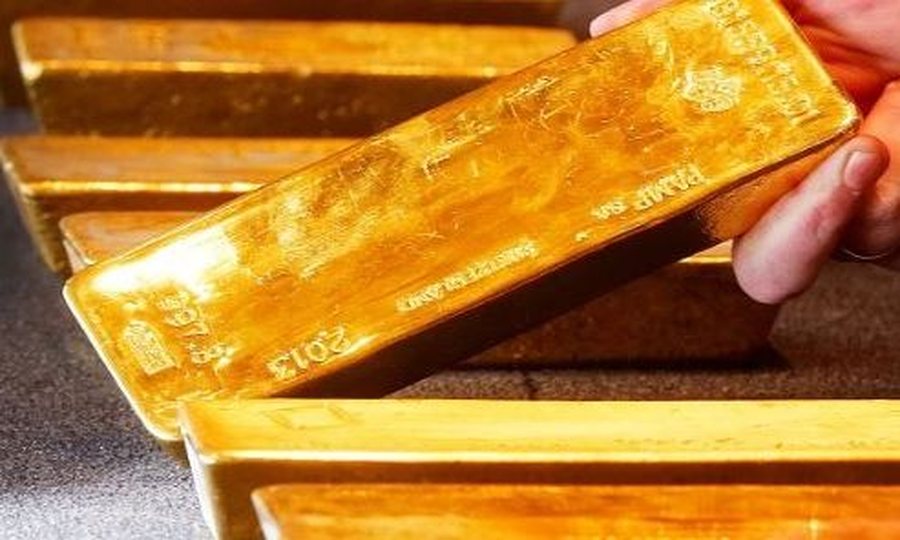
As the Trump administration continues its provocative rhetoric, European trust in the US government is waning. Between threats of tariff restrictions and promises to invade Greenland, citizens and politicians in Europe are worried, questioning a long-standing alliance.
Marie-Agnes Strack-Zimmermann (FDP), chairwoman of the Defense Committee in the European Parliament, claims to have an answer that is "worth its weight in gold," a literal rather than figurative expression in this case.
Some 1,236 tons of German gold, worth more than 100 billion euros, are in vaults in the US. Zimmermann has now announced that in light of Trump's recent political maneuverings, it is no longer justified to leave the gold to chance.
This has reignited a heated debate: should we take it back or not?
The demand to return gold to Germany has long been present, with some polls suggesting that many citizens support the move. Similar discussions are taking place in Italy, which has the third-largest gold reserves in the world after the United States and Germany.
Why does Germany own gold in the US?
Germany's gold reserves amount to about 3,350 tons. About 36.6% of this amount is in the US, a legacy of the Bretton Woods system of fixed exchange rates after World War II.
“At that time, all exchange rates were linked to the dollar and the dollar was linked to gold,” Dr. Demari, senior economist for Monetary Policy and Financial Markets at the German Economic Institute (IW), told Euronews.
“Germany had huge export surpluses with the US, so we accumulated a lot of dollars. To keep the exchange rate stable, we exchanged those dollars for gold. That’s how these reserves were created.”
During the Cold War, it was also practical to store gold abroad, as the United States was considered a safe haven in the event of a conflict with the Soviet Union. Over the years, some of the gold has been repatriated. By 2017, 300 tons had been returned from New York, 380 tons from Paris, and 900 tons from London.
This was part of a Bundesbank plan, revealed in 2013, to store half of its German reserves in Germany from 2020 onwards.
Gold Repatriation: What are the Risks?
Strack-Zimmermann and other politicians and economists cite Trump's unpredictable trade and foreign policy as the main reason for the move of gold from the US. "Of course, there is always some risk when holding assets abroad," Demari said. For example, there is the risk of storage in the event of a theft. But this risk exists regardless of whether the gold is stored abroad or in Germany.
“Another possible scenario is that the US government, due to limited foreign exchange reserves, could block the transfer of gold,” he explained. To ensure the safety of gold reserves, Bundesbank officials have had to make frequent trips to New York in the past to take inventory.
"It makes sense to leave this gold in the US in case we have a banking crisis here and we need to get dollars," Demari said.
Mining gold can not only be logistically complicated, but also dangerous.
"The gold would have to be transported in armored vehicles to a ship, which would also have to be guarded, and then returned to Frankfurt under security," Demari added, adding "there could be robbery, the ship could sink or the cargo could be seized."
Is Zimmermann's demand populism?
Is Strack-Zimmermann's request purely political? "I think so," says the economist. "Maybe it was a symbolic move in response to tariff threats, a statement like 'We're repatriating our gold now.'"
According to the economist, it is also possible that Strack-Zimmermann has overestimated the size of this gold value. However, the gold is currently safe in New York, even if Trump would like to use it to put pressure on Germany.
"The US Federal Reserve is actually independent in its monetary policy. The US government cannot simply intervene. It would have to change the laws first," Dr. Demari explained.
Even in the worst-case scenario, if the US refuses to hand over the gold, there will still be the option to go to court and force its return or receive compensation in dollars, he said. “You have to weigh the pros and cons and I would say the advantages of leaving the gold in the US outweigh the disadvantages,” he told Euronews.








Lini një Përgjigje