


 Shkruar nga Pamfleti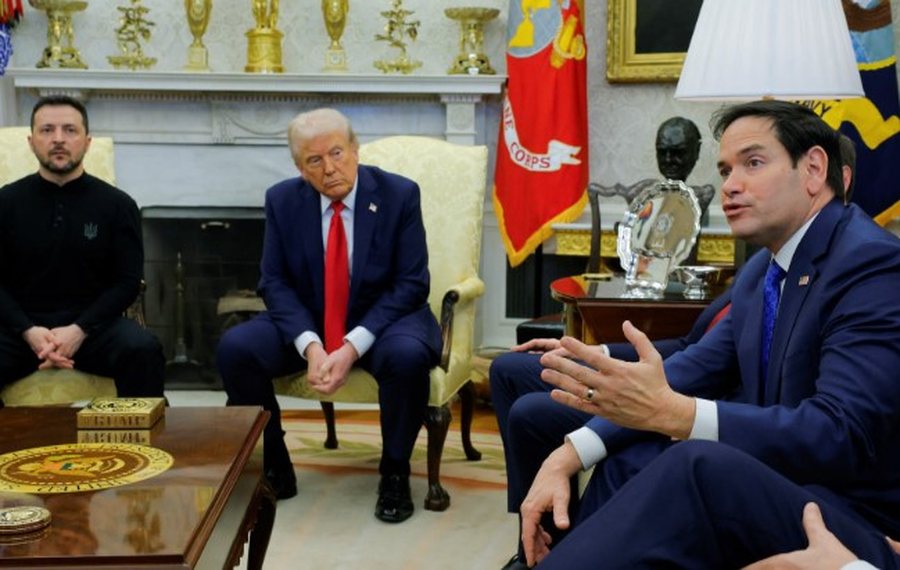
A key meeting in London aimed at ending Russia's war in Ukraine is no longer as important as it was when US Secretary of State Marco Rubio announced he would not attend the summit, escalating a standoff between Washington and Kiev over the future of Russian-occupied Crimea.
Rubio was expected to participate in discussions with Ukrainian, British and European officials, but State Department spokeswoman Tammy Bruce said Tuesday that he will no longer participate due to “logistical issues.”
Then, on Wednesday, the Foreign Office in London confirmed that the meeting had been postponed. “The talks at the official level will continue, but they are closed to the media,” the department said in a message to reporters.
Meanwhile, on a visit to India on Wednesday, US Vice President JD Vance told reporters: “We have put forward a very clear proposal to both the Russians and the Ukrainians, and the time has come for them to say yes or for the US to withdraw from this process. We have made a tremendous diplomatic and on-the-ground effort.”
President Donald Trump's special envoy for Ukraine and Russia, Keith Kellogg, will represent the U.S. in London in place of Rubio, Bruce said. The talks follow a meeting in Paris last week, where officials from the U.S., the U.K., France and Germany discussed a U.S. framework for a ceasefire.
The proposal includes recognizing Russia's control over Crimea, the southern Ukrainian peninsula illegally annexed by Moscow in 2014, an official familiar with the framework told CNN. It also includes a ceasefire along the war's front lines, the official said.
Any move to recognize Russia’s control over Crimea would overturn a decade-long U.S. policy.
Ukrainian President Volodymyr Zelensky made clear on Tuesday that he was open to talks with Russia but that Kiev would not accept a deal that recognizes Moscow’s control over Crimea.
“Ukraine will not legally recognize the occupation of Crimea,” he told reporters. “There’s nothing to talk about. It’s against our constitution.”
Rubio said in a post on X that he had a “productive conversation” with British Foreign Secretary David Lammy, who is hosting Wednesday’s meeting, and that he “looks forward to following up” with the United Kingdom and Ukraine at a later date.
Meanwhile, the fighting has resumed in full intensity this week, following an unexpected ceasefire over the Easter weekend, which both sides accused each other of violating.
On Wednesday, Ukrainian authorities said nine people were killed and at least 30 were injured when a Russian drone hit a bus carrying workers near the town of Marhanets in the Dnipropetrovsk region. Russia's National Guard said it destroyed 17 Ukrainian attack drones overnight, state news agency Tass reported on Wednesday.
Difficult discussions
The talks in London come after public statements by US officials, who have expressed disappointment at the lack of progress in efforts to end the war.
Trump has said he would "have to see an enthusiasm to get it done" from both sides for the US to continue negotiations, following Rubio's warning last week that Washington could withdraw from efforts to end the conflict if there were no signs of progress.
The broad framework has been presented to both sides, Rubio and the State Department said, to assess whether differences can be narrowed in the short term. There are still parts of the framework that need to be completed, and the U.S. plans to work with the Europeans and Ukrainians on that this week, an official told CNN.
Trump’s Middle East envoy, Steve Witkoff, is expected to travel to Moscow this week to continue negotiations with Russian President Vladimir Putin, the White House said Tuesday. The Kremlin confirmed Witkoff’s visit but gave no further details, according to Russian state media.
White House spokeswoman Caroline Leavitt said Tuesday that the negotiations “hopefully are moving in the right direction” and declined to say what a “withdrawal” from peace efforts would look like for the United States.
Moscow has previously delayed ceasefire negotiations and rejected an earlier US proposal for a 30-day ceasefire accepted by Kiev.
However, under pressure from Trump, Ukraine and Russia have expressed a willingness to negotiate for the first time in years; the two sides have not held direct talks since the early weeks of Moscow's occupation in 2022.
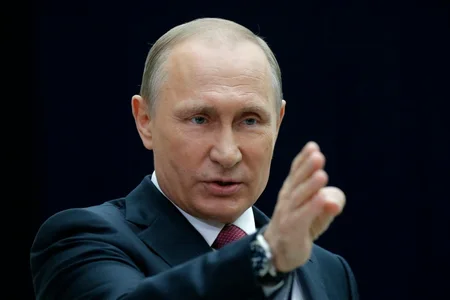
On Monday, Putin floated the idea of holding direct talks with Ukraine on a ceasefire that would stop the hitting of civilian targets, but said further discussion was needed on how a civilian target is defined.
Kremlin spokesman Dmitry Peskov later confirmed the Russian president's statements, saying that "(Putin) had in mind negotiations and discussions with the Ukrainian side," Reuters reported, citing the Russian news agency Interfax./ The Guardian



Lini një Përgjigje