


 Shkruar nga Pamfleti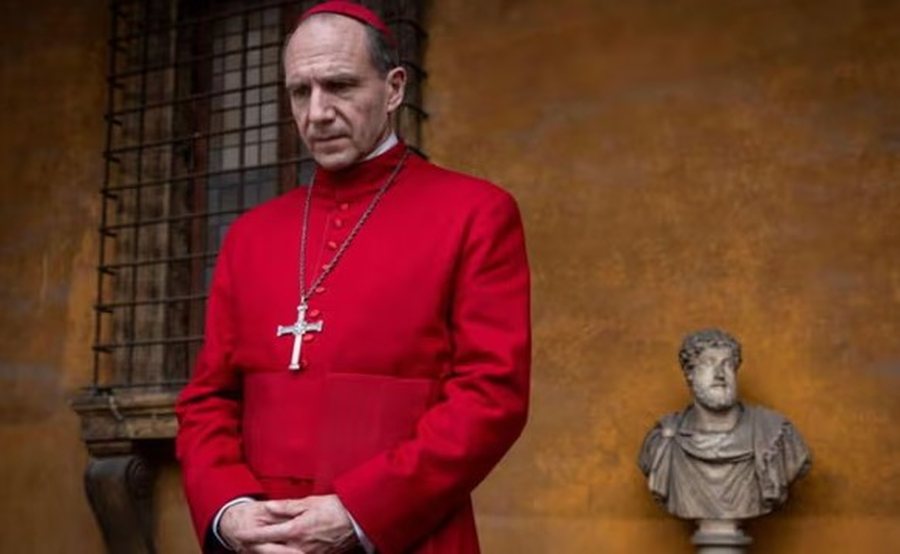
After the sad news of Pope Francis’ death at the age of 88, the first thought that came to mind was closely related to the “Conclave” — the secret process of electing a new Pope that has taken place in Vatican society for centuries. This process has always attracted the world’s interest and has long been a mystery shrouded in secrecy and ancient rituals.
Meanwhile, this process has been brought to the big screen through the film of the same name, "Conclave," which offers an in-depth and dramatic look at this important and complicated procedure.
The film “Conclave,” directed by Eduard Berger, offers a stunning and profound depiction of a process that is both sacred and political. One of the most powerful features of this film is that it gives viewers the opportunity to see and experience as an outside observer, but with a dramatic and entertaining approach, the process of electing a Pope.
Set within the sacred chapels of the Vatican, as cardinals gather to discuss and decide on the next leader of the Catholic Church, this film makes the papal election process seem like an intriguing thriller, filled with tension, shifting political dynamics, and powerful vested interests.
In terms of accuracy, the film has been praised as a thoroughly studied and well-researched effort, using interviews with real cardinals and a detailed replica of the Sistine Chapel at Cinecittà studios in Rome. Experts have praised the film for successfully recreating many of the detailed and secretive aspects of the Conclave, including the regulatory processes and some of the rituals that accompany this sacred event.
"They got a lot of the details right," said Kathleen Sprows Cummings, a historian of Catholicism who has closely followed the election of Pope Francis in 2013.
One of the most interesting aspects of this film is the portrayal of the different factions of cardinals competing to secure support for their candidate.
The film offers a detailed portrayal of individuals representing the conservative and liberal wings of the Church, who are often involved in secret conversations and maneuvers to gain support. This portrayal has sparked great discussion about the nature of papal politics and the powerful efforts that are made to secure a majority for a particular candidate.
“The Cardinals don’t fall neatly into the progressive and conservative camps… overall, it’s much more of a mixed bag,” said Bill Cavanaugh, professor of Catholic Studies at DePaul University.
Also, a unique aspect of the film is the way the conversations and maneuvers within the Conclave are handled. In a process that is traditionally secret and separated from the media and public opinion, “Conclave” offers an in-depth look at the informal conversations and political games that take place before a decision is reached on a new pope.
Cummings, an expert on Catholicism, said the film did a good job of capturing "accounts of the conversations that take place before a conclave," offering a candid account of the cardinals' efforts to drum up support for their candidate.
Several of the characters in the film represent different archetypes, including Cardinal Goffredo Tedesco, an Italian conservative, and Cardinal Aldo Bellini, a liberal passionate about reform. This depiction of the ideological divide within the Catholic Church is one of the elements that makes the film both compelling and fraught with tension. They represent different elements of the Church, who struggle to maintain a balance between tradition and the need for progress, but also face the challenges posed by the changes of modern society.
However, the film is not without inaccuracies, such as the presentation of Cardinal Benitez, a Mexican cardinal, as a hidden papal candidate who could not have been present at the Conclave, and Fiennes' role as the pope being confused with that of the Camerlengo, the figure responsible for administering the pope's successor after his death.
To a certain extent, the film does this to create a fitting and exciting drama, but a large part of it is still a successful attempt to deliver a fitting and engaging experience for viewers.
Despite these inaccuracies, “Conclave” is a film that represents a great opportunity to better understand the process of the Conclave and the election of the Pope. It offers a deep insight into an important and much-discussed event, but one that is often filled with mystery. As Cummings has pointed out, “They are caricatures, of course, but they also capture something that is true.” /The Guardian


Lini një Përgjigje