


 Shkruar nga Pamfleti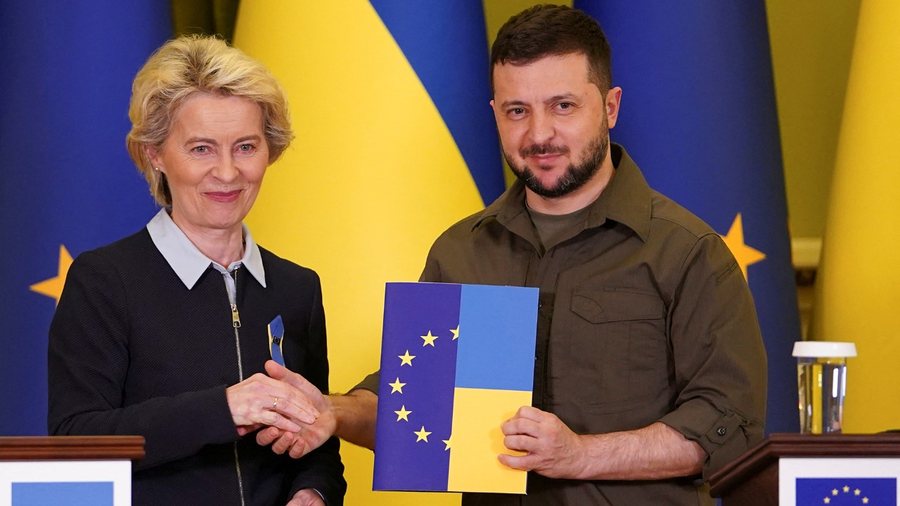
The European Union has officially launched the written procedure to approve the massive 90 billion euro loan for Ukraine and the 20th package of sanctions against Russia, ending a months-long deadlock caused mainly by Hungary.
The procedure began on Wednesday afternoon during a meeting of member states' ambassadors in Brussels. Member states have up to 24 hours to register any objections. The incoming presidency of the Council of the EU, held by Cyprus, expects the procedure to be completed on Thursday afternoon, when the final decision is expected to be announced.
EU diplomats are confident that the approval will go through without serious obstacles. Although Hungary and Slovakia had vetoed the deal over the Druzhba oil pipeline, the situation has changed dramatically since the pipeline was repaired and political changes in Budapest. Ukrainian President Volodymyr Zelensky said on Tuesday that the Soviet-era infrastructure, damaged in late January by Russian drone strikes, has been fully repaired and is ready to resume operations. Oil flows are expected to resume in the coming hours.
"The EU asked us to repair the Druzhba oil pipeline, which was destroyed by Russia. We have done it. We hope that the EU will also fulfill its commitments ," Zelensky said in his evening speech.
The €90 billion loan had been blocked for months by outgoing Hungarian Prime Minister Viktor Orbán, who accused Kiev of “politically” disrupting oil flows. Orbán had made the dispute a central theme of his re-election campaign. However, he was soundly defeated by opposition leader Péter Magyar, who promised to restore the rule of law, improve relations with the EU and unblock the blocked funds.
The Magyar victory paved the way for breaking the blockade. Orbán, now on the move, has signaled that he will lift his veto once the oil starts flowing again. The 20th package of sanctions against Russia, which includes a complete ban on maritime services for Russian oil tankers, was also blocked by Hungary and Slovakia because of Druzhba.
Slovakia has said it will lift its veto once flows resume. The restoration of the Druzhba pipeline, which supplies Hungarian and Slovak refineries with cheap Russian oil, has been key to resolving the impasse. Diplomats believe a deal is now almost certain.
The approval of the large loan will provide significant liquidity to Ukraine for 2026–2027, helping it meet military and economic needs in the midst of the war.


Lini një Përgjigje