


 Shkruar nga Pamfleti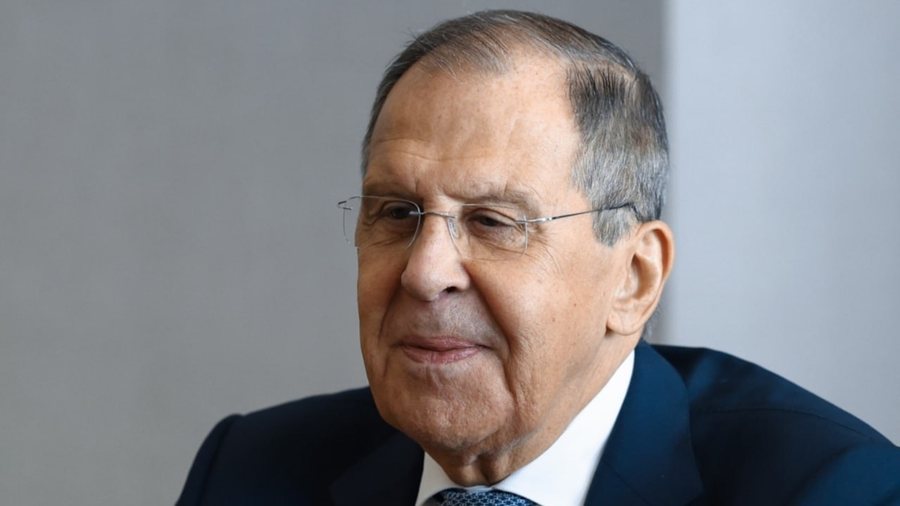
There were two important questions on the eve of the ministerial meeting of the Organization for Security and Co-operation in Europe (OSCE) that will take place on November 30 and December 1 in Skopje.
First, will one of the 57 member countries' representatives - Russian Foreign Minister Sergey Lavrov - appear in it? And, secondly, who will take over the one-year chairmanship of the OSCE, after North Macedonia?
The two questions are, in a way, related. But in both cases, on the eve of the meeting, Russia came out on top, because it used its veto to ensure both the leader it wanted and the presence it needed to show the domestic and international audience that she is still a political player to be reckoned with.
It is worth remembering that at the previous ministerial meeting of the OSCE, which was held last December in the Polish city of Llozh, Poland did not allow Lavrov's presence. Warsaw, head of the OSCE in 2022, noted that Lavrov was on the EU's sanctions list because of Russia's invasion of Ukraine, which began in February of that year. Poland acted on its own and announced its intentions a few weeks ago - which its Ministry of the Interior was right to do.
This right also applies to North Macedonia. The EU candidate country has so far complied with all EU sanctions against Russia - including all individual measures against Russian officials and the ban on Russian flights. But, in this case, there is a catch: the EU has only frozen Lavrov's assets and has not imposed a visa ban on him.
Even if there was a visa ban, it could be lifted by EU member states and allied countries, such as North Macedonia , for participation in international conferences, such as the OSCE ministerial meeting. The same applies to Russian flights if they, for example, carry important Russian diplomats. In other words, Lavrov can be welcomed in North Macedonia and this country does not violate any legal or political obligations.
North Macedonia confirmed it would allow Lavrov's plane to land, while Bulgaria gave him permission to use its airspace en route to Skopje.
OSCE sources said the Russian delegation could include up to 85 people, including the Foreign Minister's personal doctor, his deputy, Aleksandr Grushko, Foreign Ministry spokeswoman Maria Zakharova, security personnel and 24 Russian journalists. .
Skopje took this decision on its own, but it is clear that it meets the wishes of the majority of OSCE members, who argued that Lavrov's presence this time could be useful.
In addition to the possible confrontation with him over Ukraine, OSCE diplomats - on condition of anonymity - pointed to another reason for having him: resolving the issue of who should take the presidency next year and filling the four main positions of OSCE, including that of the secretary general, whose mandate will be renewed at the end of the year.
Estonia has long been the only candidate to hold the presidency in 2024. It applied as early as 2020, but Russia repeatedly rejected it and did so again this year.
Moscow's argument is that it does not want to lead another NATO country, after North Macedonia and Poland. Russia says the two countries have repeatedly raised the topic of "Russia's continued aggression against Ukraine" at the OSCE Permanent Council - where ambassadors meet - and that the pair, in various OSCE forums, have rejected the idea that there can be "business as usual" as long as the conflict continues.
The issue recently came to light in Vienna, where the OSCE has its headquarters. Some sources said the Russian representative appeared there without a tie, lecturing the people present on how the organization should be run.
Normally, the chairmanship of the OSCE is decided at least one year in advance, with unanimity among the member states. It would be unprecedented for the OSCE to enter a new year without a country at the helm - which could lead to the collapse of the entire organisation.
For the year 2025, it has already been decided that Finland will chair the OSCE, to mark the 50th anniversary of the Helsinki Final Act of the Conference on Security and Cooperation in Europe, which was the predecessor of the OSCE. But this was a decision that was made long before Finland became a member of NATO.
Estonia, for a long time, did not withdraw its candidacy, as it had the full support of the other 26 EU member states - including that of the bloc's foreign ministers when they met in Brussels on 13 november
In the end, Tallinn had to give in and Malta expressed its willingness to take over the leadership.
The fear of entering 2024 without a leading country grew in Vienna, especially when considering that the country in this position has a very important role in daily affairs, mediating consensus, leading meetings of all levels and setting priorities .
The difficulties for Tallinn became more apparent when a US political memo addressed to EU member states stated that "the US appreciates Estonia's willingness to serve as chairman in 2024 and supports Estonia as a candidate principled and capable of future leadership". But, in the first document from REL, it was also stated that "Russia has made it clear that it will not join the consensus for another NATO member as chairman".
"The OSCE must urgently identify a country capable of gaining consensus to serve as chairman in 2024. A failure to do so is a victory for Russia," the document said.
And the question is: did the Western countries give Russia a victory or two, giving in to its wishes for the high-level presence and for the removal of Estonia's candidacy?
The Kremlin does not mind Malta's chairmanship, but would like Lavrov to confirm this at the ministerial meeting in Skopje. He has also not yet said yes to filling the top four OSCE posts for another year - something he would like to do in the Macedonian capital, but likely not without asking for something in return. What that might be is anyone's guess. But reducing OSCE criticism of Russia's war in Ukraine would not be a wild guess.
In the end, it looks like the OSCE - the only international organization in Europe of which Russia is still a member - will live another year. But some, including the three disgruntled Baltic states, Poland and Ukraine, will ask at what cost and point out that Moscow has disrupted the OSCE's work on several occasions in recent years, blocking, for example, its three field missions to Ukraine and the entire OSCE budget in the last two years - which it is likely to continue to do.
However, the outlook in Skopje will not be good for Kiev and its biggest supporters, as Russia will return to the highest political level in an organization where it can still dictate any significant moves. As a result, Ukraine's foreign minister, Dmytro Kuleba, has already announced that he will not attend, and others may follow suit.


Lini një Përgjigje