


 Shkruar nga Giulia Belardelli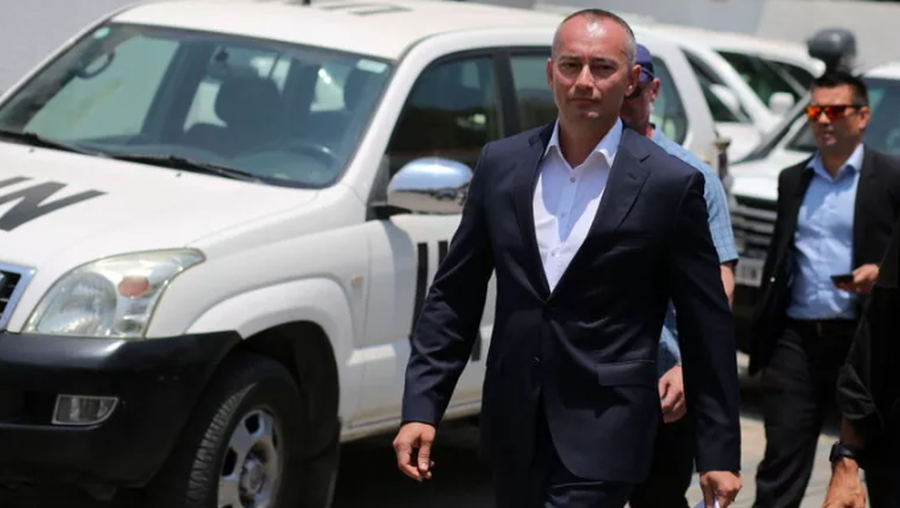
Bulgaria's Mladenov will head the Peace Council, made up of leaders and high-ranking figures from various countries, tasked with overseeing the Palestinian committee that will administer Gaza. The issue of Hamas's disarmament remained unclear, while Israel has plans ready for a new offensive...
Amid ceasefire violations, reprisals and extremely difficult living conditions, the population in Gaza is finding it difficult to imagine the future. The Strip has been reduced to rubble as the Israeli military has continued to demolish more than 2,500 structures since the ceasefire went into effect in October, according to a New York Times analysis based on satellite imagery from Planet Labs.
But despite the fragility of the ceasefire and the uncertainties over Hamas's disarmament, what was announced today by American officials represents a glimmer of hope, the only one at the moment, for thinking about a path to reconstruction of the war-torn territory.
This is the beginning of the second phase of the so-called “Trump plan,” which envisages a transition from cessation of hostilities to governance and reconstruction of the territory. According to the plan, a Palestinian technocratic body (the National Committee for the Administration of Gaza), supervised by an international “Peace Council,” would be tasked with governing Gaza for a transitional period.
A key role will be played by Nickolay Mladenov, former UN envoy for Middle East peace and former Bulgarian Foreign Minister, appointed as the high representative of the Peace Council, chaired by Trump himself, with the task of overseeing the implementation of the plan.
The 14-member Palestinian committee will be led by Ali Shath, a former deputy minister in the Western-backed Palestinian National Authority who was previously responsible for the development of industrial zones. Other members selected by Mladenov include figures from the private sector and non-governmental organizations. Hamas and its rival Fatah, led by Palestinian President Mahmoud Abbas, have approved the list of members.
In theory, the committee of Palestinian technocrats would be responsible for the day-to-day management of the enclave, including sanitation, public services and education. A titanic task, in a territory where nearly 2 million displaced people live (almost the entire population of the Strip lives in makeshift tents or damaged buildings).
The Peace Council, made up of a dozen world leaders and headed by Mladenov, will provide oversight and “high-level guidance.” Trump initially proposed former British Prime Minister Tony Blair, but the Arab world rejected him, citing his role in the disastrous 2003 invasion of Iraq and his failures as a representative of the “Quartet” (the UN, EU, US and Russia).
In the end, the Bulgarian Mladenov, a former UN envoy to the Middle East who has often worked to ease tensions between Israel and Hamas, was chosen. A somewhat surprising choice, considering that he was the director of the Open Society Foundations in Sofia, part of the global network of philanthropic foundations founded by investor George Soros, whom Trump has called his “absolute enemy.”
His name was proposed by the United Arab Emirates, and Trump accepted him largely because of the trust he enjoys with both Israelis and Palestinians. In fact, Mladenov has a long experience in Middle East politics. He was the UN's chief envoy to Iraq (2013-2015), before Ban Ki-moon appointed him as the UN's top Middle East envoy.
During those years, he helped quell cross-border violence between Israel and Hamas and supported the idea of a negotiated solution to the conflict. In Bulgaria, he was Minister of Defense for a year and then Minister of Foreign Affairs (2010–2013), during the Arab uprisings and the beginning of the Syrian civil war.
In 2012, he organized the first meeting of the Syrian opposition in Sofia, which brought together various factions against the Assad regime. For his efforts for peace, in February 2021 he received the “Grand Star of the Order of Jerusalem”, awarded by the Palestinian president. “He knows us and the Israelis very well, which is a great advantage,” said Ahmed Majdalani, a former Palestinian minister and member of the PLO Executive Committee.
Mladenov currently lives in the United Arab Emirates, where he directs the Anwar Gargash Diplomatic Academy.
He holds a master's degree in War Studies from King's College London and a master's degree in International Relations from the University of National and World Economy in Sofia.
Under the ceasefire agreement, the Council he heads is supposed to oversee everything: the new technocratic Palestinian government, the disarmament of Hamas, the deployment of an international security force, further withdrawals of Israeli troops, and reconstruction efforts.
The issue of Hamas disarmament remains the biggest obstacle. The group has not yet clarified whether or how it will disarm. The race for Hamas leadership outside Gaza is between Khalil Al-Haya, who opposes disarmament, and Khaled Mashal, who is more open to compromise with Israel.
Meanwhile, the current leader in Gaza, Ezzedine Al-Haddad, maintains a tough stance against disarmament. According to the Wall Street Journal, Israel is very skeptical and is preparing plans for a new military offensive in March. Another uncertainty relates to the composition of the “International Stabilization Force” (ISF), tasked with maintaining order in Gaza after Hamas hands over power.
Indonesia and Morocco have pledged to contribute troops, but the Trump administration has not yet announced the size of the force. Many countries discussing involvement have stressed that they do not want their troops to be asked to forcibly disarm Hamas.
These are the dangers and resistances that Bulgarian Mladenov will have to face, in a situation where the civilian population, hit by bad weather and the consequences of war, continues to pay the highest price. In recent hours, strong winter winds have demolished hundreds of tents and makeshift shelters, killing at least 4 people, including a little girl.
Gaza health authorities said Tuesday that a one-year-old child died of hypothermia overnight, while a spokesman for the United Nations children's agency said that over 100 children and adolescents have been killed by "military means" since the ceasefire began. / Taken from "Huffington Post Italia" , adapted by "Pamphlet"


Lini një Përgjigje