


 Shkruar nga Pamfleti
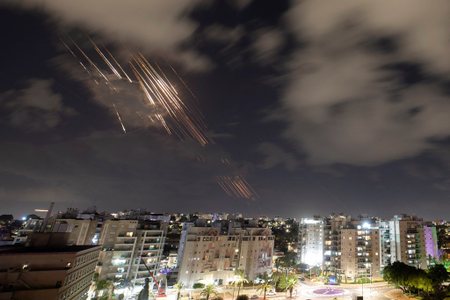
The US protects Israel from enemy drones and missiles, but fails to secure its airspace...
The most important US military bases have been "visited" several times from the sky by swarms of mysterious drones, possibly as part of espionage operations carried out by China and Russia.
The Pentagon, which has often succeeded in intercepting and shooting down enemy drones in the Middle East, appears strangely unprepared for incursions at home. Investigations into repeated incidents of restricted airspace violations appear incomplete. Regulations in force on national territory make it difficult, if not impossible, to capture or destroy flying objects.
At least three of the most important US military bases have been visited by unknown drones in the past twelve months: in Norfolk, Virginia, the largest naval base in the world (which also hosts the only NATO headquarters on US soil ); in Langley, also in Virginia, an air base that maintains some of the most advanced aircraft of the US Air Force (F-35, F-22 Raptor), and finally a nuclear base in Nevada near Las Vegas. A report summarizing all these episodes was published on the front page of the Wall Street Journal. Some overflights were systematically repeated and simultaneously involved up to a dozen drones: automatic, unmanned devices, which in these images were about seven meters long, flying at 160 kilometers per hour, at an altitude of over a thousand meters.
As had already happened at the beginning of last year during the Chinese "spy balloon" episode, the American armed forces proved unprepared. Intelligence appears unable to prevent these drone incursions, nor has it provided an official explanation for their origin and use. The ability to shoot them down and inspect their remains is severely limited by the constraints the military faces to protect civil aviation and the safety of the American public.
For example, the hypothesis of using "electronic warfare" tools to interfere with the automatic piloting systems of drones is almost out of the question, due to the risk of inadvertently hitting the Wi-Fi networks on which essential services such as calls are based of emergency for ambulances and firefighters.
Another option would be to use "directed energy," a cutting-edge technology that can disable and shoot down drones, but civil aviation regulations rule it out because of the risks to scheduled flights. Similar problems prevented the Chinese spy balloon from being intercepted and shot down for a long time, for example the fear that it would crash into a city (the military ultimately had to wait for it to fly over the ocean before hitting it on February 4, 2023).
As for the police investigation, so far only one "small fish" has ended up in the net: a Chinese student enrolled at the University of Minnesota, Fengyun Shi, was arrested while remotely piloting a drone near Langley Air Force Base. During the trial it was not possible to demonstrate the connection with the Beijing government or Chinese espionage. She received a light sentence, six months in federal prison. The drone that Shi was operating was purchased from an American supermarket chain, Costco.
The same judge who handed down the final verdict expressed displeasure, admitting that the trial had not shed light on Shi's true story and her motives. Congress has only recently begun to discuss the need to adapt national regulations to account for new threats. At the moment, the Pentagon is faced with its impotence: it is easier for it to intercept Houthi drones launched from Yemen against ships moving in the Red Sea than to protect military bases on American soil from espionage. / Adapted "Pamphlet" from "Inside Story"




Lini një Përgjigje