


 Shkruar nga Sinan Ciddi
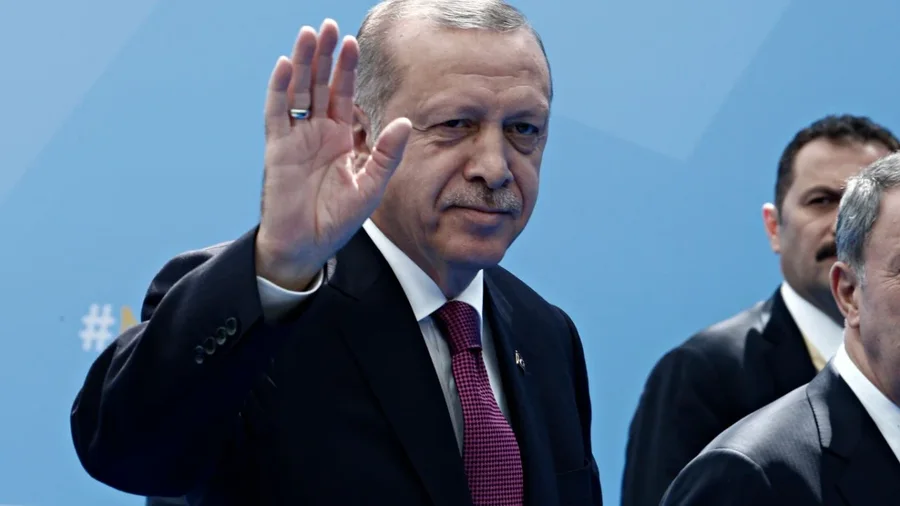
Erdogan and his cronies have tried to give this failure in foreign policy a sugary official term: "strategic autonomy" from the West. But he should be labeled for what he really is: a failure that has alienated Turkey from friends...
There is no doubt that under the government of Recep Tayyip Erdogan and the Justice and Development Party (AKP), Turkey's weight on the international stage has fallen significantly. If the goal of foreign policy is basically the pursuit and realization of national interests in the international arena, it can be said that the AKP era has produced miserable results.
From relations with its Western allies and regional neighbors to membership in alliance security networks, Turkish policy under authoritarian Islamism has been a colossal failure. Today, Ankara is a weakened, distrusted, and less influential power than it was before Erdogan took power in early 2003. If anyone doubts that, consider this question: How many countries within NATO, in which Turkey has been a member of since 1952, do they consider it a reliable ally?
This was not what Erdogan and his colleagues promised voters when they first ran in 2002. In fact, the AKP's first manifesto rejected the Islamists' historic hostility to the West. After spending several months in prison on trumped-up charges of inciting violence and defaming Turkey's secular Kemalist order, Erdogan said he had "changed".
AKP was founded under his leadership by a group of reformists, who declared their desire to remove the fallen ideological load. Instead of calling for a return to the "golden age" of the Ottoman Empire, as the Islamic National Perspective movement had promised since the 1960s, influential political actors close to Erdogan, such as Abdullah Gul and Bulent Arinç, supported the presence of Turkey in NATO, the aim to become part of the European Union, and to ensure the future of Turkey as a progressive secular democracy in accordance with the principles of Kemal Ataturk, the father of modern Turkey.
Now it is easy to look back and say that such promises should have been viewed with suspicion. When Barack Obama took office as US president in 2009, he considered Turkey a "model" country that represented the successful harmonization between democratic governance and Islam.
But even then, not a few people warned the world what Erdogan really stood for. When he first became prime minister, he had spent most of his political career thoroughly immersed in the political doctrine of the Turkish Islamic movement. His strategy to remove Turkey from the Western alliance was gradual.
It started as a two-pronged effort: first, it abandoned Turkey's EU membership process (after 2007), and then it ended Turkey's close ties with Israel. Erdogan used the excuse of stalling the EU process, which was clearly a misstep by the European powers, to fuel a wild discourse that Europe was Islamophobic and did not want to see Turkey as a member.
While this may have been true, Erdogan made little effort to make Turkey a member of the bloc. In 2017, Erdogan constantly demonized the EU as hating Muslims, often labeling European powers such as the Netherlands as "Nazi remnants".
Erdogan severely damaged Turkey's global position after the Arab Spring, and especially in the Syrian Civil War. Under Ahmet Davutoglu, Erdogan's "foreign policy wizard," Turkey sought to be not a partner of Muslim powers seeking to free themselves from autocratic rule, but a power that wanted to protect the Muslim Brotherhood regimes that Erdogan and Davutoglu tried to present them as a democratic movement.
In the case of Syria, Erdogan tried to install a Sunni regime there through regime change. Turkey provided aid, arms and transit of fighters to extremist organizations linked to Al Qaeda that were trying to topple the Assad regime.
At the time of the establishment of the Islamic State in Syria and Iraq (2014–2015), Erdogan did not pay attention to the dangers posed by the so-called Caliphate. Instead it helped him, believing that ISIS wanted to overthrow the Assad regime. Such approaches caused Turkey to lose many friends and allies.
Major Arab powers, including Egypt and Saudi Arabia, saw Turkey's actions as aggressive and destabilizing for the region's security and cohesion. Even the United States and European powers distanced themselves from Erdogan's increasingly chaotic policies.
Meanwhile in 2019, Erdogan made the fateful decision to buy Russian weapons, triggering Ankara's exclusion from the joint F-35 fighter jet production program and the imposition of US sanctions. Following Russia's invasion of Ukraine in February 2022, Erdogan made it a personal mission to block NATO expansion, delaying the entry of Finland and Sweden into the alliance for months.
After Hamas' terrorist attacks on Israel on October 7, 2023, Erdogan took a unique position as the only NATO leader who not only criticized Israeli military actions in Gaza, but recognized Hamas as a group of "freedom fighters". who fully deserved the support of the Turkish government.
Before Erdogan, Turkey and the West had experienced difficult moments in history. During the Cold War, there were times when Ankara had dilemmas over its role and place within the West. But at no point did Turkey burn the bridges of cooperation with its Western allies.
She never gave NATO, Europe or Washington a reason not to believe her. This is what Erdogan has done to his country, which he has ruled with an iron fist, imposing his ideological and Islamic worldview.
Under current conditions, Washington is interested in keeping Turkey at bay, engaging transactionally with it for a limited set of goals. Europe is also interested in communicating with Ankara, only as long as Turkey is willing to help it curb the wave of refugees from the Middle East.
Apart from Qatar, no other Muslim power in the region can be identified that perceives Turkey as a predictable and responsible state actor. It is difficult to say that Turkey is an ally or trusted partner of many countries.
Erdogan and his cronies have tried to give this failure in foreign policy a sugary official term: "strategic autonomy" from the West. But he should be labeled for what he really is: a failure that has alienated Turkey from its friends./ Adapted Pamphlet from "National Interest"
Note: Sinan Ciddi, member of the Foundation for the Defense of Democracies.




Lini një Përgjigje