


 Shkruar nga Pamfleti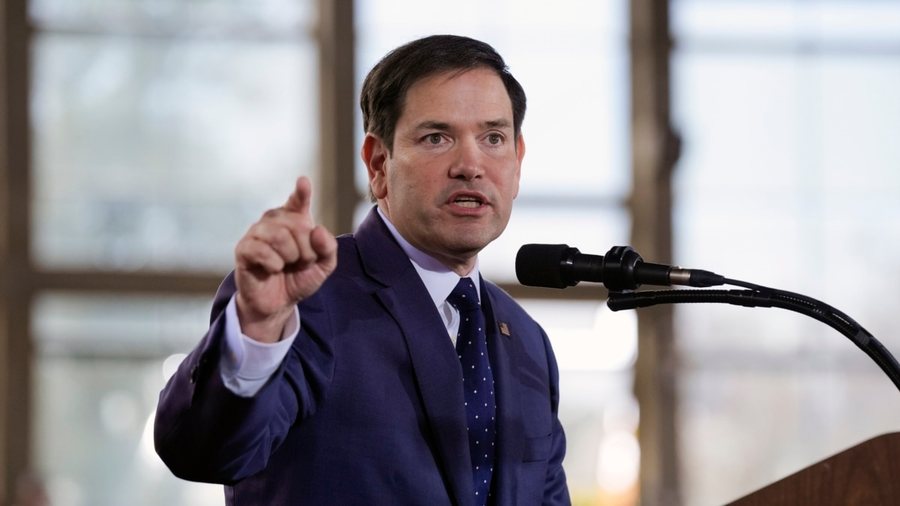
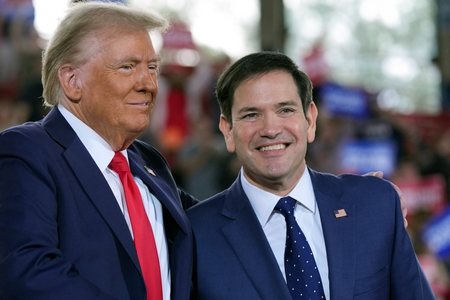
United States President-elect Donald Trump on Nov. 13 picked Sen. Marco Rubio as his top diplomat as the incoming administration prepares to navigate an increasingly dangerous world — with wars in Europe and the Middle East , as well as growing competition from China in the Asia-Pacific.
By choosing Rubio — a senator known for hard-line stances on many foreign policy issues — Trump sought someone who largely shares his views on the most pressing international topics, said Behnam Ben Taleblu, an analyst at the Washington-based Foundation for Defense of Democracies. in Washington.
"Rubio is someone who has ideological and political alignment with Trump on several important national security issues, such as great power competition, countering China, countering Iran, and restoring the maximum pressure campaign," Taleblu told Radio Europe. Cheap.
In an interview last week, before being named secretary of state, Rubio said the decades-long period of unchallenged US global dominance following the fall of the Soviet Union has ended and been replaced by an era of similar to the Cold War.
He said that the United States cannot be weakened too much through global engagements and added that Washington must be "pragmatic" in foreign policy.
"We are the most powerful [country], but we also have limited resources... So we have to invest our time and money in things that serve our core national interest," Rubio said in an interview with the US cable network. , EWTN, on November 7.
Rubio, a Cuban-American, played an influential role in shaping Trump's Venezuela policy during his first term as president from 2017 to 2021.
The New York Times described Rubio at the time as a "virtual secretary of state for Latin America."
The Florida senator, who challenged Trump in the 2016 presidential election, takes the job with extensive foreign policy experience, having served on both the Senate Intelligence Committee and the Foreign Relations Committee.
If ultimately confirmed by the Senate, Rubio, 53, would become the first Latino to serve as secretary of state.
And while Latin America will be a focus for Rubio, more pressing U.S. foreign policy concerns — such as China's global rise, Iran's threat to the Middle East and Russia's invasion of Ukraine — are expected to be as well. importance
When it comes to demands for US military, political and financial resources, Rubio wants the focus to be on China.
"I think the future of the 21st century will be largely determined by what happens in the Indo-Pacific. "I think China would like us to get bogged down in a conflict in Europe and not focus on what's going on in the Indo-Pacific," Rubio said on Nov. 7.
Rubio, who served as co-chairman of a bipartisan congressional committee on China, has repeatedly called for a tougher approach toward Beijing.
He led efforts to arm Taiwan - a self-governing democracy over which Beijing claims ownership. He requested direct shipments of US munitions and advanced military technology in hopes of deterring a possible Chinese attack on the island.
Rubio was also vocal about human rights abuses in China, pushed for a US industrial policy to better compete with China and supported tariffs on Chinese goods.
He sought to ban imports of Chinese goods made from the forced labor of Uyghurs and other Muslim minorities in western China, and to prevent China from circumventing Trump-era tariffs by shifting production to Mexico.
Rubio has consistently supported Ukraine's sovereignty and territorial integrity in its defensive war against Russia, describing Ukrainians as "incredibly brave and strong."
In February 2022, shortly after Russia launched a full-scale invasion of Ukraine, he co-sponsored the NYET Act in the Senate, which aimed to “strengthen Ukraine's defense capabilities” and impose sanctions on Russia.
But Rubio also said that Russia's war against Ukraine has reached a "stalemate" and "a conclusion must be reached."
He was among a minority of senators who, earlier this year, vetoed a foreign aid bill that included $60 billion for Ukraine.
The bill was finally approved in April, bringing the value of total US aid to Ukraine through February 2022 to almost $175 billion — about as much as all of Europe combined.
Rubio highlighted this imbalance, saying Washington should push Europe to take a bigger role in dealing with its security issues in order to enable the United States to prioritize challenging China in Indo-Pacific.
In last week's EWTN interview, Rubio said it is "unrealistic" to expect the United States to approve tens of billions of dollars for Ukraine every ten months. He said that the European members of NATO should increase their contribution to the alliance.
"Every day in our country, [we are] faced with questions about how to provide assistance to Americans," he said.
Although Rubio sees Russia as a threat to US security and supports Ukraine's sovereignty and independence, he said Kiev will have to negotiate to end the war.
Rubio said Russia has plenty of resources at its disposal, including weapons and men, to continue fighting, even though it has suffered tremendous losses.
In the Middle East, Rubio has long been tough on Iran, describing his theocratic government as a "terrorist regime" because of its funding of groups such as Hamas and Hezbollah - both designated as terrorist organizations by USA.
As a senator, he was a vocal critic of the 2015 Iran nuclear deal struck under then-US President Barack Obama. Known as the JCPOA, the deal curbed Tehran's nuclear program in exchange for sanctions relief against it.
Critics of the deal said it empowered Iran by greatly easing sanctions without any guarantee that it would not one day produce a nuclear bomb.
In 2018, Trump, who was then president, withdrew the US from the deal and reimposed sanctions on Iran.
Most recently, Rubio co-authored three bills condemning Iran's actions that became law.
They authorize sanctions on Iranian oil exports, senior Iranian leaders for human rights violations, and foreign entities and governments that support Hamas.
Hamas attacked Israel in October 2023, triggering a regional war that threatens to involve more states.
In September, Rubio criticized the administration of incumbent President Joe Biden for dragging its feet on implementing sanctions against Iranian oil. It also failed to advance sanctions in the field of human rights.
Depending on what the next administration in Iran will face when it takes office, analyst Taleblu expects the State Department, led by Rubio, to monitor the implementation of the sanctions.
As a vocal supporter of Israel, Rubio says he supports its right to defend itself from Iranian threats.
After Tehran's missile attacks on Israel on October 1, Rubio publicly supported asymmetric responses.
Rubio also has a tough stance on the Taliban, arguing that the Islamic militant group should be described as a "terrorist organization" by Washington.
In March, the Florida senator introduced a bill in the Senate calling for an end to US aid to Taliban-ruled Afghanistan, saying some of that money could end up with "terrorist groups".
In comments to the Senate , Rubio said: "A Taliban-controlled Afghanistan poses a direct threat to US national security interests and to our allies in the Middle East and Central Asia".


Lini një Përgjigje