


 Shkruar nga Pamfleti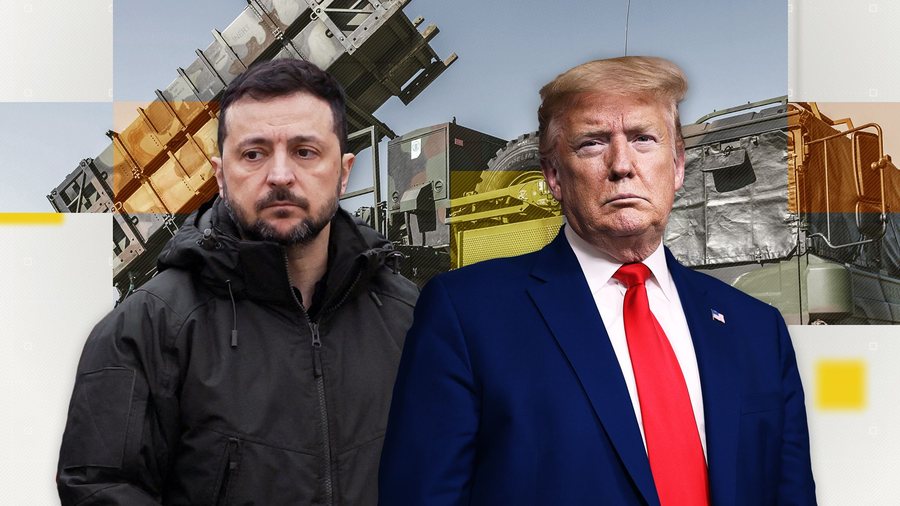
The Ukrainian president talks about "real and lasting peace." Giving up territory occupied by Russia is on the table.
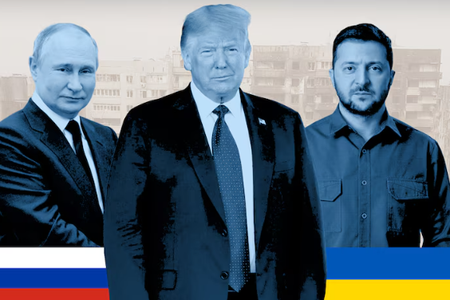
Volodymyr Zelensky's problems are endless. How can he avoid a clash with Donald Trump, keep his European partners united, convince Ukrainians that he will not sell the land he defended with blood to Vladimir Putin in exchange for a peace that few in his war-weary country believe in, and at the same time continue to provide the weapons and means to fight?
The Ukrainian president's dilemmas are those of a young leader who has had to mature at a forced pace amid painful risks and constant mistakes, yet they are still warning of deadly threats to him and the nation.
Ahead of his upcoming meeting tomorrow in Washington with the US president, the clear choice remains to avoid at all costs a repeat of the face-to-face clash that, on February 28, led to a nearly two-month halt in US military aid, resulting in Ukraine's withdrawal from the Russian Kursk region and the overall weakening of the national military system, which still depends largely on Pentagon intelligence.
It is true that most military aid now comes from Europe, but yesterday Zelensky displayed the same flexibility that secured his reconciliation with Trump at the Vatican during Pope Francis' funeral.
"Our positions remain clear. We must achieve a real peace, a peace that is sustainable and not just a pause in anticipation of the next Russian invasion," Zelensky said publicly after a more than hour-and-a-half-long phone call with Trump, his office said, stressing that Kiev and Washington remain very close.
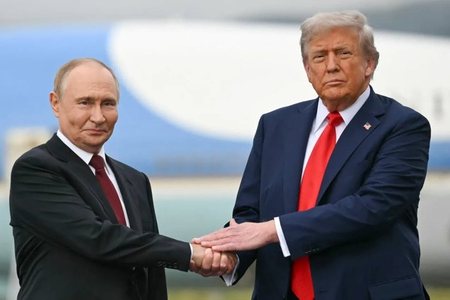
The point is clear: despite the deep concern of leading Ukrainian commentators about the Putin-Trump summit in Alaska as a failure, Zelensky will continue to please the American president to demonstrate, as he did in the spring talks, that the real culprit for the war has always been and remains the Russian president.
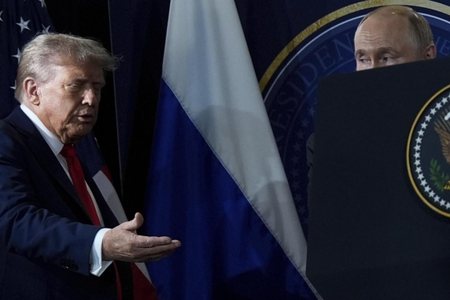
Therefore, Zelensky is giving a good look to a bad situation, not dwelling too much on the fact that Trump has "cleaned up" Putin by abandoning the precondition of a ceasefire.
But he insists on the need for the Europeans to be an active part of the negotiations and stand by his side, something Trump acknowledges, given that he also invited them to the Washington summit.
However, there is a new and quite concrete development that seems to be forcing Zelensky to make difficult decisions.
Putin is now apparently willing to discuss a possible peace deal, including a promise not to attack other European countries.
White House sources have reported this, hinting at a plan that would include a Ukrainian withdrawal from all of Donbas, roughly 25 percent of the region still controlled by Kiev's soldiers.
What is new is that Putin may now be willing to give up territories in the other two provinces that are not yet his. Until recently, he wanted to take them outright.
These include Zaporizhia, over 20 percent of which Ukrainian soldiers still control, including the capital, and Kherson, 70 percent of which Russian troops occupy east of the Dnipro River.
Crimea is not mentioned, however: Putin invaded and annexed it militarily in 2014 and has considered it his own ever since, although Kiev continues to claim sovereignty in the name of respect for international law, which opposes the annexation of territories by force.
Is this another bluff from Putin?
Zelensky is certain of this, including the fact that Moscow continues to deny the legitimacy of Ukraine's independence: this is an issue that you need to make Trump understand.
For example, there is no mention of the usual Russian demands that Ukraine disarm.
The Kyiv Independent newspaper highlights the extreme danger of news coming from the United States.
Its headline reads: “No ceasefire, extremely serious territorial concessions, vague security guarantees and fears that Trump will hand over his responsibilities to the Ukrainians after failing to reach talks with the Russian president.”
Zelensky reiterates his intention not to give up Donbass, but in the recent past he has occasionally hinted that he may be more flexible and much depends on security guarantees provided by allies.
His popularity had fallen to 58 percent by mid-July, following the scandal surrounding his attempt to silence commissions investigating internal corruption.
However, in the most difficult moments, the country has always stood by him and today more than ever he will seek internal consensus./ Taken from Corriere della Sera


Lini një Përgjigje