


 Shkruar nga Karsten-Dirk Hinzmann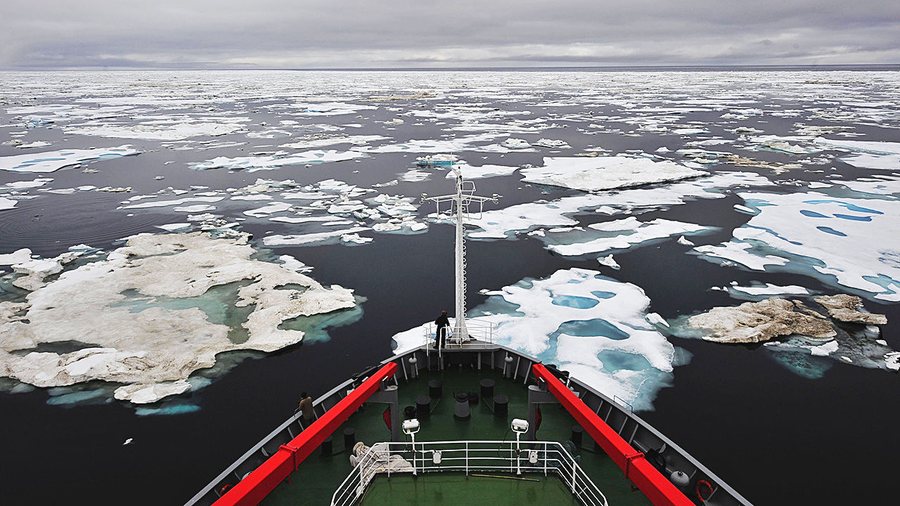
Putin is aiming for NATO's eye in the Arctic, the clash over Greenland is intensifying. Denmark and the US are arming themselves, and Russia threatens to open fire...
"Russia is being forced to take appropriate military and technical measures to adequately respond to new threats," says Vladimir Barbin.
Even as Donald Trump's ambitions for the Arctic island of Greenland have cooled somewhat, Vladimir Putin is once again adding fuel to the fire. The Russian ambassador's statement to the state news agency RIA Novosti is an expression of Russia's fear that NATO could turn the Arctic into a "springboard for potential conflict," as the Moscow Times writes.
Apparently, Russia currently feels surrounded by adversaries.
"Paradoxically, there are no open territorial disputes in the Arctic," says Klaus Dodds, a professor of geopolitics based in London. He warns Newsweek magazine that the war in Ukraine is also affecting the ice. Vladimir Putin's troops are also being positioned there. The magazine writes that international relations between global players have become colder since Russia's aggression against Ukraine.
Russia's pulse is currently high due to reports from NATO partner Denmark that it intends to expand its military presence, as well as that of the US. A frigate and two helicopters are already in place to reinforce military operations in the Arctic, Norwegian magazine High North News reported earlier this year.
In late June, The Aviationist magazine reported that Danish Air Force F-16 fighter jets had been deployed to Kangerlussuaq on the island's west coast. Denmark is ramping up operations there.
"This circumpolar region offers a preview of how the three great powers: China, Russia and the United States will flex their military and economic muscle to gain strategic and resource advantages."
"I completely agree with the Americans that the High North and the Arctic are becoming increasingly important in terms of defense, security and deterrence. And it is possible to find a way to have a stronger presence in Greenland," The Brussels Times quoted Danish Prime Minister Mette Frederiksen. According to her, Denmark is open to "further possibilities," despite the fact that the US already has a presence on the autonomous island, which belongs to Denmark. "From Pituffik, the US can detect a missile launch, calculate the trajectory and activate its missile defense systems. It is irreplaceable," The New York Times quoted Peter Ernstved Rasmussen as saying.
The Danish defense analyst describes the American presence there as “the outermost eye of American defense.” Certainly a thorn in Russia’s side.
"This circular region offers a preview of how three major powers China, Russia and the United States will flex their military and economic muscle to gain strategic and resource advantages," says Klaus Dodds.
He warned Newsweek that both the continuation of the war in Ukraine and a future conflict over Taiwan could find their ultimate test in the far north.
At least Russia seems to have understood that the US not only has a foot in the door in Greenland, but that the gates have been opened to its interests, as the Associated Press (AP) reported. According to the news agency, the Danish parliament's decision to expand US activities has led critics to suspect "that the vote has ceded Danish sovereignty to the US," as the news agency reports. "The law expands a previous 2023 military agreement with the Biden administration that gave US troops broad access to Danish air bases in the Scandinavian country," according to the AP .
Accordingly, Russia may actually be alarmed that the US administration under Donald Trump would refrain from annexing Greenland if it could at least create a stronger shield there against Russia. The two-pronged strategy involves exporting weapons to counter Russian dominance of the Arctic region, while simultaneously importing important raw materials: Climate change and the resulting demand for essential raw materials and rare metals have also sparked interest in Greenland’s potential as a supplier of important elements such as lithium, niobium and zirconium, writes Brent Hardt.
The analyst at the German Marshall Fund of the United States (GMF) think tank emphasizes that only a partnership between the United States and all Western powers interested in Greenland can keep Russia and China at bay. For example, the allied icebreaker fleets would need to be expanded and joint Arctic combat training would need to be intensified in Greenland. Hardt emphasizes activities that directly violate Russia's security interests and should provoke a swift response.
According to Reuters, Russian and Chinese state ships have appeared unexpectedly near Greenland in the past. The Trump administration then accused Denmark of failing to protect the country from potential attacks, the news agency recently reported. An annexation of the island by hostile forces would blindside the US in the Arctic. Until now, Denmark's defensive shield against NATO adversaries has been minimal, Reuters points out. "Denmark's permanent presence consists of four aging inspection ships, a small surveillance plane and dog patrols tasked with monitoring an area four times the size of France," wrote Reuters journalist Jacob Gronholt-Pedersen.
According to him, Denmark had promised in January to invest more in Arctic defense, while the Scandinavians wanted to provide more than two billion US dollars for new ships, long-range drones and satellite surveillance. According to Reuters, France has also offered to send troops to Greenland, and the European Union has also publicly considered sending European contingents to the ice. However, the United States remains the central player there.
The Pentagon is pursuing a “monitor and respond” approach, writes Aaron Brady, author of War on the Rocks magazine. According to the author, enemy actions are analyzed and action is taken accordingly, rather than having a strong deterrent force permanently stationed.
Brady asks how the US president would react if Russia or China drew their swords. Apparently, the three adversaries are watching each other. There is a tension in the Arctic air that, given the developments in the Ukraine war, could erupt into military confrontation. / Adapted Pamphlet from FR/





Lini një Përgjigje