


 Shkruar nga Pamfleti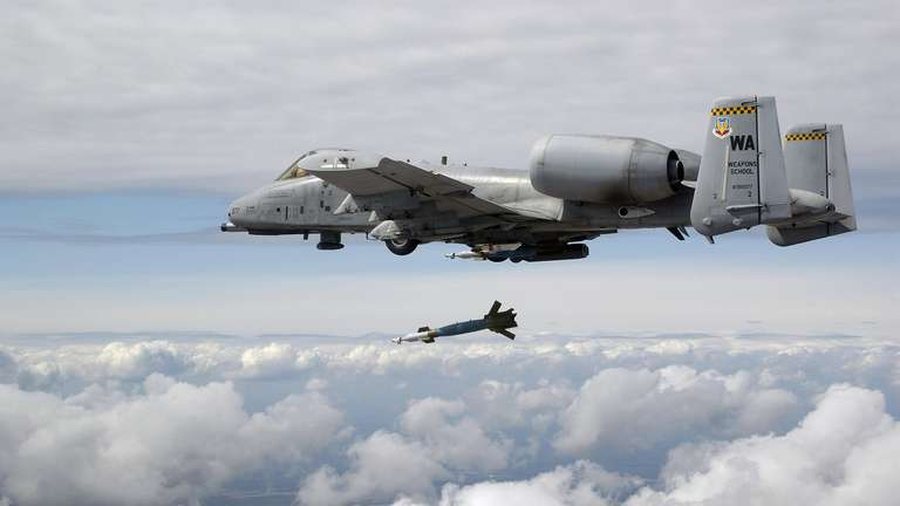
Israel has bunker-busting bombs like the BLU-109/B, GBU-28/B, and GBU-31 JDAM, but these probably wouldn't have the necessary penetrating power to truly destroy deeply bunkered targets...
“Ultimately, short of regime change or invasion, it’s pretty hard to imagine how military strikes could disrupt Iran’s path to a nuclear weapon,” says Justin Bronk.
The Times of Israel quotes an analyst from the British think tank Royal United Services Institute (RUSI), citing information from Reuters. Bronk believes that trying to find a solution to the war is not only dangerous militarily, but also politically. The US may have the only weapon that can bring Iran to its knees, but doing so would likely make the Trump administration an indirect party to the war.
"Military strikes are unlikely to permanently destroy Iran's nuclear program," argue Francois Murphy and John Irish. In addition to the fact that destroying the facilities would only set the program back a few years, as the two authors from the Reuters news agency suspect, the Israeli army faces the challenge of concrete walls one meter thick underground. In principle, the only solution against this is an American bomb, called a "bunker buster" because of its brutal effect.
According to Reuters, facilities for processing weapons-grade nuclear material are spread across multiple locations. According to the news agency, an effective attack on the entire program would have to be spread across all facilities equally and would likely be equally effective. But even the International Atomic Energy Agency, the United Nations nuclear watchdog, has no idea where Iran hides its equipment: centrifuges used to enrich uranium, Murphy and Irish write.
According to the Wall Street Journal (WSJ), the UN nuclear agency has confirmed that Israel disabled the nuclear facilities in Isfahan, but the Fordow facility remained virtually undamaged. Reuters locates the second major enrichment facility at Natanz, which is about 3-4 meters underground, apparently to protect it from bombing, the news agency writes. Fordow is said to be "much deeper," carved into a mountainside near the Iranian holy city of Qom; it is believed to be up to 90 meters below the surface.
"Israel has dealt a blow to Iran's nuclear program, but not yet a final blow," writes WSJ . The authors of the article, Laurence Norman, Michael R. Gordon and Dov Lieber, cite unnamed experts who believe that Fordow can only be destroyed by a massive American bomb that destroys the bunkers. One of the experts is Joachim Krause, quoted by Focus Online .
While Israel has bunker-busting bombs like the BLU-109/B, GBU-28/B and GBU-31 JDAM, he says "these probably wouldn't have the necessary penetrating power to really destroy deeply bunkered facilities," says the political scientist at Kiel University.
In his opinion, there is only one bomb that can destroy Ford: the GBU-57 Massive Ordnance Penetrator (MOP).
This weapon is unique to the US Air Force, but Israel could have had it long ago. “There should be absolutely no doubt that our ally Israel must be prepared for all eventualities if Iran seeks a nuclear weapon,” Politico magazine quoted Joshua Gottheimer as saying. In 2020, the New Jersey Democrat, along with Florida Republican Brian Mast, proposed legislation in the House of Representatives that would allow the US to supply Israel with the nearly 14-ton bomb; with it, Krause says, they could break through up to 60 meters of concrete.
At the time the bill was drafted, the sale of F-35 fighter jets to the United Arab Emirates was under discussion, with Israel supposedly receiving the bunker buster as compensation. The debate over handing over the weapon has been an ongoing tussle. As War on the Rocks magazine reported in 2015, supporters of transferring the MOP to Israel argued that it would increase deterrence against a potential Iranian move toward nuclear weapons, especially given that many of the restrictions on Iran’s enrichment program imposed by the Joint Comprehensive Plan of Action (JCPOA), also known as the Vienna Agreement, were set to expire in 2030.
To supporters, it seemed logical that the US would stay out of a military conflict if Iran sought a bomb, but Israel could intervene, as the author of “The War on the Rockies,” Kingston Reif, wrote. In principle, this exact situation arose ten years later; if the supporters had prevailed then, Israel would have more power now. However, Reif also described his comment at the time as conviction: “that big bomb should not go to Israel.”
In fact, the MOP alone would have been useless. Israel would have had to have B-2 bombers as carriers, which could be seen as a clear provocation.
Whatever the motives of MOP supporters for Israel, their proposal must be firmly rejected, commented Kingston Reif in War on the Rocks.
In his opinion, in 2015 there would have been other opportunities to ensure Israel's defense capability, especially considering that the US should have respected the treaty in 2015 and would have made a diplomatic misstep by implementing it.
Since then, the US, under its 47th President, Donald Trump, has withdrawn from the Iran deal. /Adapted from Pamphlet/




Lini një Përgjigje