


 Shkruar nga Olaf Storbeck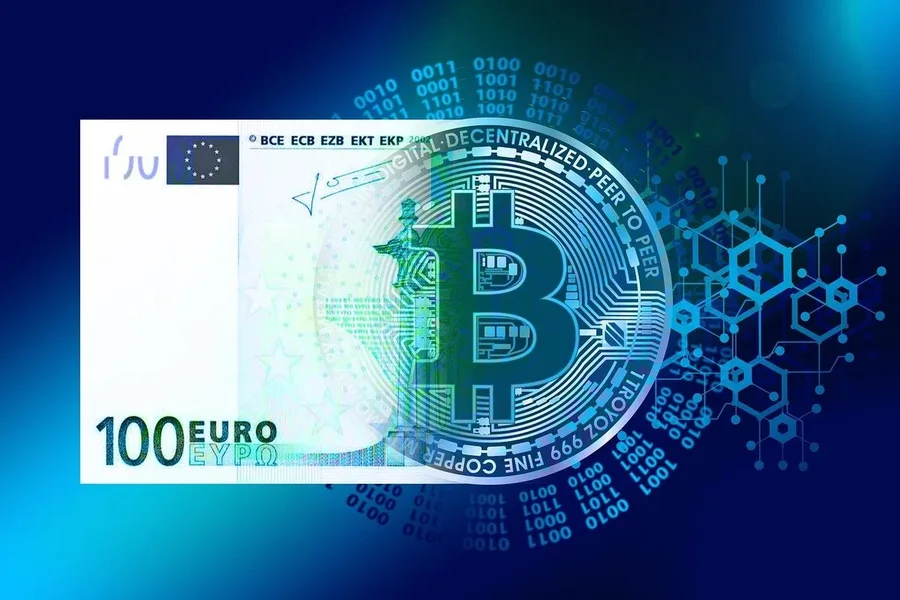
The ECB aims to issue the first digital euros in 2029, after a pilot project in 2027...
One of the European Central Bank’s most complex and controversial projects is heading for a crucial test in the first half of 2026, when the European Parliament is expected to vote on the digital euro. The plan overcame a key hurdle in late December, when the European Council backed the ECB’s plan to launch an electronic equivalent of cash: a digital currency that works in shops, online and in peer-to-peer transactions.
Member states have backed the proposal, which would give European central bankers more leeway over electronic retail payments, which currently rely heavily on US companies. But it is unclear whether the project will win the support of a majority of the 720 MEPs. An official closely following the debate said the vote could be delayed until the end.
In an effort to win over skeptics, the ECB, which began evaluating a central bank digital currency in 2020, has launched a rapid public relations campaign. Piero Cipollone, the ECB executive board member responsible for the project, argued for a digital euro in 21 speeches, six interviews and two blog posts in 2025. ECB President Christine Lagarde pledged in December to push as hard and as quickly as possible to launch the digital euro.
The ECB aims to issue the first digital euros in 2029, after a pilot project in 2027. Current rules allow it to circulate only physical money, which means lawmakers must first agree on the new legislation. The central bank’s main argument for a digital euro is freedom and sovereignty. In a digital age where cashless payments are becoming increasingly widespread, large parts of Europe’s card and online payments are controlled by US companies such as Visa, Mastercard and PayPal.
The center-left and liberal groups in the European Parliament support the plan, but they are more than 40 votes short of an absolute majority. The far right opposes it outright. The decisive votes are likely to come from the center-right European People's Party and the European Conservatives and Reformists, where views are divided.
“Building a majority will be difficult,” German EPP MEP Markus Ferber, who is skeptical about the ECB’s plans, told the Financial Times, adding that positions vary widely.
Fernando Navarrete, an EPP MEP from Spain who was appointed by the parliament to assess the digital euro, has argued for a scaled-down version. He has initially suggested limiting its use to offline person-to-person payments.
Ferber supported this view, arguing that offline payments are the only ones where existing private sector solutions had real gaps, such as the availability of digital payments when there is no electricity or internet.
"A digital euro only makes sense if it offers clear and understandable added value for citizens and businesses ," Ferber said, adding that it should not become a political prestige project.
He warned that it is far from certain that there is clear demand for an ECB-backed scheme for online payments.
At the same time, the continent's big banks are investing millions in a European challenger to US payments schemes and fear that a digital euro could disrupt their new private sector solutions. Bankers warn that this will come with huge costs, immense complexity and a high risk of failure.
“The ECB has no idea what it means to launch a payment scheme for more than 350 million people ,” the head of retail at a major European lender told the FT on condition of anonymity.
In a study commissioned by banking lobby groups, Big Four accounting firm PwC last summer estimated that the total project costs for Eurozone banks could reach 18 billion euros. The ECB argues that the figure would probably be closer to 6 billion euros.
Far-right politicians oppose the project for various reasons. Germany's Alternative for Germany (AfD) party has warned that it could lead to the gradual displacement of cash, which it says is the only payment method that guarantees anonymity.
Ludek Niedermayer, a Czech MEP and member of the EPP, said that the digital euro was strategically, economically and politically important and that his priority was to introduce it as soon as possible after the necessary technological testing and possible pilot phases.
Niedermayer said he was pleased that sufficient safeguards had been put in place for those concerned about the role of coins and banknotes. He acknowledged that support within the EPP could "change significantly" in a plenary vote, but stressed that it was too early to speculate about the overall outcome.
In an Instagram post, the far-right Patriots for Europe in the European Parliament claimed that the ECB could use the digital euro to stop citizens from buying certain goods or services, stating that it could be used as a tool for “censorship.” The group added: “ If you want to buy something that ‘they’ think you shouldn’t buy, they won’t let you do it.”
The ECB is convinced that it will be unable to monitor or control individual payments. Lagarde said in December that the global dominance of American payment providers gave US President Donald Trump an advantage. She cited judges of the International Criminal Court who were sanctioned by the US.
"People can be denied access to any funding because of a decision made on the other side of the pond. We are not practically sovereign in our own backyard ," she said.
Many observers, including some within the ECB, fear that the US government's strong support for dollar-denominated stablecoins could increase Europe's dependence on America if such digital tokens were to become more widely adopted.
Positive Money Europe, a pro-consumer lobby group, is calling for a truly public form of European money in a digital world that is otherwise “dominated by US financial interests.”/ Adapted from “Pamphlet” by “Financial Times”






Lini një Përgjigje