


 Shkruar nga Pamfleti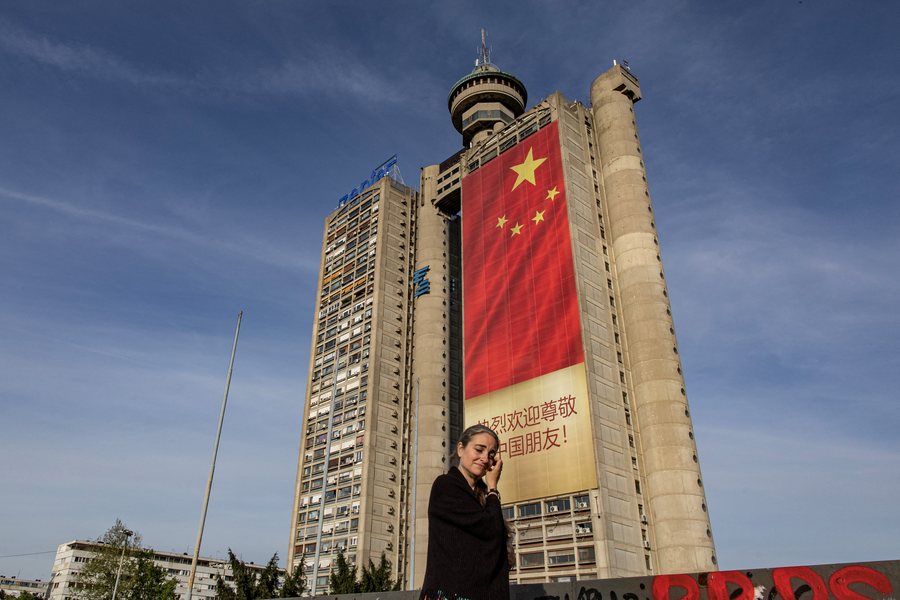
Xi Jinping decided to visit Belgrade on the 25th anniversary of the bombings, at a time when relations between Washington and Beijing have once again been marked by mistrust and antagonism...
It was May 7, 1999, twenty-five years ago. To stop the humanitarian tragedy in Kosovo, NATO launched Operation Allied Forces, bombing Yugoslavia. The background was the "ethnic cleansing" launched by President Milosevic against the ethnic Albanian population in Kosovo.
The attack from the sky by NATO forces began on May 24 of that year and would last 78 days, until the capitulation of Milosevic.
On May 7, five "precision bombs" dropped by US military aircraft hit the Chinese embassy in Belgrade. Toll: three dead, Chinese working at the embassy, and about twenty injured. The President of the United States was Bill Clinton, he apologized, calling that action a tragic mistake. Since the target had been identified by the CIA, it was Director of Intelligence George Tenet who explained himself at a congressional hearing. He said the real target must have been a nearby Yugoslav ministry where the logistics of military operations were managed. The Beijing government condemned the act, calling it "barbaric". In China there were violent anti-American demonstrations for several days, during which American diplomatic offices were also damaged.
Was it really a mistake? Or was the Chinese embassy in Belgrade the real target? Investigations into the background to that bombing also saw a sort of "media war" between the two sides of the Atlantic. An English newspaper (The Observer) and a Danish one (Politiken) published reports according to which the CIA had discovered that the diplomatic headquarters of the People's Republic was being used by Milosevic's armed forces as a center for secret communications. An investigation by the New York Times, however, denied the thesis of a deliberate act and confirmed that of a mistake.
In Beijing, the government initially allowed, and in some cases encouraged and orchestrated, angry demonstrations and protests against the Americans. Acting Prime Minister Zhu Rongji accused NATO of "hypocrisy" and of using the protection of the human rights of Kosovars as "fig leaves".
However, the communist regime later decided to defuse the crisis in bilateral relations. In May 2000, the United States Congress passed a law that liberalized trade between the two nations and paved the way for China's entry into the World Trade Organization (WTO). This entry occurred in December 2001, under the presidency of George W. Bush and two months after the September 11 attacks. Thus began the most dynamic phase of China's economic rise, closely related to the opening of global markets and in particular the American market.
Xi Jinping decided to visit Belgrade on the 25th anniversary of the bombings, at a time when relations between Washington and Beijing have once again been marked by mistrust and antagonism.
On the eve of his arrival in Belgrade, Xi published an article in a Serbian newspaper commemorating the event. "Twenty-five years ago, NATO scandalously bombed the Chinese embassy in Yugoslavia, killing three Chinese journalists. We must never forget this. The friendship between China and Serbia was created with the blood of our compatriots, which will remain in the common memory of our two peoples", he said.
Serbia is the third and final stop on the Chinese leader's European tour, his first return to the continent in five years. Serbia, Russia's traditional ally, completes the trio of countries visited after France and Hungary, all three characterized by a critical relationship with the United States. /Adapted "Pamphlet" from "Correire Della Sera"





Lini një Përgjigje