


 Shkruar nga Pamfleti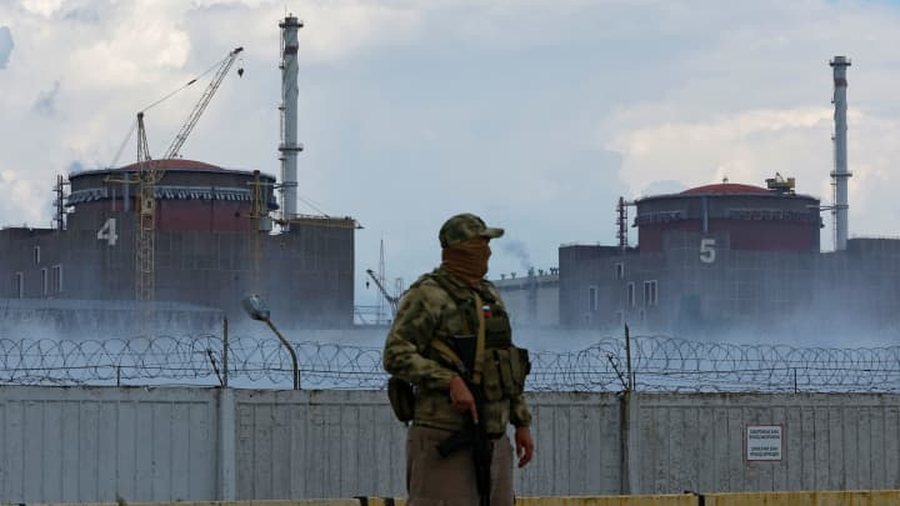
The Zaporizhzhia nuclear power plant, the largest in Europe, has become one of the most sensitive and dangerous flashpoints of the war in Ukraine. With six reactors and a capacity of almost 6 gigawatts, it is not only a strategic energy facility, but also a potential threat to the nuclear security of the entire continent.
Satellite images show the size of the gigantic complex in Enerhodar, on the banks of the Dnipro River and the former Kakhovka reservoir.
"The Zaporizhzhia nuclear power plant was a 6-gigawatt plant. It is the second in Europe and one of the largest in the world," said Oleksandr Kharchenko, director of the Energy Research Center, Kiev.
Russia took control of the plant in March 2022. Since then, the facility has been located in territory controlled by Russian forces, although almost all countries in the world recognize it as Ukrainian property. Moscow has stated that it intends to connect the plant to the Russian energy grid, while Kiev and the West consider this a serious violation of international law.
"During the years of independence, the Zaporizhzhia power plant was significantly modernized. It is very different from the power plant built in the Soviet period ," Kharchenko said.
After Russia took control, five of the six reactors were shut down, with the last reactor ceasing power production in September 2022. Currently, according to the Russian side, all reactors are in a so-called 'cold shutdown.' But experts warn that the lack of maintenance and the constant military presence are seriously damaging the equipment.
"It is very dangerous, because the Russian side does not have sufficient knowledge to operate a modernized plant like this," Kharchenko said.
Connecting the plant to the Russian power grid is not a simple process. It requires the construction of new high-voltage lines and physical disconnection from the Ukrainian system. A long, complex process with high technical risks.
"First, they need to build new high-voltage lines. Then disconnect the plant from the Ukrainian system and connect it to the Russian grid. And then solve the issue of cooling the reactors ," Kharchenko said.
Russia sees Zaporizhzhia as a key source of energy to cover energy shortages in the south of the country. According to Ukrainian experts, this is the main reason why Moscow is fighting so hard for control of the plant.
"For Russia, this plant is a giant energy source that can solve many problems in the European part of the country. It's not just a military issue, they want the plant in their energy system," Kharchenko said.
Another major problem is the lack of cooling water, following the destruction of the Kakhovka dam in 2023. The artificial reservoir that supplied the plant has disappeared, creating an unprecedented situation in world nuclear history.
"For four years we have had no real information about the extent of equipment degradation. There is no proper maintenance and the plant is in 'cold mode', something that has never happened before in the world," said Kharchenko.
On the diplomatic scene, the plant has become a key point in peace plans. Ukrainian President Volodymyr Zelenskyy has confirmed that the US has proposed a joint operation, with American management. Meanwhile, Russia has signaled openness to a joint Russian-American model. But experts see this as unfeasible.
"Diplomats and businessmen, not nuclear engineers, are speaking in these discussions. Such ideas seem very strange and technically impossible to implement," Kharchenko said.
If Ukraine were to regain control of the plant, restarting it would require years of technical investigations and rebuilding the cooling system, including restoration.
"It will take years just to figure out what can work and what can't. Without the restoration of the Kakhovka reservoir, the plant cannot fully function," Kharchenko said.
The International Atomic Energy Agency continues on-site inspections, but the situation remains fragile. Unless a sustainable and safe solution is found, Zaporizhzhia risks remaining a symbol of nuclear danger, what experts call “the most expensive monument to nuclear energy in the history of mankind.”






Lini një Përgjigje