


 Shkruar nga Pamfleti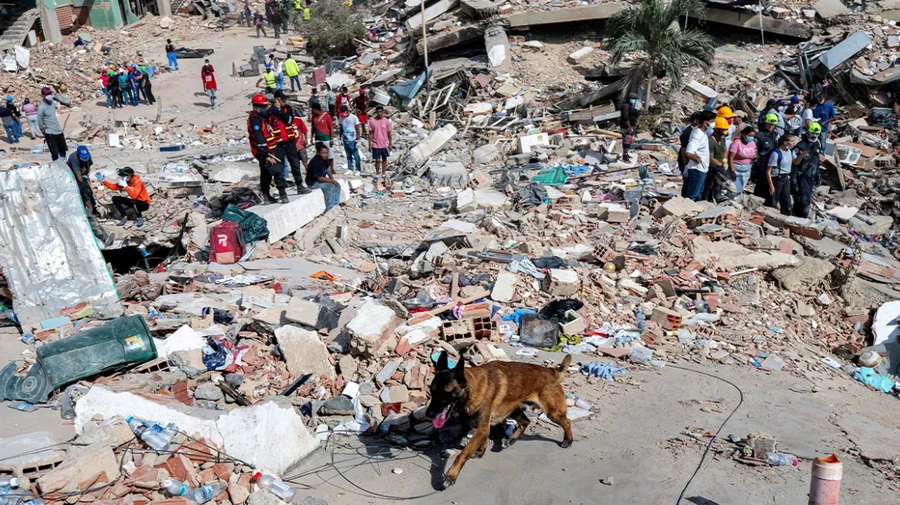
The World Health Organization said on Tuesday that there is a high risk of disease outbreaks in Venezuela, a week after two earthquakes struck the country. The organization said that the registration of victims and missing people remains insufficient.
"Health services are under extreme pressure, with institutions operating beyond their capacity due to the influx of wounded ," WHO spokesman Christian Lindmeier told a press conference in Geneva.
According to the president of the National Assembly, Jorge Rodríguez, the preliminary death toll has reached 1,719 dead and 5,034 injured.
On the other hand, the United Nations (UN) estimates that around 50,000 people continue to be missing.
Lindmeier warned that "there is an increased risk of disease outbreaks."
Problems in the health system, damage to water supply and sanitation networks, and population displacement can favor the spread of vaccine-preventable diseases, such as measles, diphtheria, and whooping cough.
Also, according to the WHO, the spread of diseases transmitted by mosquitoes or through water could be accelerated, including yellow fever, dengue, chikungunya, Zika virus, Oropouche virus, and malaria.
"The country's interim president, Delcy Rodríguez, announced that 38 hospitals have been affected by the earthquakes ," the WHO spokesperson said.
As of June 27, WHO had collected data from 21 health facilities in Caracas, La Guaira, Miranda and Falcón. According to the organization, three of them are in critical condition, six have suffered structural damage or are only partially functioning, while the rest continue to provide services, but with significant limitations.
Preliminary WHO assessments show that hospitals face overcrowding, long waiting lists for surgical interventions – particularly in trauma orthopedics and neurosurgery – deficiencies in biosecurity measures and extremely high pressure on medical staff.
Source: Reuters, based on statements from the World Health Organization (WHO).







Lini një Përgjigje