


 Shkruar nga Pamfleti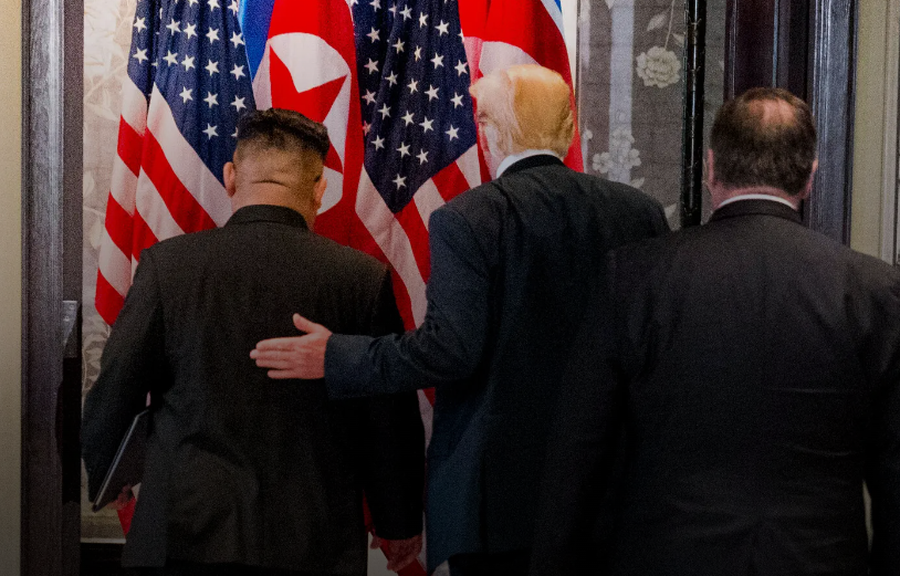
The prestigious American newspaper "New York Times" has revealed a secret mission by elite marines, Navy Seals, when in 2019 they landed in North Korea to install a listening device, but failed.
The episode occurred when Donald Trump was president, during his first term.
It was a winter night when a group of Navy SEALs emerged from the sea and approached the rocky shores of North Korea. They were engaged in a top-secret mission, so complex and with such far-reaching consequences that every move had to be perfect.
The mission's purpose was to plant an electronic device that would allow the United States to intercept North Korean leader Kim Jong-un's communications during nuclear weapons talks with President Trump. The mission had the potential to provide valuable intelligence, but it also risked placing American soldiers on North Korean soil, a move that, if discovered, could cause not only the failure of negotiations but also a hostage crisis or an escalation of a conflict with a nuclear adversary.
Due to the high risks, the mission required direct approval from the President of the United States.
To carry out the operation, the military chose Red Squadron, a unit of SEAL Team 6, which had carried out the famous mission to eliminate Osama bin Laden. The SEALs had spent months training, aware that every move had to be perfect. But when they arrived on what they thought was a deserted beach, wearing dark suits and night vision goggles, the mission fell apart in seconds.
A North Korean ship appeared out of the darkness. It was a civilian ship, not a military one. Fearing they might be discovered, the SEALs opened fire. Within seconds, all the passengers on the North Korean ship were dead. The SEALs retreated and fled into the sea, unable to plant the interception device.
The 2019 operation was never made public, and its details remained classified. This report is the first to reveal the full events of the operation. The Trump administration did not brief any of the key members of the US Congress, who oversee intelligence operations, either before or after the mission.
Shortly after the operation, US spy satellites detected increased North Korean military activity in the area. This did not lead to a public response from North Korea, and it remains unclear whether they fully understood who was behind the operation.
In late February 2019, Trump met with Kim Jong Un in Vietnam for a nuclear summit, but the talks collapsed. North Korea then resumed missile tests.
This secret mission is a story that remains to be studied as one of those operations that may have had major impacts on the development of international relations, but which also highlights the risks involved in secret military actions, where any mistake can lead to unexpected and catastrophic consequences./ "New York Times"





Lini një Përgjigje