


 Shkruar nga Pamfleti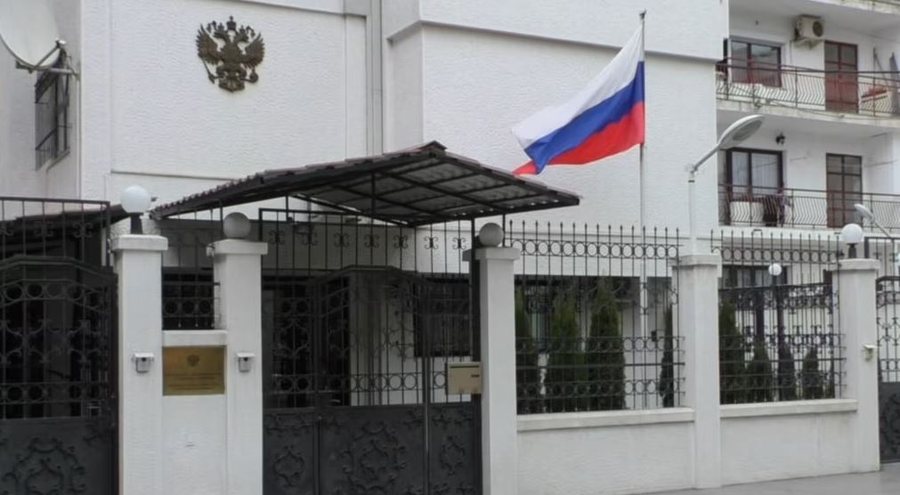
The Russian Embassy in Albania has confirmed that a voting center will be opened at its headquarters in Tirana for the upcoming presidential elections in Russia, which are set for March 17.
As stated in the answer sent to Radio Free Europe, Russian citizens with the right to vote will be able to vote on election day. In response, the Russian Embassy said it will announce later what time the polling station inside the building will open.
REL also received confirmation from the Russian Embassy in Skopje that Russian citizens in North Macedonia will be able to vote in this embassy, without giving more details.
However, REL failed to obtain information on the possibility of Russian citizens voting in Montenegro. According to the data that REL has provided from the Police in Montenegro, which are from July 2023, in this country close to 25,000 Russians have residence permits.
Of the states of the Western Balkans, three are on the Russian list of "enemy countries", which currently includes 49 states. Among them are Albania, North Macedonia and Montenegro.
The list of "enemy states" was created by the Ministry of Foreign Affairs of Russia in April 2021, about two months after the start of the Russian invasion of Ukraine, to which the West responded with sanctions against Moscow.
Russia does not recognize Kosovo's independence. However, in this country it has a Liaison Office.
So far, there is no confirmation or denial from Moscow that voting for the Russian presidential elections will be possible in the embassies of any of the "enemy states", including the 27 member countries of the European Union.
About voting in Kosovo, Serbia and Bosnia
In a telephone conversation with Radio Free Europe, the Russian Office in Kosovo said that Russian citizens working in Kosovo will be able to vote online. This Office also said that it is a "very small" number of voters, but did not specify other details about the possibility for them to vote via the Internet.
REL has learned from the Ministry of Foreign Affairs of Bosnia and Herzegovina that the competent representatives of Russia have addressed this country with the request to hold elections, namely the possibility of voting in the Russian Embassy in Bosnia.
However, in the Russian request, according to the same source, the Council of Ministers, which takes the final decision, has not yet approved the Russian request due to some "legal deficiencies" in the request. However, the REL source did not indicate what the deficiencies are.
The Russian Embassy in Sarajevo has not answered REL's question regarding the possibility of Russian citizens voting in Bosnia and Herzegovina.
However, as far as Serbia is concerned, there is currently no information on whether Russian citizens will be able to vote from this country. REL's request for comment on this matter was not answered by the Russian Embassy in Belgrade, nor by the competent institutions of Serbia.
After the start of the war in Ukraine, a large number of Russian citizens went to Serbia. The last data on the Russians who stayed in Serbia were published eight months ago. Subsequently, the Ministry of Internal Affairs of Serbia told REL that almost 30,000 Russians are residing in Serbia, who have temporary residence.
What is the election procedure in Russia?
According to the decision of the Central Election Commission of Russia, the final list of voters will be completed 45 days before the vote, which falls on December 29 and 30. The possibility of correcting the list in special cases is possible, but these improvements can be made no later than five days before holding the elections.
According to the further procedure, the Central Election Commission finishes the procedure of obtaining signatures in support of the presidential candidacies. The list of candidates is expected to be announced in the first days of February.
The holding of Russian presidential elections was announced on December 7, 2023. A day later it was announced that the current Russian president, Vladimir Putin, will run as an independent candidate.
So far, Putin has won the presidency four times: in 2000, 2004, 2021 and 2018. This time, the elections are taking place in an atmosphere described as increasingly intense pressure on political dissidents and opponents of the war against Ukraine, but also amid Russia's western isolation. /REL


Lini një Përgjigje