


 Shkruar nga Federiko Rampini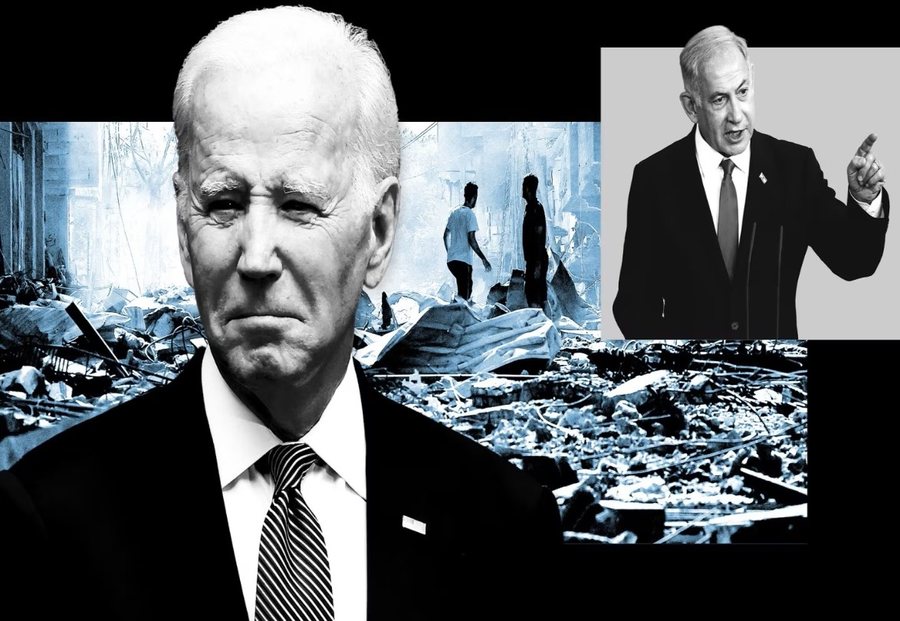
America no longer needs Arab oil, but its European and Asian allies do. A serious crisis in the Red Sea would have serious consequences for the economic security of Europe, Japan, South Korea...
Slowly but surely, America is sliding toward a mini-war in the Middle East: exactly what Joe Biden vowed never to do again, when he (badly) pulled out of Afghanistan in the summer of 2021. This puts him in worst possible position, politically: just over nine months from the election, with polls showing him behind Donald Trump.
American presidents and pre-election wars
"American presidents start wars to win elections", is an old stereotype without confirmation in historical reality. It is easier to find evidence to the contrary, for example some wars that destroyed presidents like Vietnam for Lyndon Johnson. Even a "perfect" conflict, with few American casualties and a quick victory such as the first Gulf War (1991) to liberate Kuwait occupied by Saddam Hussein, although considered a military-diplomatic masterpiece by experts, was followed by the electoral defeat of George Bush against Bill Clinton in 1992. The idea that his son George W. Bush Jr. was re-elected in 2004 thanks to the second war in Iraq was floated by the Democrats to mask the unfitness of their candidate, John Kerry.
The isolationist wind
While there is generally no evidence that wars help win elections, the opposite is far more likely in the current political climate: with American public opinion largely disillusioned, disillusioned, or even hostile to the United States' global role.
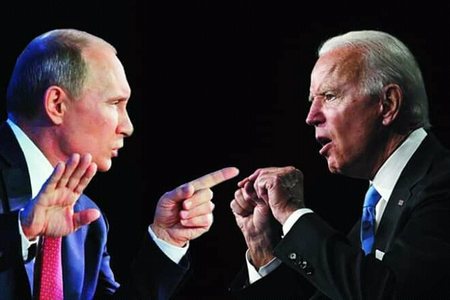
Trump with his isolationism is more in tune with the mood of the time. This ties Biden's hands and limits his freedom of maneuver. Others may constantly provoke him, he should moderate his responses. It was seen in Ukraine. After clearing the ideological fog of pseudo-pacifist demonstrations, in which NATO seemed to blame for that war, it is now clear that the response to Putin from the West, and especially from America, has always been characterized by the utmost caution. Especially in the early stages of the war, Putin or some of his aides threatened the use of nuclear weapons and World War III. Biden and other NATO leaders did just the opposite: they specified that they would never go directly into the field.
Why not in Ukraine, and in the Middle East?
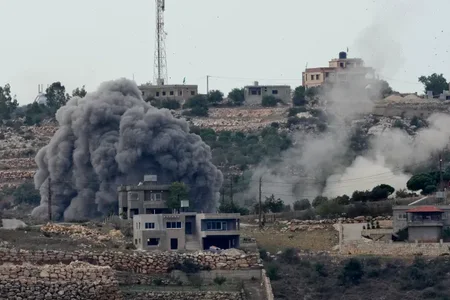
But then why the Middle East? While in Ukraine, Biden immediately said—indeed, right on the eve of the invasion—that no American soldiers would be involved, but after the Hamas massacre on October 7 he immediately deployed a fleet off the coast of Lebanon to check on Hezbollah.
As for the Red Sea, now the Americans are fighting every day. Biden can hope that this self-defense operation - launched because the Houthis have already attacked about fifty merchant ships in the Red Sea - will remain limited and be successful quickly. We all hope so, given the implications for world trade.
The risk of war getting out of control
However, these conflicts can always get out of control. The Houthis may prove to be a more persistent and insidious enemy than expected (the Saudis fought them for nine years).
Iran may have more strikes against America in its strategy of destabilization and blackmail. However, unlike Ukraine, where Biden was never tempted and never really risked plunging, in the Middle East US armed forces are in action. Why this "Arab curse"?
Renegade detachment
After the conflicts of 1991 in Iraq, 2001 in Afghanistan and 2003 again in Iraq, it seemed that the US ruling class had decided once and for all: never again. Two factors prompted the secession. The first is the energy self-sufficiency of the United States, which has banned the import of Arab oil for more than a decade. The second is China.
Since Obama's first presidency, a "pivot to Asia" has been theorized, the need for America to focus attention and resources on its only rival of its size, the People's Republic. Biden, when he was Obama's vice president, fully shared the idea of strategic repositioning of America, stopping the waste of energy on many fronts and focusing on the challenge that will be important in the long run. As Obama's deputy, Biden had been at the forefront of the desire for an early withdrawal from Afghanistan. Then Trump put it on, and Biden did it in the worst possible way. But the logic was always the same: never dive into the Middle East again. Easier said than done? Why did Biden return to fight where he swore not to?
Why did Biden end up in the trap?
All explanations can be explained by the theme of "inheritance" or imperial legacy. I use the terms empire and imperial somewhat loosely, knowing full well that the American empire is not a classical empire (in the sense that Russia and China still are, for example, with their internal colonies). However, America has exercised a hegemonic role, since 1945, in large areas of the planet, though not all.
This role cannot be explained by a narrow economic vision. A leading nation does not act solely on the basis of narrow economic interest. Here's an example: America no longer needs Arab oil, but its European and Asian allies do. A serious crisis in the Red Sea would have serious consequences for the economic security of Europe, Japan, South Korea, all energy importers from the Gulf and surrounding areas. A leading country like America knows that its well-being and security are stronger when its allies are also doing well. Furthermore, an energy strike in the Middle East would still have ramifications within the United States. American oil and gas are extracted, refined and distributed by private companies that are free to sell energy around the world; their prices are linked to global markets. Finally, a superpower like America has long learned that geopolitics – like physics – does not tolerate a vacuum. If the United States military were to withdraw from the Middle East, sooner or later someone else would fill the void.
Given the ignorance of the Europeans – whose electorates do not understand the urgency of increasing military spending – it is almost certain that the void will be filled by China, Russia, Iran, in various combinations.
Finally, there is no other conflict on the planet that has the power to sharpen and exasperate internal divisions in American society like the Israeli-Palestinian conflict. Ukraine released only a fraction of the cracks visible today in Gaza. This is also part of the "inheritance" factor. That is why the curse of the Middle East strikes again, and at the worst moment, a president who had sworn not to fall again. / Adapted "Pamphlet" from "Corriere della Sera"




Lini një Përgjigje