


 Shkruar nga Giovanni Vale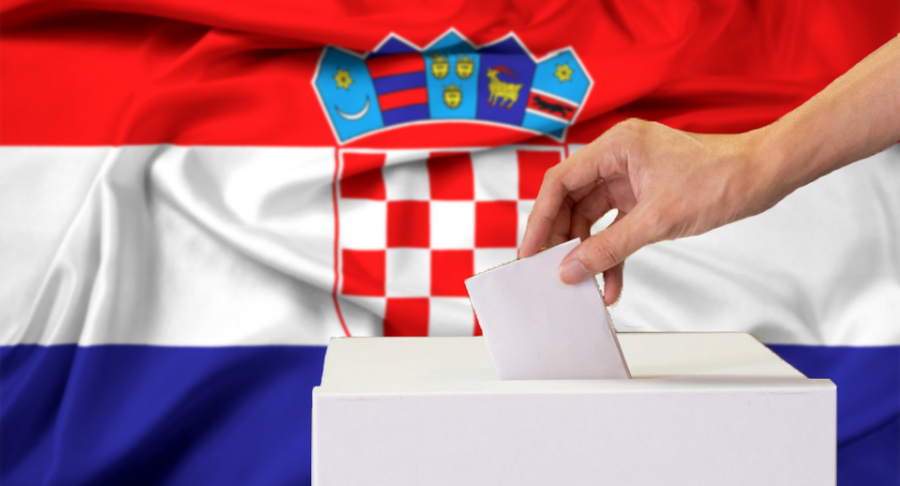
Milanović has already proposed the creation of a government of all against the HDZ. But the idea of an alliance with the extreme right is already causing a lot of discontent. The Croatian Parliament was dissolved on March 14 by decision of the Prime Minister, and elections were announced by the President of the Republic for April 17, just 30 days later, the minimum allowed by the constitution. Therefore, the campaign was very short and entirely centered around the surprise candidacy of the head of state, and thus the Plenković-Milanović duel.
After a short but surprise election campaign, Croatia is expected to go to the polls on Wednesday to renew the Sabor, the national parliament. The main challenge is between the right-wing Croatian Democratic Union (HDZ) and the "Rijeke Pravde" (Rivers of Justice) coalition led by the Social Democratic Party (center-left PSD), which according to recent polls is very strong.
On the one hand, Prime Minister Andrej Plenković (from HDZ) is running for a third term. If he wins again, he would cement the positions of a power that he has controlled since 2016, that is, before the victory of Donald Trump in the US, the exit of Great Britain from the European Union and before the Russian invasion of Ukraine.
Plenković is considered a moderate conservative. However, his two governing mandates have been characterized by scandals of corruption and nepotism. So much so that in 8 years he was forced to replace about 30 ministers and vice-ministers who fell into the trap of the justice system.
Regarding foreign policy, the current prime minister is pro-European and Atlanticist. He has built excellent relations in recent years, especially within the EU, and last year he achieved the double objective of his country's membership in the Schengen Area and the introduction of the euro as an official currency.
The challenger in this campaign is the President of the Republic Zoran Milanović himself, elected in 2020 as a SDP candidate. Despite the fact that the role he holds requires him to be "above the parties", the head of state is involved in the political arena without resigning from the position he holds.
Milanović was prime minister in 2011-2016. But his communication style has changed a lot since then. There are those who consider him a "Croatian Trump" because of his scandalous statements, or as "an instigator of chaos" as 24Sata columnist Tomislav Klauški told me in an interview, especially because of his decision to ran for prime minister without resigning from the post of head of state.
But there are those who consider him a champion of the fight against corruption, and as the only politician capable of freeing the country from the yoke of HDZ, Franjo Tuđman's party in power almost always since 1991. His approach to politics the exterior is problematic.
He is a friend of Viktor Orban and Milorad Dodik, does not spare the attacks on the European Union and NATO, and has described the conflict in Ukraine as "an American war".
Therefore, it is not surprising that even left-wing voters, who would traditionally vote for a candidate for prime minister from the SDP, are very confused in these elections. And not only that. Because even after they have made their choice between HDZ and PSD (or one of the other smaller parties), the result is far from certain.
In fact, according to the polls, neither HDZ nor PSD will have a majority in parliament. Under these conditions, which post-election alliance will govern Croatia? In the age of social media and Artificial Intelligence, polls are popping up everywhere. In the chaos of predictions about Sabor's new line-up, there are some recurring trends.
The first common point of all polls is that HDZ is first. Out of a total of 150 seats in the Zagreb parliament, of which 3 are reserved for the diaspora (usually all go to HDZ) and 8 for national minorities (traditionally pro-government), Prime Minister Plenković's party is expected to get around 60 MPs.
The progressive coalition "Rijeka Pravde" would rank second with 41-44 MPs, while the Patriotic Movement (Domovinski Pokret, extreme right) would rank third with 14-15 MPs. Then comes Mošemo, the progressive green party, which from 2021 leads the municipality of Zagreb (9-11 possible seats), the Catholic conservative party Most (9 MPs), the Istrian Democratic League (2 MPs) and other more small with only 1 deputy.
To govern, a party must secure the support of 76 deputies. Based on the politicians' statements, no one (except the minorities) is ready to make an alliance with the HDZ to form a new government. "However, it is not difficult to imagine that Plenković will convince the few deputies he needs, without entering into official negotiations with certain parties", Tomislav Klauški emphasizes.
If the polls are correct, the prime minister could count on getting 60 deputies plus 11 more (diaspora and minorities). Another 5 would be enough to achieve a ruling majority. Then there is the scenario of an alliance between HDZ and another right-wing party such as Most (a former ally in the past) or the Patriotic Movement (created by a faction of HDZ).
What about the left camp? If the SDP came out on top - or if or if head of state Milanović decided to give his coalition the mandate to negotiate the new government anyway (it would be embarrassing, however the Croatian constitution does not specify which party should take precedence) - the dialogue would be more natural with Mošemo, but this may not be enough.
Milanović has already proposed the creation of a government of all against the HDZ. But the idea of an alliance with the extreme right is already causing a lot of discontent. The Croatian Parliament was dissolved on March 14 by decision of the Prime Minister, and elections were announced by the President of the Republic for April 17, just 30 days later, the minimum allowed by the constitution.
Therefore, the campaign was very short and entirely centered around the surprise candidacy of the head of state, and thus the Plenković-Milanović duel. Therefore, the debate on the future of Croatia became much more concrete during the campaign. Plenković focuses on stability, wage growth in recent years and the fact that according to him "Croats have never been better".
In reality, Croatians have many reasons to complain. From immigration that is emptying the country, making the need for labor force in all sectors acute, to the increase in prices that has already made the country expensive for tourists and very expensive for local residents.
Meanwhile, Milanović has above all the desire to carry out a great purge in the ranks of the HDZ, rooting out corruption and nepotism in order to start from scratch. But in what direction? As a former center-left prime minister, in recent years Zoran Milanović has spoken much more often to the right-wing electorate, not sparing attacks on immigrants and stances in favor of Croatian war criminals. In short, the result of Wednesday's election will tell us whether the leap into the unknown is more tempting or more frightening for Croatians. / Adapted Pamphlet, taken from "Balcani Caucaso"



Lini një Përgjigje