


 Shkruar nga Gresa Hasa & Erion Gjatolli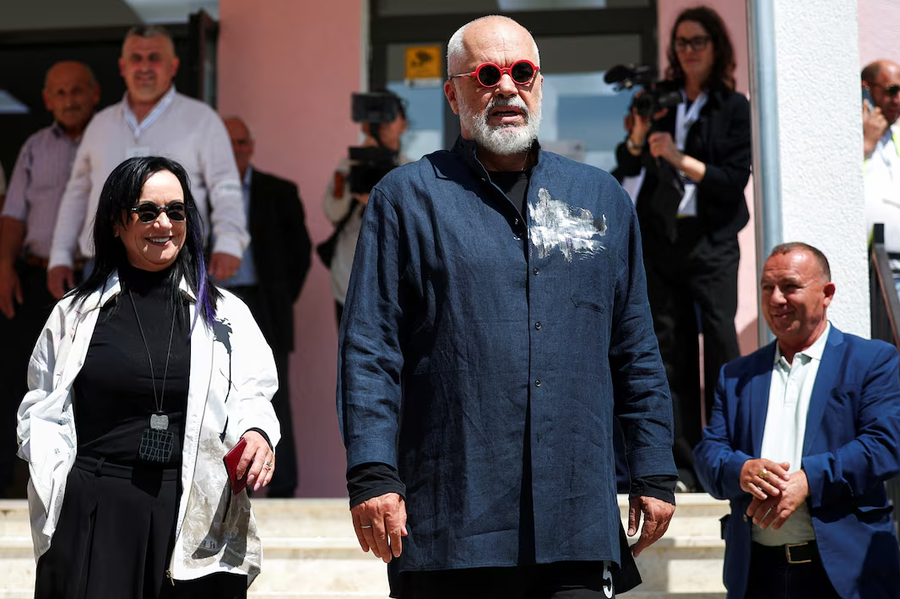
With 83 seats in parliament, only one vote separates the Socialist Party from the qualified majority that would allow it to rewrite the Electoral Code, the Penal Code, and the justice reform legislation itself.
In the parliamentary elections of May 11, Socialist Prime Minister Edi Rama triumphed again, consolidating a power already cemented in the previous 3 mandates. His electoral machine seems stronger than ever, but the boundaries between state and party are becoming increasingly blurred...
After 3 consecutive mandates, the Socialist Party confirmed its dominance in last Sunday's elections, receiving 52 percent of the vote. A result over 4 percentage points higher than in the 2021 elections, which translates into 83 out of 140 seats in parliament, 9 more than the current majority.
The Alliance for a Greater Albania, led by Democratic Party leader and former Prime Minister Sali Berisha, received only 34 percent of the vote, and only 50 seats, 9 fewer than in the previous legislature. The DP paid dearly for the support of its founder, a figure as divisive as he is negative, currently under investigation by the Special Anti-Corruption Prosecutor's Office (SPAK) on charges of corruption and abuse of power.
His return to the scene, seen as an attempt at personal survival rather than party renewal, deepened internal strife, further sinking an opposition that was already struggling. In a race characterized by an electoral system designed specifically to protect the big parties, it was the new parties that faced the most difficult battle.
Three of them nevertheless managed to cross the threshold by entering parliament, marking a modest but significant turning point that leaves open the possibility of a new credible and representative opposition. Among the new parties, the coalition “Nisma Shqipëria Bëhet” stands out, which received 3.9 percent of the national vote, winning one seat.
The radical left-wing movement “Bashke”, the only party representing the Albanian working class, took one seat. Meanwhile, entrepreneur and center-right MP Agron Shehaj, a former DP MP, achieved a good result with his Mundësia movement, with 3.1 percent of the vote and 2 seats in parliament.
A significant innovation in these elections was the postal voting of the diaspora, an important step for the approximately 1.1 million registered voters abroad, of whom approximately 200,000 participated in the process. Although the new parties received more support, the trend did not differ much from that of voters at home.
While the emergence of new political parties represents an undoubtedly positive signal, their evolution into structured parties is further narrowing the space for civil society. And this is creating a gap in participation and representation, which is now only partially filled by several other movements that continue to challenge traditional models.
In this scenario, the Socialist Party holds an almost uncontested power, while civil society seems increasingly weak and on the periphery of public debate. Voter turnout was 42 percent, almost 4 percentage points less than in 2021 and reaching the lowest level ever recorded.
But given the 3.7 million registered voters - of whom nearly half, some 1.8 million, live abroad - actual turnout among residents living in Albania still stands at 80 percent. However, these figures reflect a deeper crisis of political engagement, driven by several structural factors.
Among these is the ongoing wave of migration, which has created a growing demographic gap. According to Eurostat, in 2023 alone, around 75,000 Albanians received residence permits in European Union countries, one of the highest levels of emigration in the last decade.
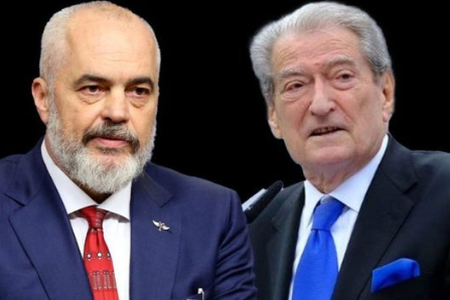
Alongside the demographic exodus, trust in the political and electoral system has steadily declined. The political debate has traditionally been dominated by a few old figures - most prominently Rama and Berisha - who have influenced the Albanian political scene since the fall of the regime.
During the election campaign, the two leaders monopolized over 80 percent of television time and 60 percent of media coverage, leaving little room for new voices. This continuity, coupled with an unbalanced playing field and reduced media space, has severely limited the visibility of alternative political forces, leaving many voters in the dark about their proposals.
In Albania, media independence continues to be undermined by opaque funding, centralized ownership, and editorial interference, factors that have fueled widespread self-censorship and the decline of independent reporting. With 83 seats in parliament, the Socialist Party is just one vote away from a qualified majority that would allow it to rewrite the Electoral Code, the Penal Code, and justice reform legislation itself.
Without any counterweight, it could further complicate political competition and weaken democratic institutions, given civil liberties, such as freedom of expression and the media, long-time favorite targets of the Rama government.
In this context, justice is confirmed as one of the most delicate fronts of the political conflict. After the arrest for corruption of the mayor of Tirana, Erion Veliaj - a close ally of the Prime Minister - it was Rama himself who attacked the judiciary, accusing SPAK of human rights violations and emphasizing that he would no longer tolerate its actions.
Reforma në drejtësi, e zhvilluar me mbështetjen e ekspertëve ndërkombëtarë, solli ndryshime rrënjësore në sistemin gjyqësor, duke parashikuar që çdo ndryshim do të kërkonte një shumicë të kualifikuar në Parlament, pikërisht për të siguruar konsensus të gjerë midis forcave politike.
Në zemër të kësaj reforme është SPAK, një strukturë e posaçme kundër korrupsionit dhe krimit të organizuar, e cila ka kryer hetime ndaj figurave kryesore nga i gjithë spektri politik. Megjithatë, me këtë shumicë të re, Partia Socialiste mund të ndihet e legjitimuar për të zvogëluar rolin e saj.
Përveç kontrollit mbi drejtësinë, Partia Socialiste kontrollon tashmë të gjitha institucionet shtetërore: ajo qeveris 53 nga 61 bashkitë e vendit, dhe menaxhon burimet publike dhe proceset e vendimmarrjes në të gjithë vendin. Një nivel hegjemonie i paparë që nga rënia e regjimit diktatorial.
Fitorja e qartë e Partisë Socialiste në zgjedhjet e fundit, nuk mund të shpjegohet vetëm me një opozitë të fragmentuar dhe të pabesueshme. Ajo që e shënon vërtet këtë moment, është mobilizimi dhe disiplina e brendshme e PS-së, e paprecedentë në 30 vitet e fundit.
Një shembull emblematik i makinerisë zgjedhore socialiste, kishte dalë në pah që në vitin 2021, kur një bazë të dhënash u publikua në median shqiptare, e përpiluar nga anëtarë dhe aktivistë të PS-së. Ajo përmbante informacione për 910.000 votuesit në qarkun e Tiranës: jo vetëm të dhëna personale, por edhe detaje mbi vendin e punës, preferencat politike si dhe mbi origjinën e tyre familjare, nevojave dhe dobësive personale.
Rrjedhja e informacionit, nxori në pah shkallën e sistemit të kontrollit të partisë dhe sofistikimin e mjeteve të përdorura për të monitoruar dhe ndikuar elektoratin. Udhëheqja e PS nuk e mohoi, përkundrazi u mburr me efektivitetin e tij, duke e paraqitur atë si një simbol të forcës së saj organizative.
Ky sistem kontrolli, u dëshmua sërish tejet efikas, duke i dhënë Partisë Socialiste rezultatin e saj më të mirë zgjedhor në 20 vitet e fundit. Por çmimi që duhet paguar është larg të qenit i papërfillshëm: duke e konsoliduar kontrollin e tyre mbi aparatin shtetëror dhe duke i zbehur gjithnjë e më shumë kufijtë midis partisë, shtetit dhe administratës publike, socialistët e Edi Ramës po kontribuojnë në nxitjen e ndjenjës se zgjedhjet nuk janë më një instrument i vërtetë ndryshimi.
Nëse deri në vitin 2013 Shqipëria ishte të paktën në gjendje të ruante fasadën e jashtme të demokracisë, duke ruajtur një farë alternimi në pushtet, raundi i fundit i zgjedhjeve rrezikon t’u konfirmojë qytetarëve se kabina e votimit është bërë pak më shumë se një ritual i pakuptimtë, më i dobishëm për legjitimimin e qeverisë ekzistuese, se sa për rrëzimin e saj.
And with it, disillusionment with the entire democratic process inevitably grows. During the election campaign, Pandeli Majko, a veteran Socialist Party MP, cynically captured the spirit of the times: “After the elections, Albania’s real opposition will be the European Union, not the DP!”
A joke that reveals how socialists have been able to weaponize Brussels' "stabilitocratic" approach, where stability matters more than democracy, and where credible governments are worth more than contested ones.
A story already seen in the Western Balkans, where Prime Minister Edi Rama - like other colleagues in the region - has now learned to embody the role of a credible leader in the eyes of Europe, even at the cost of reducing internal competition to a game with fixed pieces.
Under the label of "stability", Rama has enjoyed continued support from European institutions. A support that has not been damaged by the numerous corruption scandals in his party, or by the repeated alarms included in the European Commission's progress reports, which denounce problems with corruption and the rule of law.
Transactional diplomacy has further strengthened his position on the international stage. The recent agreement with Italy on migrants - promoted as a symbol of "common European values" and blessed by the European Commission - is a concrete example. By offering hospitality in migrant centers, Rama gained in return political legitimacy, visibility in European salons and financial support, both from Rome and Brussels.
In this context, he managed to create a rigid bipartisan political landscape during the election campaign, presenting himself as the only credible option against an already discredited opposition. Thus, he has cast a shadow over any alternative voice, carving out for himself the role of an irreplaceable figure, both in the eyes of Albanian voters and in those of Brussels leaders.
The result is a dangerous compromise: as long as Rama continues to deliver what Brussels needs - such as help in managing the migration crisis - his government's authoritarian tendencies will be ignored as "internal matters".
A very suitable dynamic for Edi Rama, which protects him from responsibility and real opposition in the country, but dangerous for the democratic future not only of Albania, but of the entire region. / Adapted from "Pamphlet" by "Balcani Caucaso"




Lini një Përgjigje