


 Shkruar nga Pamfleti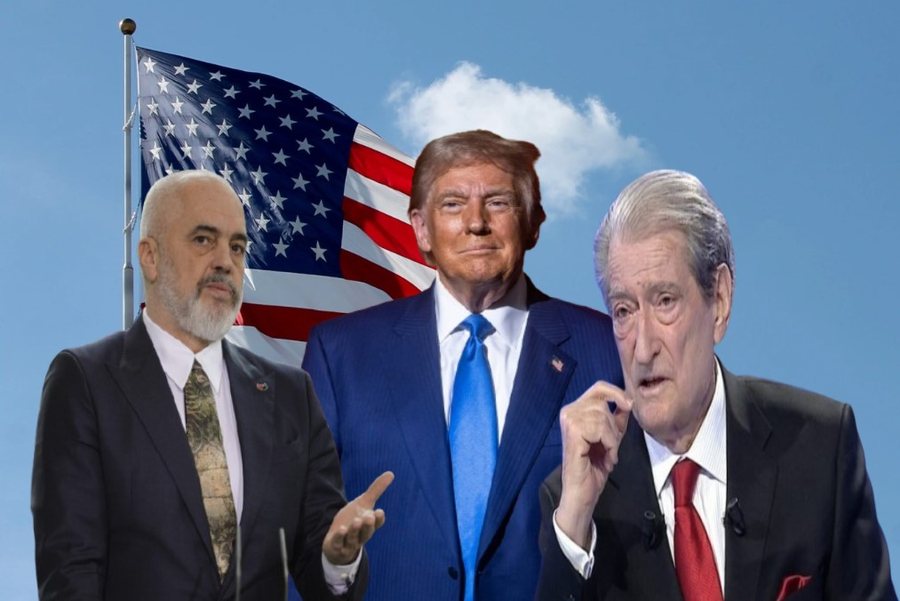
In Trump's second term, the US is giving up its leading role in the Balkans, the vacuum is being filled by arbitrary power and untouchable leaders...
For more than three decades, the role of the United States of America has been key in supporting democratic reforms in Albania and the wider Balkans.
If Albania has made strides towards the rule of law, this has not happened thanks to the awareness of the local political class, but under the pressure and active intervention of American diplomacy. The US Embassy in Tirana has traditionally been the most influential institution in the country, often more than any local body or constitutional institution. Justice reform, the voting of constitutional amendments in the Assembly, decriminalization, electoral reform or the unblocking of political crises, all of these have been achieved only when the US intervened directly and demanded accountability.
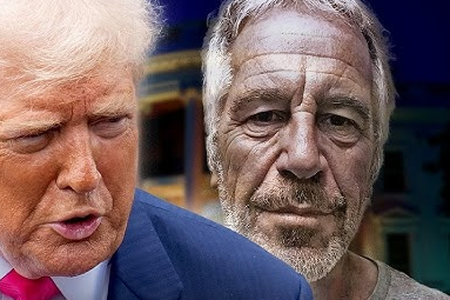
But with the return of Donald Trump to power and the start of his second presidential term, a deliberate shift in American foreign policy has become apparent, away from direct interventions in allied countries, towards a more withdrawn and selective approach. The funding freeze was the first signal.
The second signal was given yesterday in Secretary Marco Rubio’s cable, which asks US embassies not to make public statements about electoral processes in foreign countries. In the Albanian context, this is a strong signal that the US is shifting its role from “guardian” of Albanian democracy to a peripheral observer.
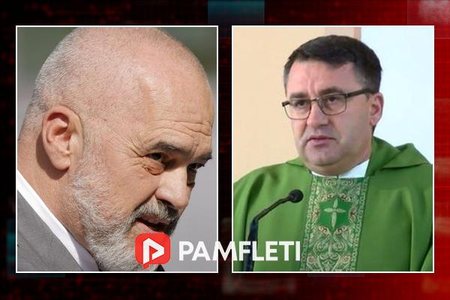
This created vacuum has been felt immediately on the ground. Since the last elections, where Edi Rama consolidated complete political control with 83 mandates, there has been no serious reaction from the US Embassy to the phenomenon of state capture. In the past, such an outcome would have been accompanied by concern about the lack of political balance, the misuse of state resources and the dominance of a single force. Today, this silence gives Rama the signal that he has free territory to further his authoritarian agenda.
On the other hand, Sali Berisha, a politically exhausted figure and declared "non grata" by the US State Department itself, continues to hold the Albanian opposition hostage. In another context, diplomatic pressure would have forced him to leave the political scene. Today, not only is there no new call for reflection, but no clear signal to hold him accountable for the consequences of his role in the crisis of opposition representation. Berisha is even throwing a lot of money at getting US support.
But the US's silence towards both sides, Rama who rules and Berisha who blocks, is leaving Albanian citizens without democratic protection.
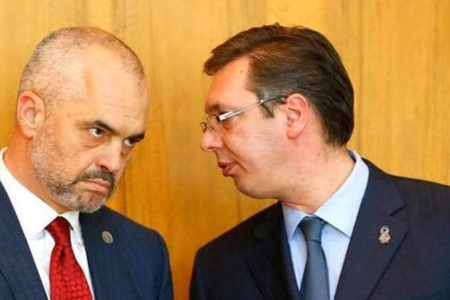
This lack of real impact shows that the era of active US intervention in the Balkans, at least under the Trump philosophy, is turning westward. And this is not just true for Albania. In Serbia, mass protests against Vučić have not brought any strong stance from US diplomacy. In Kosovo, the lack of a clear commitment has led to a deadlock in dialogue and repeated institutional crises.
Essentially, when the US withdraws from the region, the vacuum is filled by local authoritarians, who exploit the lack of international pressure to strengthen their control. Democracy does not function in a vacuum; it requires external oversight, partnership, and guarantors, especially in countries where independent institutions are fragile. Therefore, the more the US withdraws, the more the citizens of Albania and the Balkans feel the lack of justice, freedom, and hope. /Pamphlet


Lini një Përgjigje