


 Shkruar nga Skënder Asani
Society always needs civic courage that would express disagreement with evil, but also solidarity with the victims of denigrating situations. But, on the other hand, civic courage also has its cost, because not everyone is happy when we openly express a position that condemns violent extremism in any form…
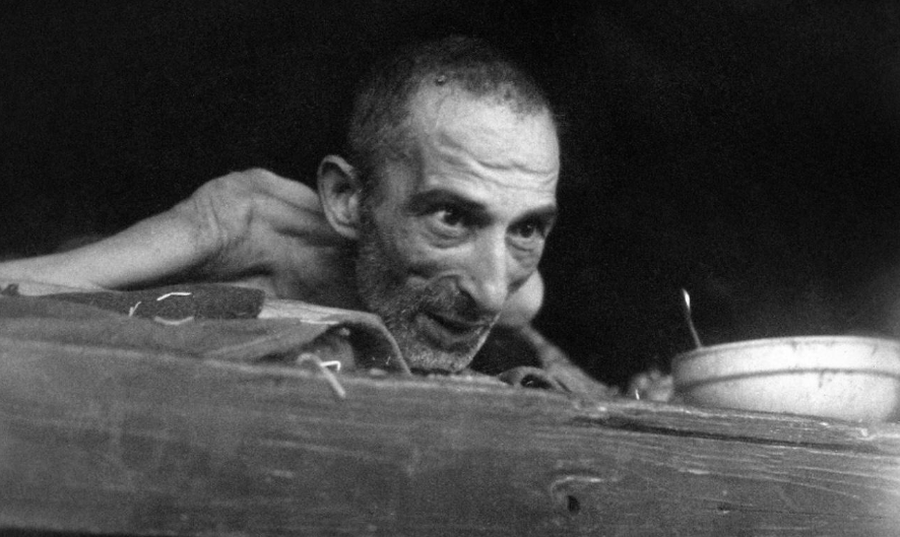
Today, as we mark January 27, International Holocaust Remembrance Day, we as an Institute are taking on the obligation to combat the danger of forgetting, because any evil that happens in the past can be repeated again, if it is not prevented by refreshing memory. This homage today to the six million Jewish victims during World War II is precisely a humane effort to make our memory more resistant to any human destructiveness that may arise in our midst.
One of the preventive mechanisms against the risk of forgetting is the UN General Assembly Resolution, which, in addition to declaring January 27 - International Holocaust Remembrance Day, noted that "the Holocaust, in which one third of the Jewish people and countless members of other minorities were killed, will always serve as a warning to all people against the dangers of hatred, intolerance, racism and prejudice". Consequently, this resolution was also based on the Universal Declaration of Human Rights, which condemns all forms of "religious intolerance, incitement to hatred, oppression or violence against individuals or communities on account of their ethnic origin or religious belief".
Inspired by these international documents, which can be considered models for dealing with the Holocaust, we as the Institute have installed a solid scientific, human resources and legal infrastructure that deals with this issue head-on. Initially, we opened the Department for Holocaust Education and Research, which covers a wide scope, including the publication of monographs and IHRA recommendations for Holocaust education, exhibitions and working visits to Israel, from where we have brought the memories of Holocaust survivors that have now been turned into books. The special feature of this Department is that it is led by our colleague from the Jewish community, Maja Susha. In order to advance and consolidate knowledge and experiences on dealing with the topic of the Holocaust, Ms. Susha is currently pursuing an international master's program for Holocaust studies at the "Vajs Livnat Institute" at the University of Haifa in Israel.
For our Institute, these professional and scientific preparations of Maja Susha are of particular importance, especially considering the great importance that education about the Holocaust has in preventing the consequences of discrimination and in enabling us to identify contexts similar to the past where the dignity of a certain group may be violated. All this in the function of raising awareness for a new critical thinking in society and shedding light on the history of the victims, in particular the Jews of North Macedonia during World War II, including the examples of solidarity of the local population with dozens of Jewish families who were saved from the clutches of death. With this, we wanted to affirm the ethical and human dimensions of civic courage in difficult times, a work that has not gone unnoticed by the US State Department, which in its two reports has praised the commitments of our Institute in advancing religious tolerance and the culture of civic dialogue.
This has also been the reason for us to initiate the project "Dealing with the Past - Civic Courage in Difficult Times", as a continuation of the US Department of State Alumni Project, of which I was also a part, but also as an integral part of our strategy as an Institute in preventing xenophobia, intolerance and extremist tendencies in North Macedonia.
Society always needs civic courage that would express disapproval of evil, but also solidarity with the victims of denigrating situations. But, on the other hand, civic courage also has its cost, because not everyone is happy when we openly express a stance that condemns violent extremism in any form. We have experienced the consequences of the cost of civic courage in recent years, whether as an open threat to life, or as political pressure and blackmail to change the course and prevailing spirit of our work as an Institute. Therefore, we, with the help of international friends, are forced to wage battles against both those who threaten our lives, but also against certain political segments that have in their agendas the suppression of the independence and autonomy of the work of our Institute.
However, our work has its own unceasing dynamics, because many ideas and projects that require concrete action plans await us. Where ultimately it is our sacred mission that, in addition to civic courage, we must also cultivate wisdom in human nature, similar to what Mother Tetreze recommended: "If you judge people, you will not have time to love them". Therefore, before we judge others, let us gather strength and find the points that unite us, because only in this form can civic courage overcome the thick walls of our egoism. / Pamphlet


Lini një Përgjigje