


 Shkruar nga Angelo Panebianco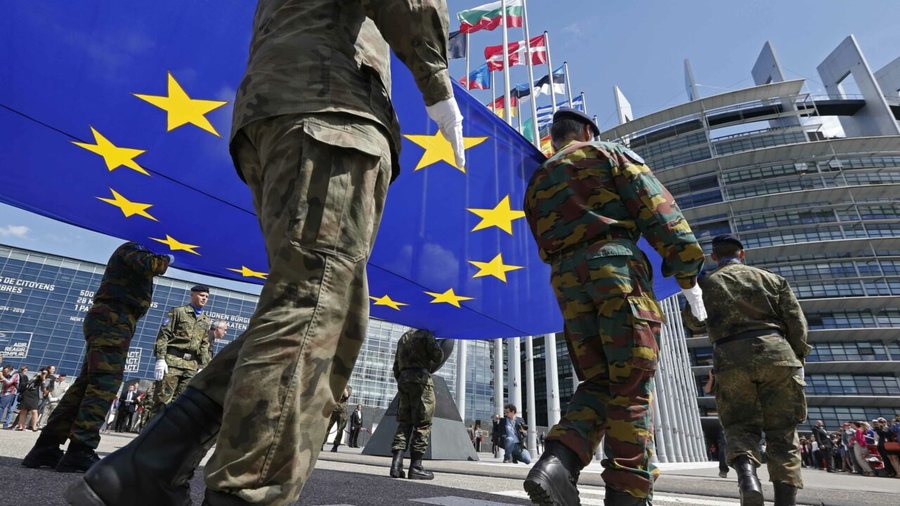
Focusing on European defense would bring about a paradigm shift, a great distance from the history of European integration...
From word to word there is an entire sea in between... Faced with an increasingly dangerous international environment, and with the possibility that the United States will no longer guarantee the military protection of Europe in the future, the instinct of survival must 'encourage Europeans to invest in their security, to build the common defense mentioned so many times in recent years.
This protection will require (and why not only) a European army. But those who agree with this, have the duty to identify the obstacles that make it difficult to achieve the goal. Some of them are recent. Thus, until Germany and France have overcome their internal difficulties, the process of European integration will remain blocked.
Under these conditions, ambitious goals such as defense seem currently unattainable. However, the main obstacles are old and deep-rooted. They are related on the one hand to the nature of the European Union, and on the other hand to the functioning of the democracies that are part of it.
Let's examine the nature of the block a bit: choosing to create a European army would mean a "paradigm shift", a revolution. The topic of military defense has features that clearly distinguish it from all other topics on today's European agenda: migration, the fight against climate change, etc.
And giving life to European defense today would mean a radical break with the way Europe has been since the Treaties of Rome (the creation of the European Communities in 1957) onwards. These treaties were signed after the failure (in 1954) of the European Defense Community (EDC) project, the first and only attempt to create a sovereign Europe.
So no army, no sovereignty. After that failure, the supporters of integration changed direction and perspective: if it was not possible to create a sovereign Europe, then they had to focus again on economic integration. Putting aside, along with the EDC, its sovereign aspirations, the European Community (later the European Union) became a successful enterprise.
Integration brought important benefits to Europe, it favored the modernization of economies and social life. At the same time, the American military umbrella allowed the Europeans not to allocate too many resources to defense, and to invest them in their expensive social welfare systems.
But today, focusing on European defense would bring about a paradigm shift, a great distancing from the history of European integration.
Can you imagine anything more difficult than this? Then there are the obstacles related to the functioning of European democracies. If the voters don't want it, nothing will happen. So far, the voters of the main European countries have shown no sign that they want to give up the nation state.
It is easy to point the finger at so-called sovereignists and anti-European movements. But it is a fact that after the Russian invasion of Ukraine, the German chancellor announced a very ambitious rearmament plan, and not a German investment in common European defense.
Apparently Scholz's approach was in tune with the sensibilities of his constituents. And French President Macron, so committed to championing the cause of European integration, would never dream of putting French nuclear weapons at the disposal of all of Europe.
It is unlikely that if we were to move from talk to action (that is, if we were to invest massively in defense), it would not offend the sensibilities of a possibly significant part of the Catholic world. It is likely that a strong resistance would appear against what would immediately be denounced as the "new militarism" of Europe.
The history of European integration on the one hand, and the orientations of public opinion on the other, make it difficult to create a real and stable European defense in the near future (which can really only be the European part of NATO) .
Unless Europe faces a mortal threat, immediately recognized as such by the majority of European voters. If this were to happen, Europeans would be divided between a part that is ready to prepare a European defense against the threat, and another part ready to submit to the dictates of the author who makes the threat.
Today it is not possible to predict which of the two sides will dominate the other. / Adapted "Pamphlet" from "Corriere della Sera"



Lini një Përgjigje