


 Shkruar nga Diplomatico | Pamfleti.net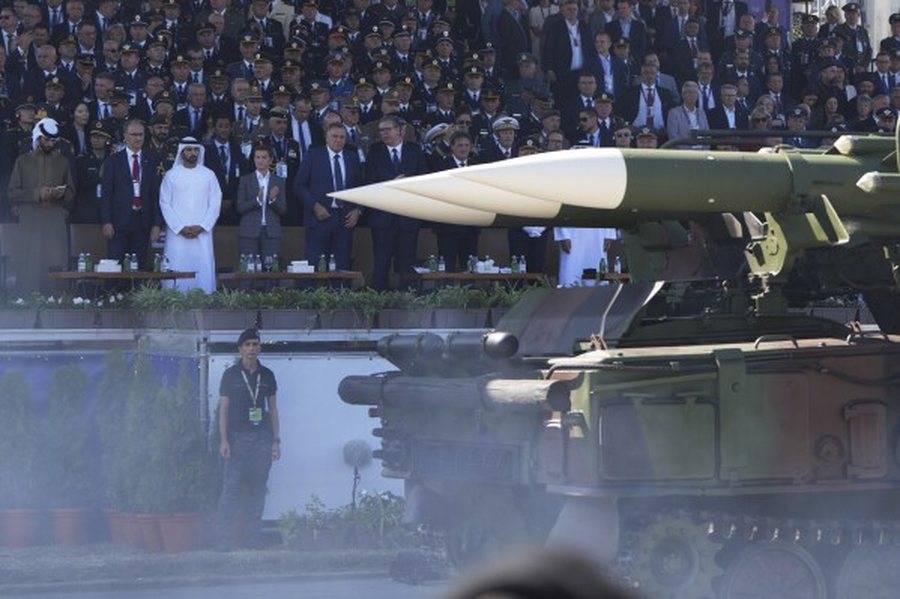
Aleksandar Vučić brings back tanks to silence the people and threaten the region
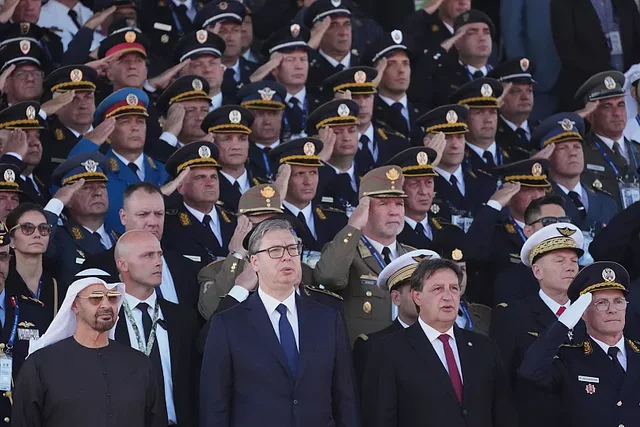
The military parade held on September 20 in Belgrade, considered the largest in Serbia's modern history, was not a traditional manifestation of force, but a clear political demonstration of the fragility of Aleksandar Vučić's regime and the logic of intimidation within and outside the country's borders.
In a climate filled with internal discontent, months of protests against corruption, and an opposition emboldened by the Novi Sad tragedy, where 16 people lost their lives due to institutional negligence, Vučić chose not to confront the political problem, but to sidestep it with nationalist rhetoric and spectacular military displays. The use of the army as political decor in this case is a coded message to citizens: “the state is strong, obey.” But in fact, the very need to return tanks to the streets of the capital shows the weakness of the government, not its strength.
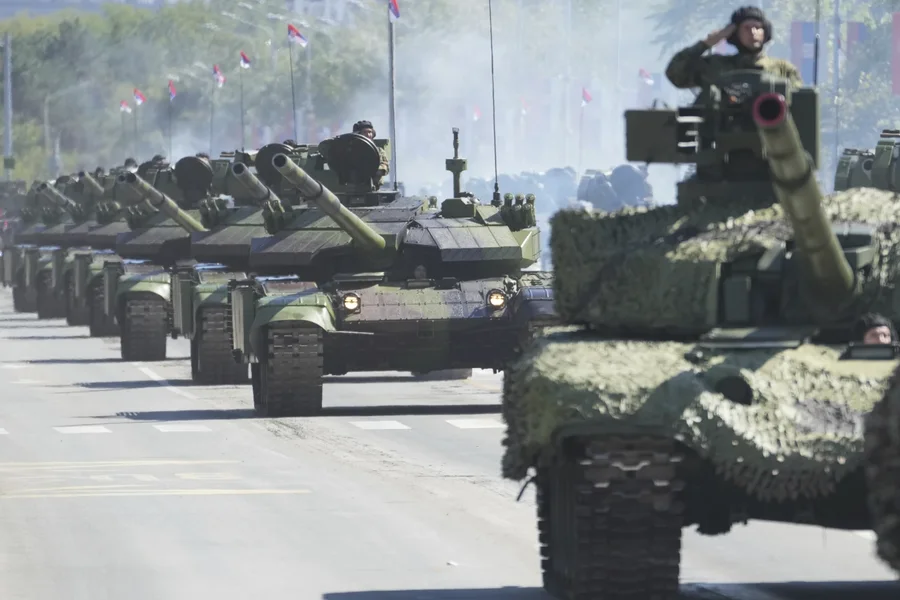
The demonstration included 10,000 troops, hundreds of military vehicles, and the latest missile systems, including the Israeli PULS with a range of 300 kilometers. This is a distance sufficient to strike most Balkan capitals from positions inside Serbia. In this context, weapons were no longer a means of defense, but were presented as a potential threat. Military analysts have noted that the selection of weapons and their placement on stage was done with the aim of producing a psychological effect on domestic public opinion and sending an unfriendly signal to Serbia's neighbors.
This parade is not disconnected from other regional political developments. Vučić’s rhetoric about “military alliances” between Croatia, Albania and Kosovo, as well as the deliberate straining of relations with neighbors who are already part of NATO, is an attempt to revive feelings of encirclement and justify strengthening his position as “defender of the nation”. It is a classic strategy of autocratic leaders who, faced with the loss of popular support, seek legitimacy through external conflicts or the constant threat of an “external enemy”.
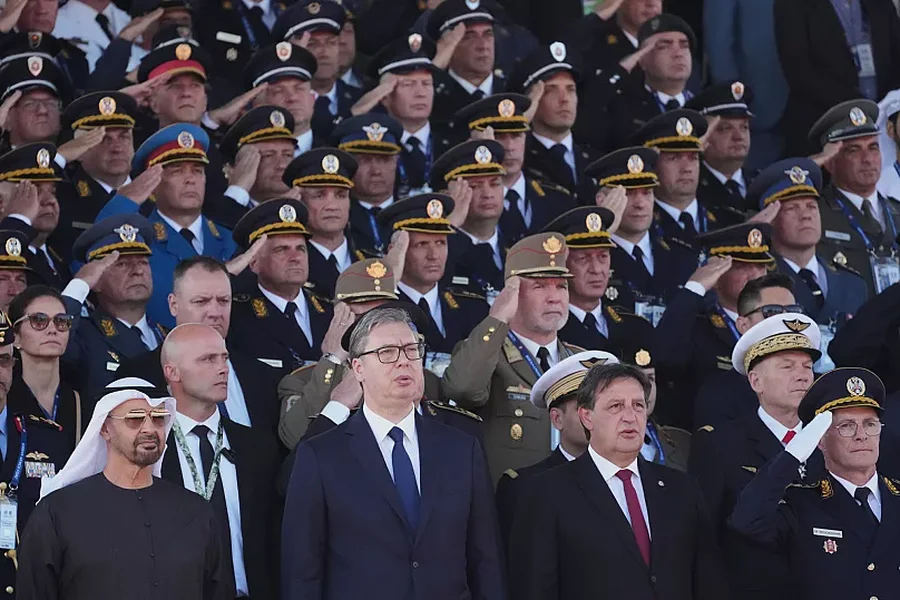
At the same time, Serbia is using the military as a diplomatic tool to buy international sympathy and support. Billion-dollar contracts with Western companies like Elbit Systems in Israel or the purchase of French Rafale jets give Belgrade negotiating leverage beyond its actual military power. It is a profound paradox: while accusing the West of interference, Vučić invites American generals to Serbia and presents Israeli weapons to his people as a guarantee of national defense.
In this parade, two opposing images were combined: for the West, a Serbia that tries to appear as a moderate partner; for the Balkans, a Serbia that openly threatens with weapons and missiles that can hit any point in the region. This deliberate duality shows that we are not dealing with a strategy of state defense, but with a strategy of political survival of the leader.
The most dangerous thing in this situation is the tendency to turn the army from a professional and defensive structure into an instrument of propaganda and intimidation. Instead of providing security for its citizens and neighbors, Belgrade is projecting the image of a state ready for escalation – both politically and militarily. For Albania, Kosovo and other countries in the region, this should serve as a clear alarm: Vučić is not building the army to join NATO or to maintain peace – but to maintain power.
At the end of the day, the military parade in Belgrade was not an act of sovereign force, but a signal of a regime in crisis, seeking salvation in tanks, while losing popular support and international trust. And like any story that begins with demonstrations of force against its own citizens, this one risks ending in failure and isolation. /Pamphlet


Lini një Përgjigje