


 Shkruar nga Pamfleti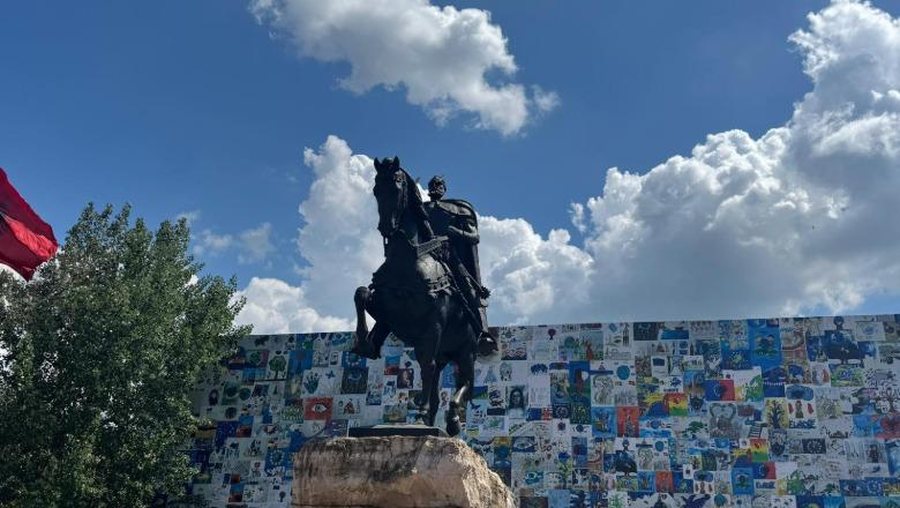
From Tirana, European leaders face a choice: change approach, or watch the EU shrink into a diplomatic museum...
Enlargement and geopolitics are now on opposite sides of history. One builds patiently, the other collapses urgently. One seeks institutional transformation, the other acts with the brutal logic of immediate interest. In this clash, the European Union is at an existential turning point.
In the past, EU enlargements were slow but steady. They marked the end of the division of Europe, the integration of the former Eastern Bloc countries, and the strengthening of a democratic model on the continent. Geopolitics, at that time, was a silent background. The US supported it. Russia was silent. Candidate countries were reforming the state, regulating the economy, translating the acquis communautaire into national law.
Today everything has changed. Enlargement has become a battlefield where the EU is no longer the arbiter, but a party. And in this battle, the opponents are no longer the ill-equipped bureaucracies of the Balkans, but Russia, Trump's USA, and populism within the Union itself.
From Tirana, a reflection in times of realpolitik
The May 16 meeting of the European Political Community (EPC) in Tirana, attended by the leaders of 47 European countries (excluding Russia and Belarus), is symbolic, but also a signal of urgent reflection on the future.
This is no longer an ordinary dialogue about allocating funds or coordinating reforms. This is an identity crisis for the EU itself. How can it remain an “anchor of stability” on a continent where two major actors – Russia and the US – are playing dangerous games to undermine it?
Russia has not given up on the Balkans or the Eastern Front
The Kremlin is more active than ever: from sabotaging the EU referendum in Moldova to pushing the government in Georgia to abandon integration; from instrumentalizing Serbia and Republika Srpska in Bosnia to attempting deliberate destabilization in the region. Russia has gone from silent obstructionist to active saboteur.
Trump and the America that no longer wants a strong EU
Meanwhile, the US is no longer the driving force behind the European project. Donald Trump has labelled the EU an “economic enemy”, supported Brexit and made it clear that he has neither the interest nor the will for a bigger and stronger EU.
Even more alarming are the US mining interests in Ukraine, which clash with the European agenda for the integration of that country. If the negotiations over Ukraine turn into a US-Russia trade bargain, the European project risks failing for the first time in its history.
Europe in conflict with itself: vetoes, blockages and mistrust
Meanwhile, within the EU, member states are no longer united. Hungary is ready to block sanctions against Russia and the opening of negotiations with Ukraine. Pro-Ukrainian countries, in retaliation, may block the Western Balkans. The entire enlargement architecture risks falling into chaos from the veto of a single state.
This situation has produced two conflicting approaches:
-The traditional approach, which sees the integration of Albania and Montenegro as a way to maintain the credibility of enlargement until 2030;
-The geopolitical approach, which calls for the urgent anchoring of Ukraine in the EU, even with a partial or “associated” membership, leaving the legislation for later.
Neither is wrong, but neither has the mechanisms for implementation without the consensus of the member states. And in the current political climate, with the rise of populist parties in every corner of the continent, such a consensus seems impossible.
Enlargement requires a different EU, not just bigger, but also bolder.
If the EU continues to behave as usual, it will not win this race with geopolitics. Enlargement requires new rules, political flexibility, convincing public communication and a willingness to break precedent.
The EPC in Tirana will not provide a solution, but it may signal that the EU has realized that the era of "business as usual" is over.
Now, either the Union becomes truly geopolitical, or it will remain an institutional memory of an era that no longer speaks to today's crisis./ Pamphlet


Lini një Përgjigje