


 Shkruar nga Gjergj Zefi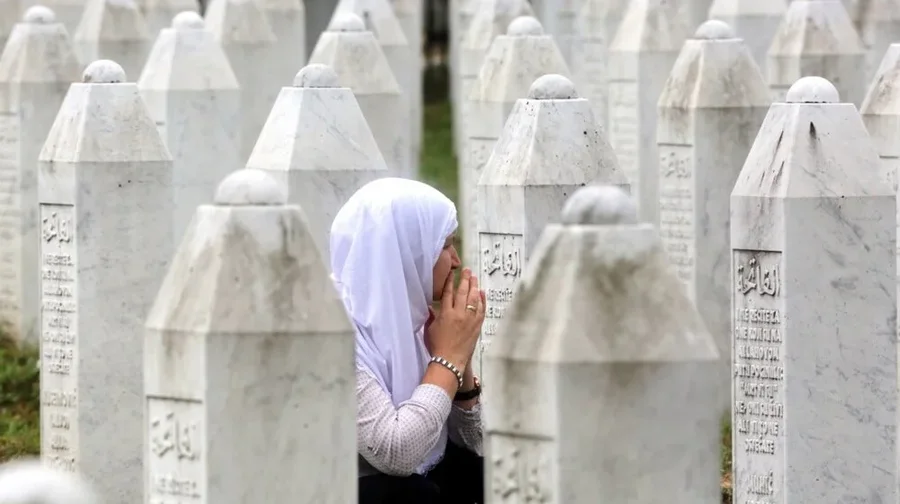
Srebrenica 1995; when the world pretended not to see, and Serbia continues to pretend it didn't happen...
On July 11, 1995, in a small town in northeastern Bosnia, something happened that modern European history could not erase: the Srebrenica genocide.
Over 8,000 Muslim men and boys were systematically executed, under the orders of Serbian military structures, led by Ratko Mladić and with the political blessing of Slobodan Milošević.
For the world, it was a documented massacre. For international justice, it was a crime against humanity. But for today's Serbia, it is just a "tragic event", denied, relativized, treated with the false language of nationalism and historical manipulation.
Thirty years after this crime, denial is no longer a peripheral manifestation of extremists, but has become state doctrine.
In Serbia and Republika Srpska, the Srebrenica genocide is being erased from school textbooks, war criminals are being glorified, parades are being held for Mladić, and rallies are being organized that call the victims “Islamic terrorists.” This is not forgetting, it is a strategy. A strategy to recreate a Serbian national identity based on denial and to transform the victim into the aggressor. President Aleksandar Vučić, once Milošević’s propaganda minister, today plays a double game: in Brussels he talks about dialogue and peace, while at home he glorifies the criminals and justifies the denial in bland terms as “historical differences of opinion.”
In this theater of hypocrisy, Europe is not just a spectator, but an accomplice. It was the Dutch troops who left the civilians of Srebrenica at the mercy of the butchers. It was the West that gave Serbia 30 years to repent, but never forcefully demanded the punishment of denial. Today, in the name of “regional stability”, the EU turns a blind eye to the glorification of Mladić and the attacks on the decisions of the Hague Tribunal. In order not to “annoy Serbia”, many countries even hesitated to support the UN resolution declaring July 11th the International Day of Commemoration of the Srebrenica Genocide. Diplomatic hypocrisy cannot make peace over the blood of a people.
And in this institutionalized denial, in this deliberate silence of European chancelleries, Albania cannot remain neutral. There is no political, diplomatic, or even human reason why official Tirana should not be in the first row of countries denouncing the denial of Srebrenica. Because whoever denies Srebrenica will also deny Recak. Because when Belgrade calls Mladić “defender of the nation,” then it is preparing the ground to reborn the idea of “Serbian lands” in Bosnia, Kosovo, and wherever Serbs are found.
Albania must be the voice that resounds in every international forum to demand the punishment of denial and the education of new generations with the historical truth.
Srebrenica is not just a dark page of history, it is the permanent test of our conscience. Not to call it what it is, genocide; is to become part of the crime. To remain silent in the face of denial is to accept that the truth no longer has value. And not to react when the truth is being desecrated every day is to betray the victims for the second time. Serbia has chosen the path of criminal silence. Europe has chosen moral compromise. Albania must choose the truth; without any compromise. Because in this battle there are neither “sides” nor “equal suffering”. There are victims and criminals. There is a history that will not forgive anyone who denies it./ Pamphlet



Lini një Përgjigje