


 Shkruar nga Pamfleti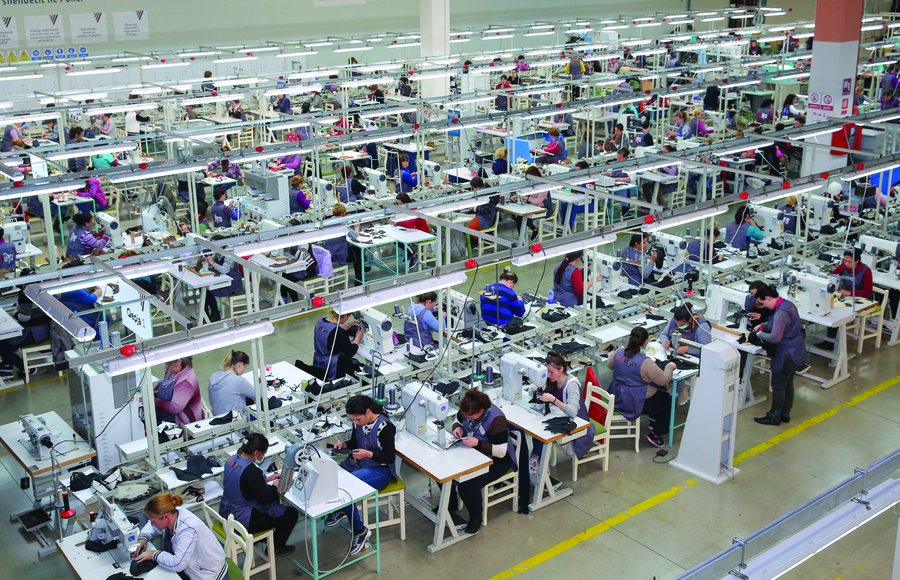
The business barometer for the 6 countries of the Western Balkans showed that Albanian enterprises had the highest concern about the increase in labor costs.
The survey found that 89 percent of Albanian businesses claimed that their labor costs will increase further in 2023, but this concern was higher in neighboring Macedonia where 92% of businesses reported increased costs.
High emigration in both countries has created strong labor force problems. Many sectors suffer shortages and this has encouraged the increase in wages and therefore costs to businesses. In Albania, the lack of human resources is hindering expansion in some sectors such as tourism and industry.
Businesses in the Western Balkans see the situation slightly more favorable than a year ago, as their satisfaction index increased by 5 points to 58.
However, 77% of businesses say their operational costs have increased, 6% more than in 2022. Only a third of businesses anticipate an improvement in their economic situation in the next 12 months.
Macroeconomic instability, labor availability and brain drain/emigration have been identified as the most worrying factors affecting business growth in the Western Balkans. In 2022, the Covid-19 pandemic ranked first, followed by macroeconomic stability and access to finance and the informal economy.
In view of the challenges they face, 69% of companies use their funds and retained earnings to finance their operations, indicating a significant contraction of access to finance.
A low level of awareness of climate change continues among businesses in the region, where 70% of respondents do not consider it a problem for their activity. 42% of businesses believe the green transition would have a positive impact on their business, but 50% believe it will have no impact.
Factors that can influence and improve the implementation of good practices in their business activities are energy prices (52%), and energy and resource efficiency (38%).
Lack of government subsidies (48%) was the second most cited barrier in 2022, just behind increased costs (64%), which retained the top position in 2023. Lack of skills and experience ranked third in in 2022 with 40% of the respondents emphasizing this issue. Can the government stimulate the greening of the business sector?
Regional cooperation is perceived as important by 74% of businesses, marking a 5% increase from last year and a 23% increase since 2016. The highest support comes from Albania with 85%, and Bosnia and Herzegovina with 84% where we see a 9% increase from last year.
The level of support for EU membership in the Western Balkans has witnessed a significant increase since 2022, increasing by 11 percentage points to reach 71% at the regional level.
This marks the highest level of perceived support from citizens of the Western Balkans since 2015, when 56% of respondents cited that EU membership is good for their economy. Similar to 2022, Albanian businesses showed the highest support (96%), and Serbian the least with 62%, but again making the decisive improvement of 13% since 2022 and more than double since 2016 when it was 29%.
The 2023 Balkan Barometer surveys were conducted between early February and early April 2023 in Albania, Bosnia and Herzegovina, Kosovo*, Montenegro, North Macedonia and Serbia, by the Regional Cooperation Council operating under the Berlin initiative. The Business Opinion Survey presented 80 questions to 1211 business owners, managers or leaders./Monitor



Lini një Përgjigje