


 Shkruar nga Pamfleti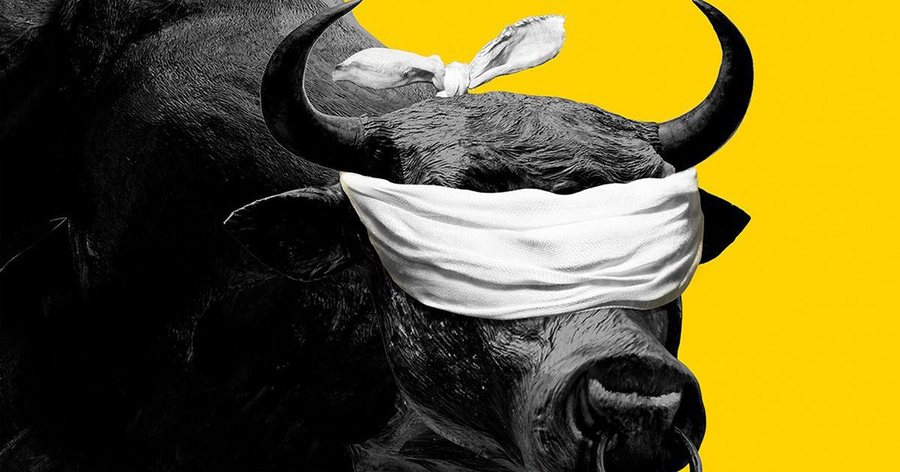
Euphoric markets are ignoring rising political risks. Investors' strength in the face of political turmoil is unlikely to pay off, writes The Economist. The past year has brought war in the Middle East, escalation of the trade conflict between the West and China, and on July 13, there was even an assassination attempt on the leading candidate in America's presidential race.
But if you look at the financial markets, you would think that nothing extraordinary is happening in the world. It seems that no amount of bloodshed or political anger can distract Wall Street from the good economic news: that fears of recessions have so far been misplaced and that inflation has fallen.
As a result, markets are near all-time highs in America, the Eurozone and Japan, and many stocks in emerging economies are also thriving. Optimism has spread everywhere. Relative to corporate earnings, America's stocks have only been this expensive during the previous two economic booms.
Perhaps the assassination attempt on Donald Trump was seen as a random act without deep political implications. After all, America has a long history of assassination attempts on politicians.
Neither did the assassination attempts on Gerald Ford in 1975 and Ronald Reagan in 1981 lead to economic crises. However, the fact that the stark partisan divide has inspired an assassination attempt is a reflection of America's political disunity, which is spreading around the world, causing global unrest.
If Mr. Trump and his new running mate, JD Vance, enter the White House, then there will be even greater divisions. As he expressed in his speech to the assembly, Mr. Vance reinforces the isolationist instincts of Donald Trump.
Europe may lose its security umbrella in NATO and may suffer economic pain caused by American protectionism. Why are investors not worried by all these threats? One reason is that the real economy has so far adapted remarkably well to global turmoil.
As the trade war rages, Western companies have rerouted their supply chains through Asian countries like Vietnam and India (often masking ties to China, rather than severing them). When forced to suddenly cut off Russian gas, the German economy adapted, rather than collapsing.
In America, the damage caused by the tariffs has been overshadowed by the jobs boom and stimulus that made the big deficits possible. Innovation, especially the advancement of generative Artificial Intelligence, has moved at a rapid pace.
However, it would be naïve to think that the global economy is immune to politics. Ultimately, its development depends on the liberal, democratic and peaceful foundations on which modern capitalism is built.
This is shown by the fact that the good news that investors are celebrating, i.e. the painless reduction of inflation, was achieved by the central banks, which are relatively protected from political interference. But politicians may decide to ignore the taboo of intervening in interest rates, just as they recently changed views on subsidies and tariffs.
Trump, for example, attacked Federal Reserve Chairman Jerome Powell during his first term. If Trump gets a second term, it will be very difficult for the Federal Reserve to continue to maintain its independence.
Countries where no stock market rally is observed are an example of the consequences of bad policy and trade disruptions. The major market with the worst performance over the past year is that of China, which has fallen by about 10% in dollar terms.
Despite growing acceptance of Chinese state capitalism in the West and Beijing repeatedly pointing to unrest in America, the truth is that China's economic growth has been disappointing recently.
Its authoritarian government, which lacks the discipline and dynamism required by democratic politics, has failed to solve the property crisis or fight the economic slowdown by boosting consumption.
On the other hand, in the West, Britain's stock market has performed extremely poorly since the country voted to leave the European Union in 2016, a decision that has disrupted trade flows with its closest partners.
This week, shares of TSMC and other technology firms fell after Trump demanded that Taiwan pay America to receive defense guarantees.
In some parts of the world (though not places investors want to know much about), the real economy is suffering from the collapse of the old order. Since the Covid-19 pandemic, developing countries have not grown faster than rich ones as they did during the boom of globalization after 1990.
Many of the poorest countries are burdened with huge debts, from which it is difficult to escape because creditors, including China, do not respect the special status of the IMF, because they see it as an arm of Western power.
Eventually, there will come a point when political and geopolitical clashes will hurt even the rich countries. However, Wall Street for now is buoyed by the fact that there is growing confidence that Trump's return to the White House would be good news for investors.
In recent days, as the likelihood of interest rate cuts and Donald Trump's victory have increased, small-cap stocks have become popular.
It's true that cutting the corporate tax rate from 21% to 15%, an idea Trump has repeatedly touted, could mechanically raise profits, and that bigger deficits are stimulating to the economy. But the economy is overheating and America's budget is much tighter than at the start of Trump's first term.
These mean that higher inflation is more likely than faster economic growth. Trump has long seen the stock market as a gauge of his performance, so he can let go of the worst ideas.
But we cannot simply hope that Trump's more dangerous economic ideas will be abandoned if too much pressure is brought against them.
A shock in China
And if Trump and Vance were to allow more wars in Europe, or if they were to take steps toward a complete disengagement from China, it would undoubtedly bring economic chaos. Investors would be hit hard.
Such a plunging of the world order into turmoil would be unsettling for investors, even if stocks were at normal prices. If their ratings were extremely high like they are now, it would cause a huge crash. Political risk is difficult for markets to assess. But that doesn't mean they should ignore it./ Monitor


Lini një Përgjigje