


 Shkruar nga Pamfleti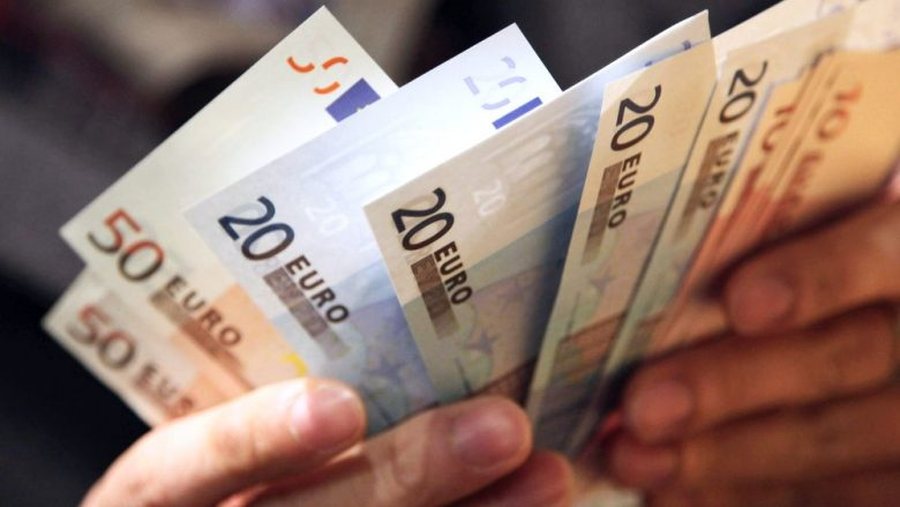
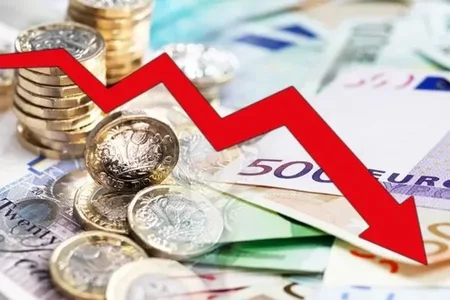
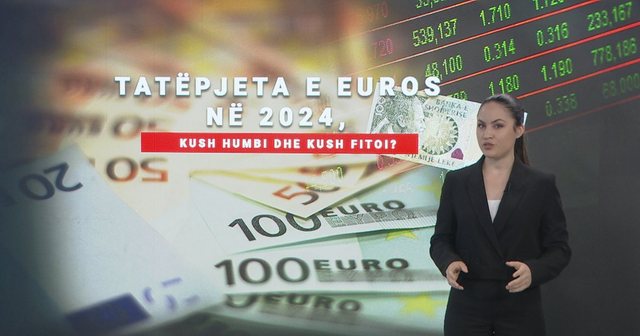
22 years on the market when it was put into circulation for the first time as a physical currency, the euro in Albania is considered the strongest currency. But with the progress of the Albanian economy and the influences from geopolitical factors, the devaluation of the euro has continued at an unstoppable pace, putting many sectors in difficulty but favoring some others.
With the decline of the Coronavirus pandemic, mainly after 2020, the European currency began to depreciate from the level of 123 lek, suffering continuous fluctuations. In the last three years alone, the euro has lost more than 24 ALL, or over 20% of its value.
The increase in foreign direct investments, the impact of remittances and the tourist boom are the factors that most influenced the decline that the euro has taken. Experts explain that the amount of euros in circulation, or what is otherwise known as supply, is much higher than the demand, or need for euros.
"This is a 2- or 3-year trend of the strengthening of the lek and the fall of the euro in the Albanian foreign exchange markets. We are dealing with a new balance that is caused by a multitude of factors, but in a single word by the high amount of euros in the market. It comes from many sources, tourism, foreign investments, the trade balance, but also money of criminal origin that has created a new balance of the euro that is reflected in these exchange rates. This is a trend that does not seem to have stopped in order to create a stability", says the economy expert, Adrian Civici, for A2 CNN. "What was learned during 2023 significant fluctuations in short-term periods. We had significant movements in short-term periods, which stabilized somewhat in 2024 despite the fact that this trend continued to decline this year as well.
"We take 2020 as a comparison period since it has been more than 2-3 years since the euro currency has been devalued and the lek overvalued. We have a 20% drop. Due to high numbers and high inflows in euros, they were forced to increase the price. Precisely the management of the informal euro would lead to a more stabilized situation", says Eriola Hoxha, an economic expert, for A2 CNN.
Although there has been an increase in foreign exchange flows from official channels, they are not the only ones that have made the euro's downward spiral unstoppable. Informal channels are the ones that have significantly added euros to the market, although their quantity remains immeasurable.
"Informality is discussed a lot. Because the real estate market, tourism, a good part of the products are bought in euros, but if we talk about informal channels, they are difficult to exchange. It is relatively difficult, but it also affects indirectly. But we have to keep one thing in mind about informality, informal and criminal money intervene here", says Dritan Vakaj, Association of Foreign Exchange Agencies.
"We are currently a country with 2 currencies and a decision of a strategic nature is required if we will take a series of measures to limit the informal use of transaction payments to give the necessary space to the lek and to influence the exchange rate. And the recommendations of the IMF and experiences from other countries, as long as you have another currency that fluctuates and you have no control, there are moments when the strengthening has positive effects as well as the opposite", says Civici.
The widespread use of the euro in the economy has its winners and losers. Those who have lost are mainly the exporters, whose activity is in euros and expenses in lek; individuals who have their salary or other income in euros have lost; families who receive money from immigrant relatives, as well as those who have bank deposits in this currency.
The data show that for the 11th month of this year, exports reached the value of 347 billion ALL, shrinking by 13.9% compared to the same period a year ago.
"We will have an even greater deterioration of the economic situation, not only of the export sector, it is the main locomotive of the economy over 30% of GDP. There are 200 thousand people connected with exports. This reversal of exports will also be reflected in other parts of the economy. They are suffering and a liquidity crisis is even more dangerous as often businesses do not go bankrupt due to lack of capital, profitability, but lack of liquidity. Which translated into understandable figures for the public, inability to raise wages, for new jobs, inability for more competitive products. On the other hand, other sectors have started to feel it", says exporter Alban Zusi for A2 CNN.
While those who have loans in euros have benefited, as they will pay less for monthly installments; importers who will buy goods and services more cheaply, as well as the government, who will pay less on foreign debt.
In order to stabilize the situation and keep the exchange rate under control, the Bank of Albania has intervened several times in the foreign exchange market through direct withdrawals. Due to the strong devaluation of the euro this year, the Bank of Albania has purchased over 9 months nearly 542.3 million euros, where 313.7 of them were withdrawn from official auctions just to stop the fall of the euro.
Only during the third quarter of the year, which coincides with the influx of summer tourists who also increase the amount of euros in the market, the Bank shows that it bought 270.50 million euros, of which 176.10 million euros were bought to stop the devaluation of the euro and 94.4 million euros in order to increase the foreign exchange reserve. But beyond these euro purchases in July-August-September, it touched the lowest values, dropping below the quota of 100 lek. A red line that has already been crossed and that signals every day for new falls in the value of the euro.
"Albania has adopted the free exchange rate system in the market since 1992, and the Bank of Albania does not have instruments to maintain a stabilized exchange rate, but with indirect intervention, it can contribute to a stabilization of the exchange rate," says Adrian Civici, expert economy.
Euroization of the economy in a high percentage of sectors caused the Bank of Albania to return to the policy of 2017, that of focusing only on the national currency. In the conditions of the high presence of this currency in the economy, experts emphasize that it would bring a countercyclical effect, of a euro under 100 ALL.
"The policy that the Bank has made so far is within the logic of the market. Personally, I am against the declaration of obligation. It is impossible to do, but logically it would have the opposite effect. We try to keep the course in line, but on the other hand, in such conditions, the euro would fall even lower. The question is whether this policy was successful. I join those experts who think that this policy was not good. I blindly believe in market forces. Market rules are set by supply and demand. If 80-90% of economic agents want to use the euro, the Central Bank is unable to swim against the current brought by the market", says Artan Gjergji, an economic expert.
"The Bank of Albania has made it clear that we do not have an intervening role in the market because of its importance, it has a supervisory role, but the market remains free. How will I find the balance, this is an object of demand and supply", says Vakaj.
The euro below the quota of 99 lek is now the new normal. This means that economic agents, such as businesses and citizens, must reorient financial plans and decisions with a weak euro at these levels or even below.
This currency is used today as a currency in many internal transactions in important sectors of the Albanian economy, such as the financial sector, where a significant part of deposits and loans are in this currency; in the real estate market, in the sale and lease of properties; in tourism, but also in some services.
"With the euro so high in the economy, the risk from the exchange rate continues to be eminent and the mechanisms to keep it under control are limited as long as we have a free market and the market continues to remain free", says Dritan Vakaj, Association of Foreign Exchange Agencies
In the conditions of the market and the economy, no one can make predictions about the exchange rate. It does not even say when the fall of the euro will stop, or at what values it will reach.
What is known for sure is that the so-called strong currency is no longer strong and that a depreciated euro is now the new normal. (A2 Television)


Lini një Përgjigje