


 Shkruar nga Pamfleti
The gap between the rich and the poor is becoming the new global crisis, and Albania is part of this alarming map...
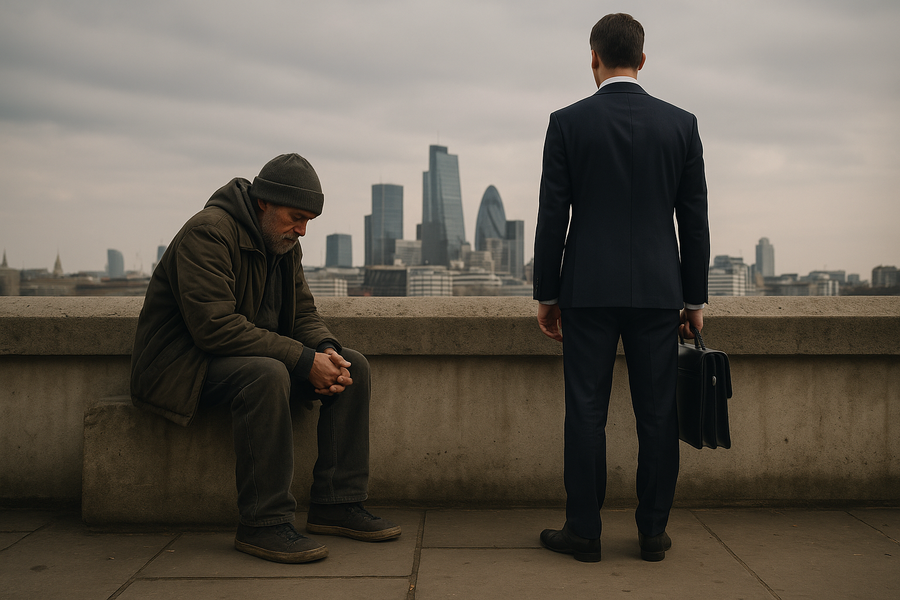
The latest global inequality report, published by the World Inequality Lab, reveals a stark reality: the world has entered its most extreme phase of economic inequality since the beginning of the 21st century. The richest ten percent of the planet controls three-quarters of global wealth, while the poorest half holds just 2%. This is a system where a very small elite accumulates most of the capital, while the rest of humanity struggles to meet basic needs.
Latin America, South Africa and some large Asian economies exhibit the most dramatic levels of inequality, while even wealthy Western countries, including the US and some EU states, are experiencing a growing concentration of wealth.
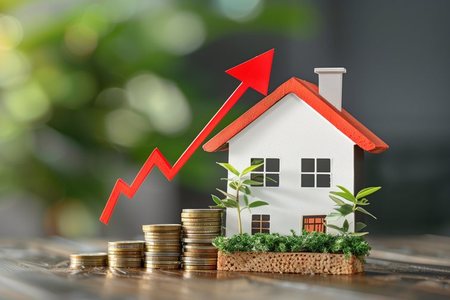
Although Albania is rarely included in international reports due to the lack of complete fiscal data, the domestic picture is increasingly clear: economic inequality is high and growing. Data from INSTAT, the Bank of Albania and the World Bank show that the richest 10% control approximately half of the national wealth, while the poorest 40% of the population together earn less than 10% of income. Meanwhile, Tirana has a level of wealth that is unmatched by the rest of the country: real estate prices have increased at unprecedented rates, driven by construction, financial speculation, informal money and the lack of progressive property taxation.
The Albanian economy is following the well-known oligarchic pattern of countries with deep inequality: a few large businesses, beneficiaries of concessions, PPPs and tenders with little competition, have gained a disproportionate influence over public policy and decision-making. Meanwhile, wages remain low, the cost of living has increased significantly and the middle class is shrinking. This situation produces massive emigration; often as the only economic mechanism for Albanian families. Emigration is further impoverishing the country’s human capital, leaving behind a fragile labor market where young people and qualified professionals are lacking.
Inequality in Albania also has a geographical dimension: entire rural areas are outside the orbit of economic development, while poverty in the north and mountainous areas remains much higher than the national average. In this landscape, the influence of oligarchs, the informal economy and the lack of state control create a reality where wealth grows faster than wages, and economic power is concentrated in a minority.
This situation is not just economic; it is political, social and strategic. Countries with high inequality are more vulnerable to destabilization, political polarization and loss of trust in institutions. Albania is no exception: the decline in trust in justice, governance and the economic system is directly linked to a sense of social injustice, where citizens see that wealth is not created through work, but through connections, monopolies and favors.
On a global scale, today's inequality is the result of a system where financial, technological and political elites operate in harmony that often resembles a deliberate architecture. In this context, small states, including Albania, risk always remaining consumers of an economic order that they do not control. This is why many analysts consider inequality to be the main challenge of the 21st century: it affects democracy, the economy, security, migration and the very functioning of the state.
Albania needs new policies: progressive property taxation, fight against informality, strengthening of institutions, protection of competition and targeted investments in poor areas. Otherwise, the gap will deepen and the country will face irreversible social and demographic consequences. /Pamphlet



Po nga aksionet e ketyre oligarkeve , sa u jane dhene si shperblim politikaneve me poste sbume te larta, se thuhet qe ka ndryshuar "kafja", nuk i narrin me kesh po me "aksione".