


 Shkruar nga Pierre Haski
The Kurds are the perennial losers in recent Middle Eastern history. They have repeatedly tried, and then inevitably betrayed. This is a dynamic that dates back a century.
In 1920, the Treaty of Sevres, which dissolved the Ottoman Empire after World War I, recognized the Kurds' right to "autonomy", which could later lead to the establishment of an independent state.
More than 100 years later, more than 40 million Kurds are still waiting for this moment, spread over 4 countries: Iraq, Iran, Syria and mainly in Turkey. Once again, their fate hangs in the balance.
Unexpected developments in Turkey and Syria are evoking more distrust than hope. In both cases, the driving force is the neo-Ottoman ambition of Turkish President Recep Tayyip Erdogan.
The other key figure in this geopolitical chess game is Abdullah Öcalan, head of the Kurdistan Workers' Party (PKK), who advocates the idea of establishing a Kurdish state. Öcalan, now 75, has been serving 25 years of a life sentence in Turkey on terrorism charges.
The role of Abdullah Öcalan
In recent weeks, there have been attempts at a new round of negotiations between Öcalan from his prison cell and the Turkish government, which even includes an ultra-nationalist party. While nothing definitive has yet been reached, the very fact that these talks are happening is good news.
The stated intention is for the PKK to give up its armed struggle. However, a broader perspective is needed to fully understand the significance of this development. Certainly, the overthrow of Bashar Al-Assad's regime in Syria has upended the strategic landscape in the region.
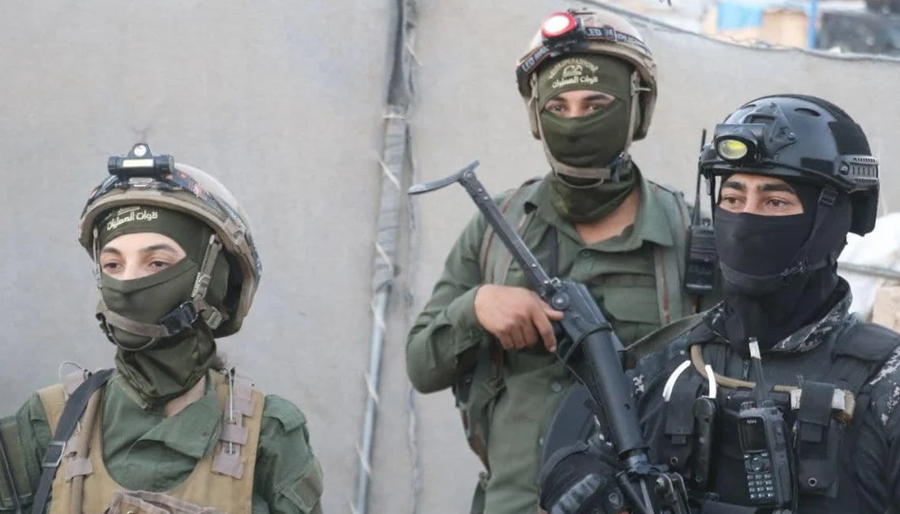
One area of Syria is still eluding the control of Damascus' new rulers: the northeast, which is controlled by the Kurdish-led Syrian Democratic Forces (SDF). These fighters are closely linked to Öcalan's PKK and are actively opposed by Turkey. Kurdish leaders in Syria themselves are divided.
The initial clashes have already pitted them against Turkey's Syrian allies. But this is just the prelude to a wider conflict that Ankara could instigate, with the aim of creating a security zone along the Turkish-Syrian border.
The dangers of betrayal
The situation of the Kurds is very complex. If a real dialogue with Öcalan will start in Turkey, then this could change the dynamics for Syria as well.
But Kurdish leaders in Syria themselves are divided between those who see it as an opportunity, and those who foresee a darker outlook for civil war in Syria.
Meanwhile, it should be noted that the Kurds in Syria are under the protection of the United States, with about 1,500 American soldiers stationed there. And more modestly also under the protection of France, after its leading role in the fight against ISIS that began there in 2015.
During his first term, incoming US President Donald Trump wanted to withdraw US troops from Syria, but was discouraged. What will happen this time? Without this protection, the pro-Kurdish SDF would be even more vulnerable to pressure from the Turkish military.
This complexity is the fruit of decades of war, rivalries and ambitions in a region that has been constantly destabilized. The Kurds are afraid of once again facing the consequences of a reshuffle of the geopolitical cards, where the new dynamics of the Middle East could lead to indifference, or even betrayal by those who have pledged to support them.


Lini një Përgjigje